Battery warranty: how much is left
Most manufacturers cover the high-voltage battery for eight years or 160,000 km (100,000 miles), whichever comes first, against defects and against capacity falling below a set level, usually 70%. Some go further: Skoda, for example, promises at least 78% in the first three years in Ireland, and Tesla covers the batteries in some Model 3 versions for up to 192,000 km.
What matters for a used buyer is how much of that cover is left. The clock starts on the date the car was first registered, so a 2021 car with modest mileage still has battery cover until 2029, while an EV from 2018 is losing it now. Ask a franchised dealer to confirm the warranty start date for the car's VIN, and check the service history: most manufacturers require servicing to their schedule to keep the warranty valid.
The rest of the car usually had a three to seven-year warranty, depending on the brand, so on an older EV the battery cover is often the only manufacturer warranty left.
Watch out for battery leases. Some older Renault Zoes were sold with the battery rented separately, which means a monthly payment on top of the car. Make sure you know whether the battery is owned before you buy (see our used Renault Zoe guide).
Charging: plugs, speeds and cables
Not every used EV charges the same way, and this is easy to miss on a test drive. Most EVs sold in Europe use a CCS socket for rapid charging, which works at nearly every public rapid charger. The main exception is the Nissan Leaf before the current model, along with a few older cars, which use the Japanese CHAdeMO standard instead, and many new charging hubs no longer offer it. If you're looking at one of those, check the chargers on your regular routes.
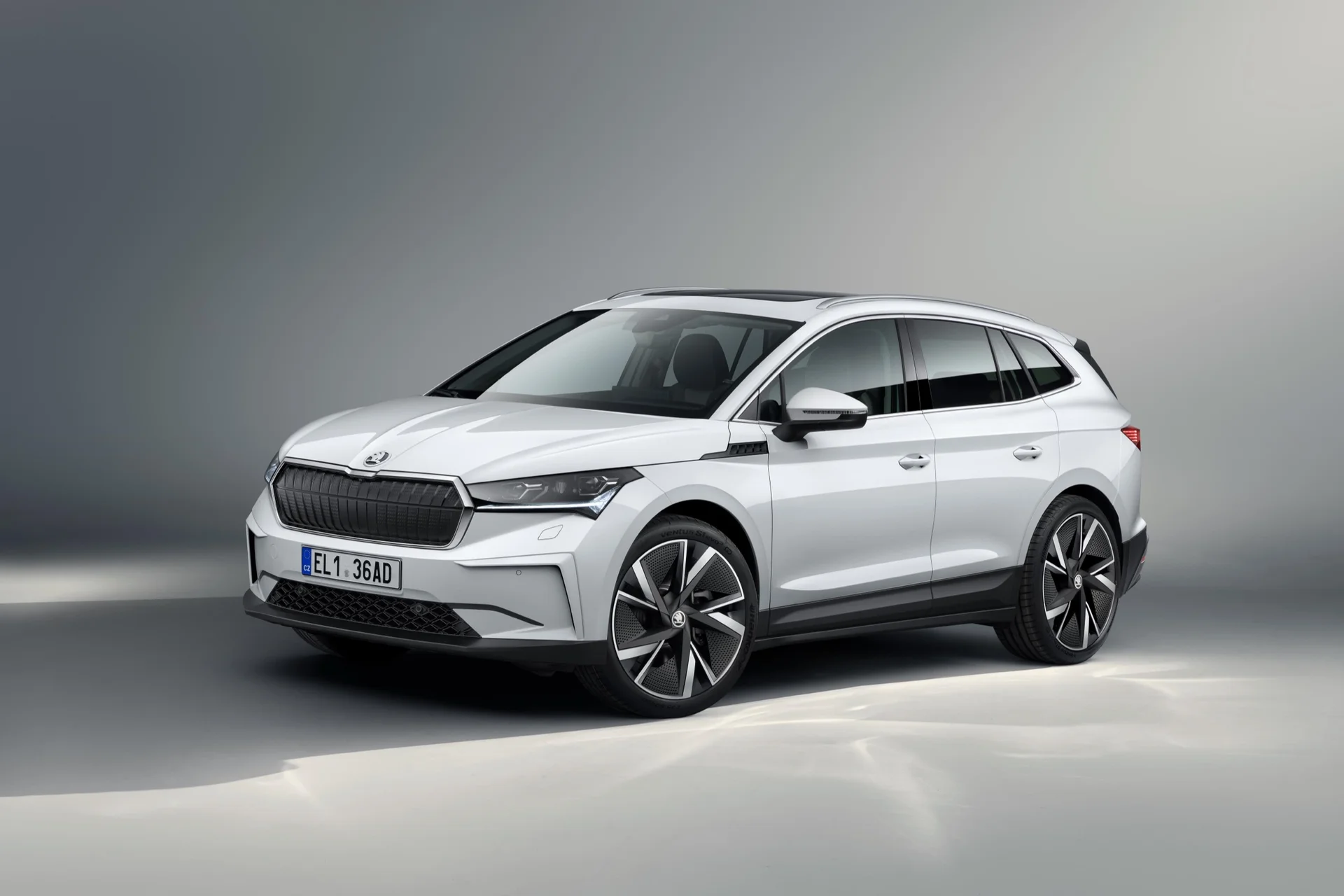
Rapid charging speed varies a lot between cars, and sometimes between cars of the same model. Some early Skoda Enyaqs sold in the UK could only rapid charge at 50 kW unless a faster option was fitted, while later software raised the same car to 135 kW (see our used Skoda Enyaq guide). Look for the peak DC figure in the advert or the specification, and remember that older cars without battery preconditioning charge more slowly in cold weather.
At home, the car's on-board AC charger sets the speed. Most charge at 7 kW to 11 kW, but some older cars and cheaper versions have 3.6 kW units, which roughly double the time to charge from a home wallbox. Check which cables come with the car: a Type 2 cable for public posts and wallboxes is the most useful, and a portable charger for a domestic socket is handy as a back-up.
If you'll charge at home, a home charger is worth having. In Ireland, homeowners can get the SEAI's €300 grant towards a smart charger, and it's open to owners of used EVs too. In the UK, renters, flat owners and homeowners without a driveway can get 75% off the cost of a chargepoint socket, up to £500.
Recalls, software updates and test history
Electric cars get recalls like any other, and many are now fixed by a software update rather than a workshop visit. In 2026, some Volkswagen ID. models and the Cupra Born were limited to an 80% charge while a battery cell fault was investigated (see our story on the VW battery recall), so check any car for open recalls before you buy. In the UK, enter the registration on the GOV.UK recall checker. In Ireland, recalls are tied to individual VINs, so a franchised dealer can check by registration or VIN; the Road Safety Authority publishes recall summaries.
Software matters more on an EV than on a petrol car, because it controls charging, range and battery management. Ask whether the car has had the manufacturer's updates, and check the version in the settings or the brand's app if you can. Some updates add real features: older VW ID. and Skoda Enyaq models are only now getting battery preconditioning by software (see battery preconditioning on older VW and Skoda EVs).
Test history is the other free check. In Great Britain, the GOV.UK MOT history service shows every MOT result since 2005, the mileage recorded at each test and any defects or advisories, which makes it easy to spot a clocked car. Cars need their first MOT at three years old. In Ireland, cars take their first NCT at four years old, then every two years, and every year from their tenth anniversary. Ask to see the NCT certificate and any previous fail sheets, and consider a paid history check for finance, write-offs and import history.
Tyres, brakes and the 12-volt battery
EVs are heavy and have plenty of instant torque, so they can wear tyres faster than a petrol car of the same size. Check the tread on all four, and look for uneven wear, which can point to alignment problems. Many EVs come on low-rolling-resistance tyres that help their range, so check the price of the right replacements before you buy.
Brakes are the opposite problem. Because regenerative braking does most of the stopping, the discs on many EVs get so little use that they rust and pit, especially the rear ones. Badly corroded discs can fail an MOT or NCT, so look at them through the wheels and check the test history for brake advisories.
Most EVs also have a small 12-volt battery, like a petrol car, which runs the electronics and wakes up the car. When it fails, the car may not start even with a full main battery. Ask when it was last changed, as it's a cheap fix but an annoying surprise.
Grants and tax on used electric cars
There are no purchase grants for used EVs in Ireland or the UK. The SEAI grant is for new cars only, and so is the UK's Electric Car Grant.
In the UK, electric cars have paid vehicle tax since April 2025. A car registered from April 2017 pays the standard rate of £200 a year, and electric cars registered before 1 April 2025 are exempt from the expensive car supplement. A car registered between March 2001 and March 2017 pays the band A rate of £20 a year. Electric cars registered from April 2025 with a list price over £50,000 pay an extra £440 a year from their second to their sixth year of tax, which is worth checking on nearly new, expensive cars.
In Ireland, motor tax on an electric car is €120 a year. A car already registered in Ireland has paid its VRT. If you're importing one, VRT is charged on first registration based on Revenue's valuation, with relief of up to €5,000 on electric cars, reduced for cars valued above €40,000 and none above €50,000. The relief applies to cars registered before the end of 2026, and Budget 2027 extends it to the end of 2028, subject to EU approval (see our article on VRT relief for electric cars). A private import from Great Britain also pays VAT at 23%, and customs duty depending on where the car was built, so check the full cost with Revenue before you commit.
What to check before you buy
- Battery health. Get a state-of-health percentage from a report, a dealer or the car's own display.
- Battery warranty. Work out how much is left from the first registration date and mileage.
- Battery ownership. Confirm there's no separate battery lease.
- Rapid charging. Check the plug (CCS or CHAdeMO) and the peak DC speed.
- On-board charger. Check the AC charging speed if you'll charge at home.
- Cables. Make sure the charging cables come with the car.
- Recalls and software. Check for open recalls and ask about software updates.
- Test history. Check the MOT history online, or the NCT certificate and fail sheets.
- Service history. Gaps can affect the battery warranty.
- Tyres and brakes. Look for worn tyres and rusty or pitted discs.
- 12-volt battery. Ask when it was last replaced.
- Range at full charge. Charge to 100% and compare the range shown with the official figure.
Our used electric car guides
We're building a guide for each of the most popular used EVs, covering which versions to buy, common problems and asking prices in Europe and the UK:
FAQs
Is it worth buying a used electric car?
For most drivers, yes. Batteries are generally lasting well, used EV prices have fallen a long way, and running costs are low if you can charge at home. Check the battery health, the warranty and the charging hardware, and a used EV can be one of the cheapest ways to drive.
How do I check the battery on a used electric car?
Ask for a state-of-health report from the seller or a franchised dealer, check any battery display the car has, and charge it to 100% to see the range it shows. A battery in good health on a car a few years old should be above 90%.
Can I get a grant for a used electric car?
No. The SEAI grant in Ireland and the Electric Car Grant in the UK are for new cars only. You can still get help with a home charger: €300 from the SEAI in Ireland, and up to £500 in the UK if you rent, live in a flat or have no driveway.