
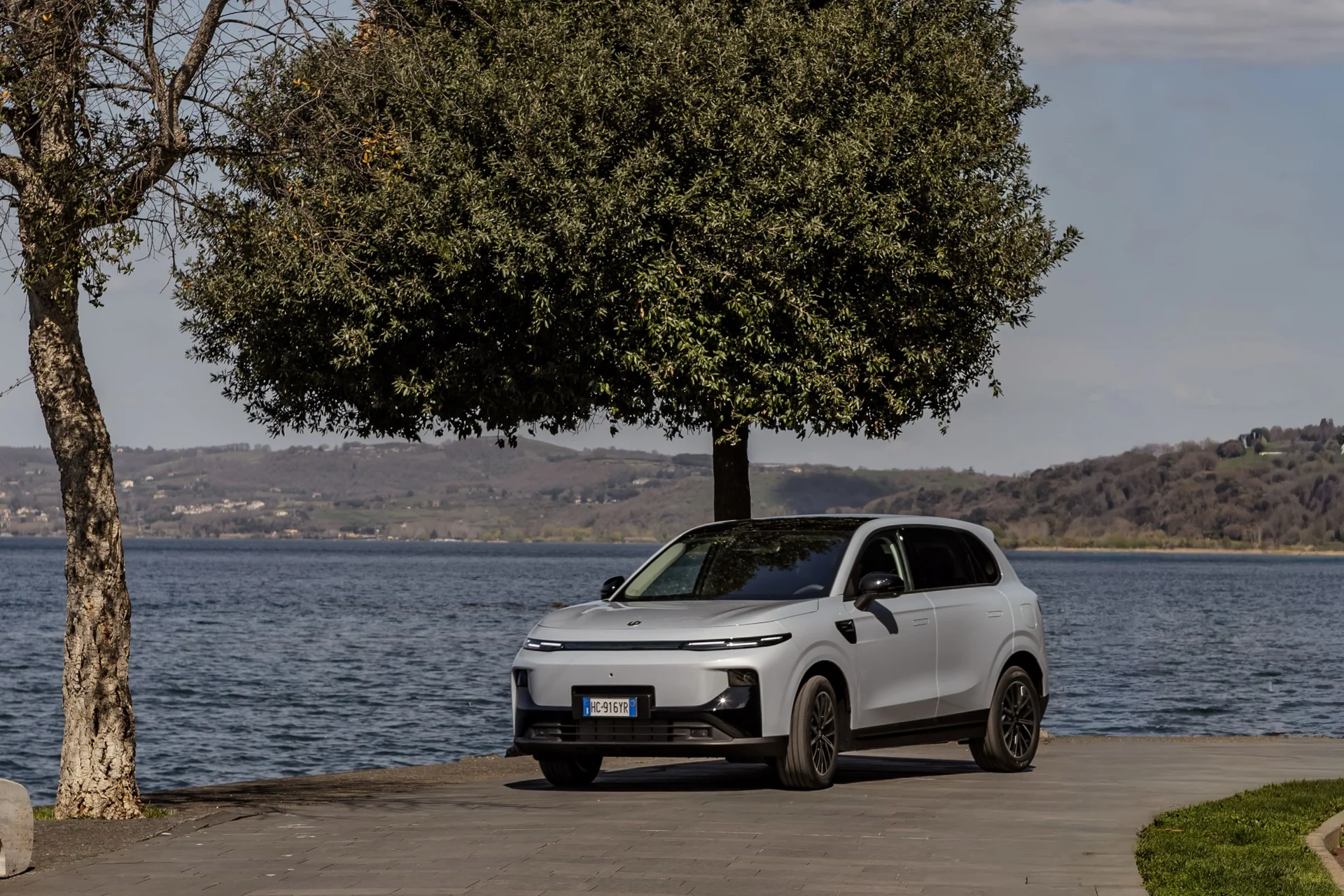
Range extender electric cars built in China won't be caught by the EU's new limits on hybrid imports, which start on 1 December. Because only the electric motor drives the wheels, the EU treats them as battery-electric cars, so instead of counting towards a quota they keep paying the extra duties on Chinese EVs, of up to 35.3% on top of the usual 10% import duty.
It matters because there are more of them to choose from. The Leapmotor B10 Hybrid EV, Leapmotor C10 Hybrid EV and XPeng L03 PowerX all pair a battery big enough for everyday driving with a small petrol engine that charges it on longer trips.
The new limits on hybrid imports
The European Commission published provisional safeguard measures on 24 November, setting a maximum number of hybrids each country can send to the EU. They run for 200 days, from 1 December 2026 to 18 June 2027, and any car above a country's quota isn't allowed in. The measures put into practice an understanding the EU and China reached at trade talks on 9 October, but they apply to hybrids from everywhere, not just China.
The Commission's investigation found that hybrid imports rose by 49%, from 957,965 cars in 2023 to 1,423,691 in the year to June 2026, and that European carmakers were losing market share as a result. Each country's quota is based on what it sent to the EU in 2025, plus a little over 15%:
| Country | Quota, 1 December 2026 to 18 June 2027 |
|---|---|
| China | 191,780 |
| Japan | 170,889 |
| Türkiye | 126,320 |
| United Kingdom | 105,402 |
| South Korea | 67,924 |
| Mexico | 34,755 |
(Smaller quotas cover Morocco, Serbia, the US and all other countries. South Africa is exempt. Figures from Commission Implementing Regulation (EU) 2026/2614.)
The quotas cover full hybrids, mild hybrids and plug-in hybrids: any car with both a combustion engine and an electric motor driving the wheels. If you're buying in Ireland or elsewhere in the EU, hybrids built in Britain are capped too, even though the measures were drawn up with China in mind.