
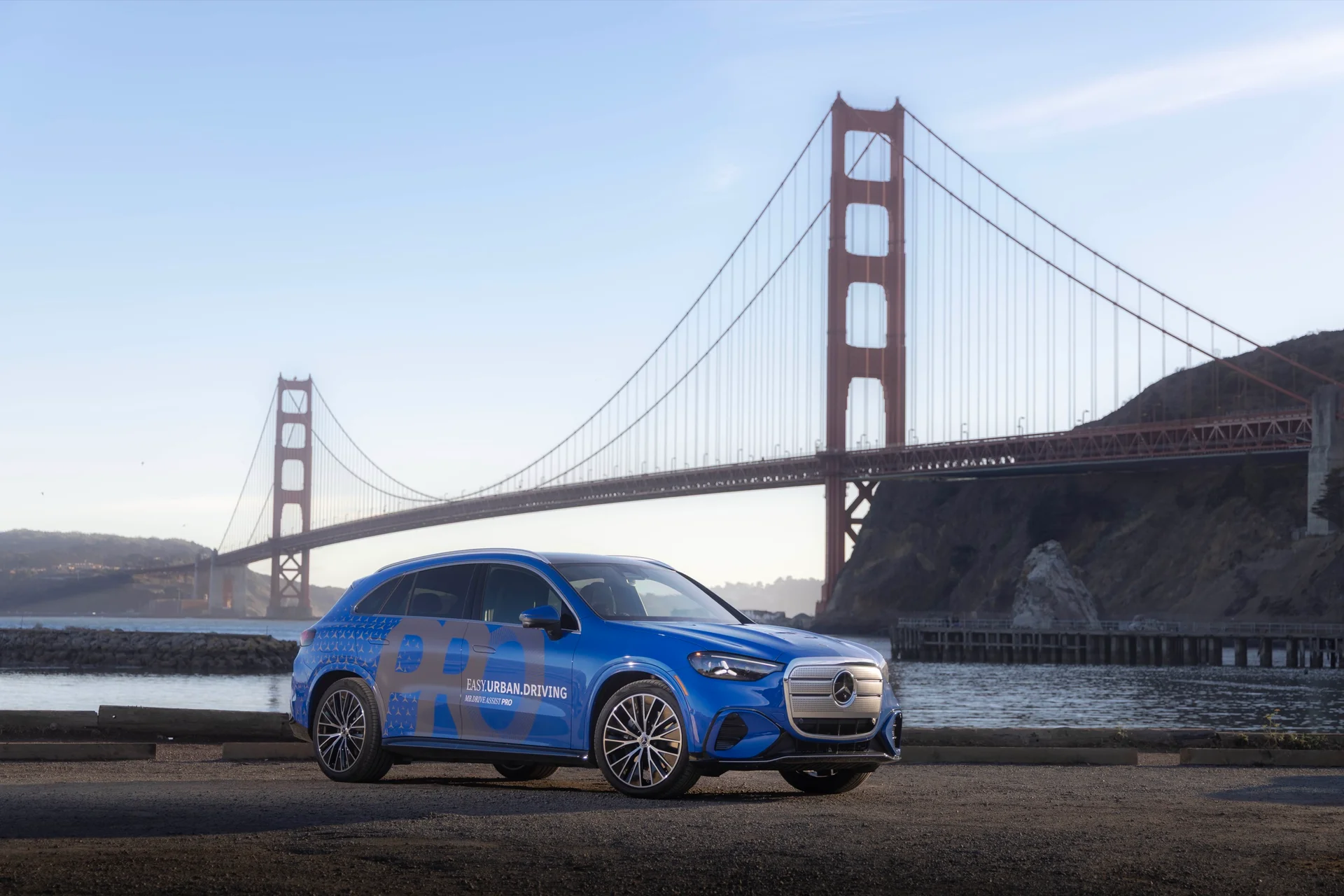
Mercedes hands-free driving is coming to German motorways before the end of 2026. The new Hands-free Assist lets you take your hands off the wheel at up to 130 km/h, and a second feature, Proactive Lane Change Assist, can overtake slower traffic and move across for your exit without asking you first.
Mercedes announced both on 16 November as part of its MB.DRIVE range of driver assistance systems. Cars already on the road can get them too: eligible models will be able to add the features by an over-the-air update once they're rolled out. Which models qualify, and what it costs, will be announced before launch.
How Hands-free Assist works
The system takes over steering, braking and acceleration on the motorway and adapts to the traffic around you, as today's adaptive cruise and lane-keeping systems do, but without the need to keep a hand on the wheel. It works only where Mercedes says the system and operating conditions allow, and the speed limit of 130 km/h matches the recommended maximum speed on German autobahns, so in practice it covers most motorway driving there.
The bigger change is the lane changing. Most of today's motorway assistants need you to start a lane change with the indicator, or at least confirm it. Proactive Lane Change Assist decides for itself when to pull out to pass a slower car, and when to move over to reach the right exit for the route in the satnav. You'll still be the driver in law: Mercedes says you have to keep watching the traffic and be ready to take over at any moment.
This is what new UN rules for driver assistance systems now allow. In January 2026, the UN's expert group on automated vehicles endorsed rules that permit system-initiated manoeuvres such as overtaking without the driver's confirmation, with hands off the wheel on motorways and hands on everywhere else, as long as a camera checks that the driver is looking ahead. Road safety campaigners at the European Transport Safety Council criticised the change, arguing that drivers become less attentive as systems do more, while staying fully responsible for anything the car does.
It's a step back from Mercedes' own Drive Pilot, the Level 3 system approved in Germany in December 2024 for use at up to 95 km/h, which legally allowed drivers to look away from the road. Drive Pilot cost from €5,950 as an option on the S-Class and EQS, but Mercedes paused it in January 2026, and the facelifted S-Class doesn't offer it. Hands-free Assist is a Level 2 system, so your eyes stay on the road, but it works at higher speeds and should reach far more cars.