
Tesla FSD in Europe: Italy becomes the 12th EU country to approve it

For the first time, one of Europe's big car markets has said yes to Tesla's supervised self-driving.

Published

Share:
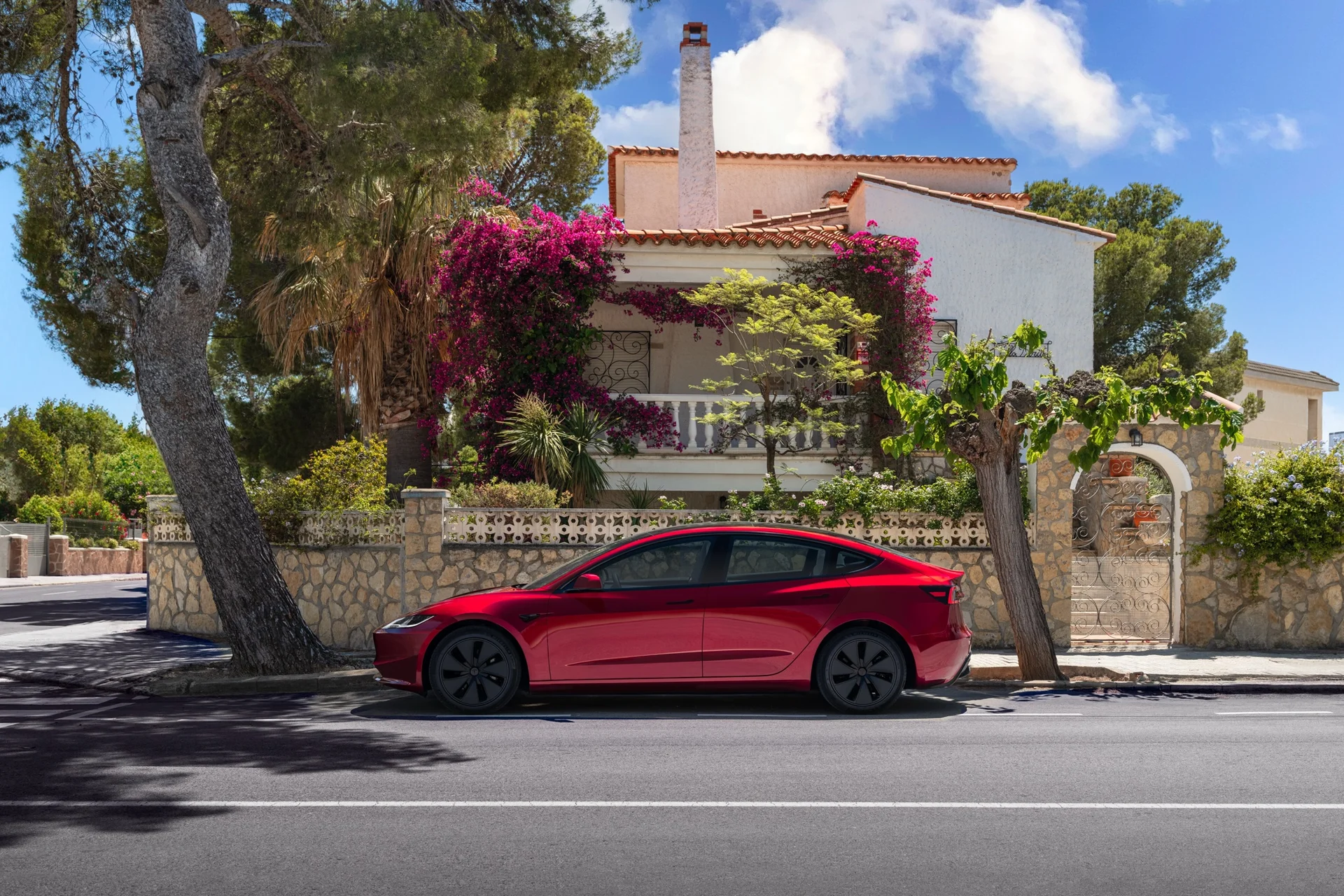
Red Tesla Model 3 parked on a sunny Mediterranean street lined with trees and villas
Courtesy of Tesla, Inc.

Tesla FSD in Europe has its first big market. Italy's transport ministry has given provisional approval to Tesla's supervised self-driving system, sold in Europe as Tesla Assisted Driving, making Italy the 12th EU country to allow it. Transport minister Matteo Salvini announced the decision on 20 November, and Tesla Europe says the rollout will begin soon, without giving a date.

It comes nine days after Finland became the eleventh, but Italy matters more. With 58.9 million people, it has 13.1% of the EU's population, according to Eurostat, almost as much as the eleven earlier countries put together. Most of those are small markets; Italy is the EU's third-largest country after Germany and France.

What Italy has approved

Like the others, Italy is recognising the provisional type approval that the Dutch vehicle authority, RDW, granted in April 2026. EU rules let one country approve a new technology on its own and let others choose to accept that approval while the EU makes up its mind. Italy has gone ahead without waiting for the EU-wide vote, which Salvini had pushed to speed up after talks with Elon Musk in October.

The ministry hasn't published the text of its decision, so the detailed conditions aren't public. What's clear from the other countries is that the system only runs on cars with Tesla's latest hardware, HW4, and that it's still a driver assistance system: you have to watch the road and be ready to take over at any moment, and you're responsible for any speeding fine. In the Netherlands, Tesla charges €99 a month including VAT, and early Italian reports point to the same price, though Tesla hasn't confirmed it.

The approvals so far all build on the same Dutch decision:

CountryApproved
NetherlandsApril 2026
LithuaniaMay 2026
EstoniaMay 2026
DenmarkJune 2026
BelgiumJune 2026
SloveniaSeptember 2026
CzechiaSeptember 2026
CroatiaSeptember 2026
SlovakiaOctober 2026
LatviaOctober 2026
FinlandNovember 2026
ItalyNovember 2026

(Approvals correct at 23 November 2026.)

Get the latest EV news and reviews straight to your inbox

Unsubscribe any time. See our privacy policy.

Stricter driver monitoring for Europe

The Italian decision follows two changes Tesla made to get European regulators on side. In October it renamed FSD (Supervised) as Tesla Assisted Driving, and cut the most it can be set to drive above the speed limit from +50% to +10%, resetting to 0% every time the car starts. We covered those in our article on Tesla Assisted Driving's new speed cap.

On 16 November, RDW approved a second update, sent over the air to HW4 cars, that tightens how the car watches the driver. You'll get attention warnings earlier, and looking away during a manoeuvre counts as a full strike. Above 130 km/h you'll need your hands on the wheel. If you want to drive faster than the maximum speed shown on screen, you have to confirm it with the steering wheel's scroll wheel, and the speed sign pulses red when the car is over it.

That's the opposite of the direction Tesla has taken in the US, where it has relaxed its driver monitoring over the past year. For European owners it means a system that asks more of the driver, which is exactly what the regulators wanted before giving their approval.

The EU vote, Ireland and the UK

The bigger decision is still to come. EU-wide approval needs a qualified majority in the EU's Technical Committee on Motor Vehicles: at least 15 member states representing 65% of the EU's population. The vote is expected in December at the earliest. Germany, with 18.6% of the EU's population, has said it will vote yes. Even with Germany and all twelve approving countries, that's still only a little under half of the EU's population, so Tesla would still need another big country or two, such as Spain or Poland, on its side. France refused national approval in July and Sweden wants the speed offset removed altogether, while Spain is waiting for the EU decision.

An EU-wide approval would cover Ireland without a separate Irish decision. Ireland hasn't recognised the Dutch approval so far, and no Irish date or price has been announced.

The UK is on a separate track. Great Britain left the EU's type-approval system after Brexit, so neither the Dutch approval nor an EU vote applies on British roads, and no British approval has been announced. If you're buying a Tesla to use the system, check that it has HW4 and that it's approved where you live; current cars like the Tesla Model Y have it as standard.