
Tesla is ending Cybertruck production to build more Cybercabs

Tesla's most divisive car bows out after three and a half years, having never officially reached Europe.

Published

Share:
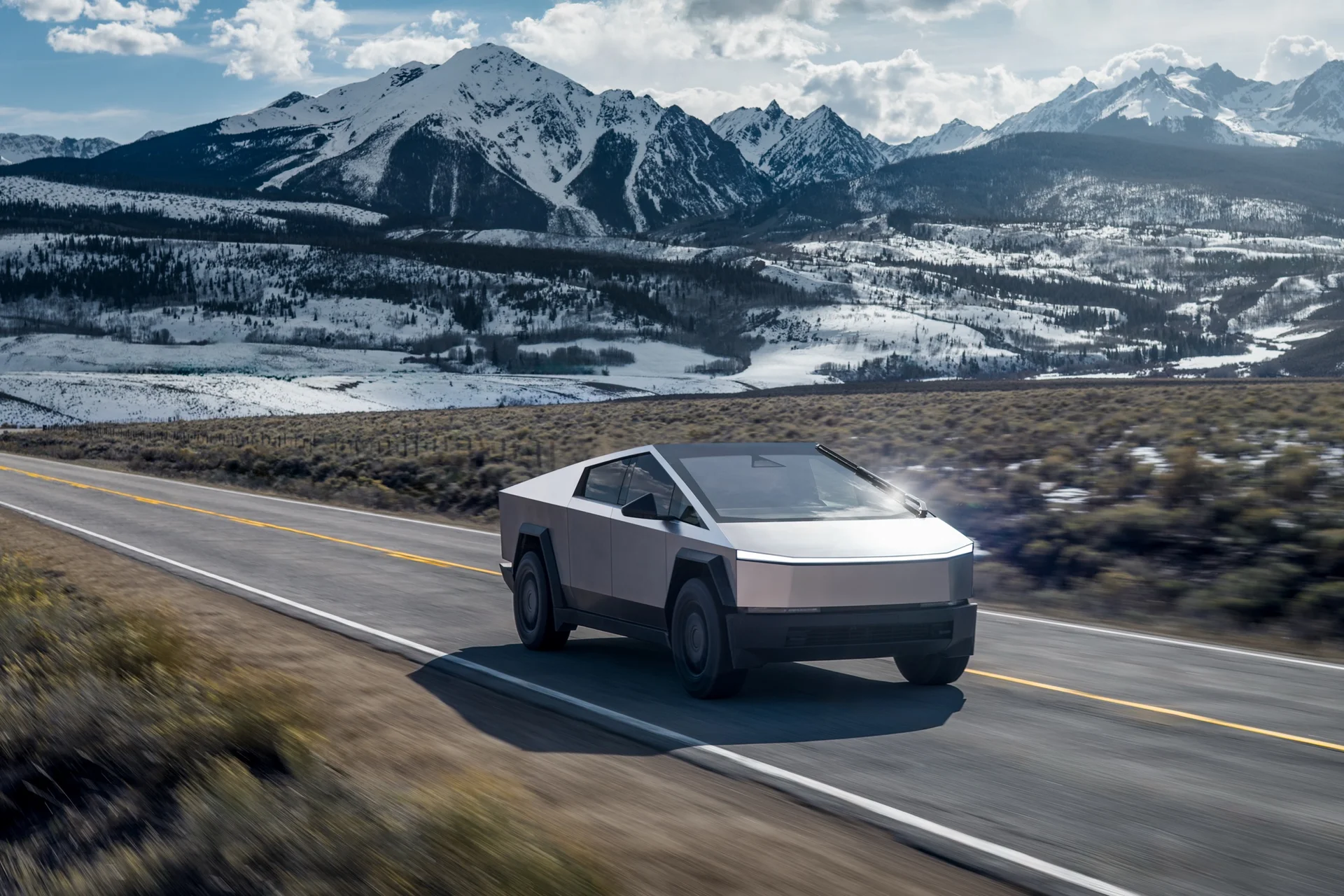
Tesla Cybertruck driving along a mountain road
Courtesy of Tesla, Inc.

The Cybertruck is coming to an end. Elon Musk said on X on 6 November that Tesla will wind down production at Gigafactory Texas around the middle of 2027 "to make room for increased Cybercab production", about three and a half years after the first deliveries.

Musk didn't say whether production could move elsewhere, but Giga Texas is the only Tesla factory known to be set up to build it, so this looks like the end of the model. Lead engineer Wes Morrill has said Tesla will keep supplying spare parts and that service will continue, which is the main thing existing owners need to know. The truck was unveiled in November 2019 and reached its first customers in November 2023.

Why the Cybertruck is being dropped

Tesla's stated reason is factory space, but the sales figures tell a different story. Tesla built the Cybertruck line for 250,000 trucks a year, and its latest shareholder update lists installed capacity of more than 125,000. Kelley Blue Book counted 20,237 sold in the US last year, down 48% from 38,965 in 2024, and 11,586 in the first nine months of 2026, which was another 28% drop. That US total for last year is about 8% of what the line was built for. With Tesla also saying Giga Texas has over 10 million square feet of floor space, it's hard to see a shortage of room as the whole explanation.

Tesla doesn't publish Cybertruck deliveries separately. They sit in an "Other Models" category that also includes the Semi and the last Model S and Model X cars, and that figure was 8,295 in the third quarter, 48% down on a year earlier. Some of the buyers have also been close to home: SpaceX bought 1,279 Cybertrucks in the last quarter of 2025, and Musk's companies together accounted for about 19% of US registrations that quarter, according to S&P Global Mobility data.

Prices have been going up lately. A cheaper dual-motor version launched this year at $59,990 and went up to $69,990 about 10 days later, before an increase of $5,000 in August took the cheapest Cybertruck to $74,990. Last month Tesla also cancelled Cybertruck reservations in Australia and New Zealand, nearly seven years after taking them, and US regulators have listed 11 recalls since the truck went on sale.

Get the latest EV news and reviews straight to your inbox

Unsubscribe any time. See our privacy policy.

What the Cybercab gets

The factory space is going to the Cybercab, the two-seat robotaxi with no steering wheel or pedals. It went into production this year and is built on a separate "unboxed" line, where large sections of the car are put together before final assembly, with Tesla aiming eventually for one every 10 seconds. Paid rides in a small fleet began in Austin in September, and Musk says most Cybercabs will be owned by Tesla and run in its own robotaxi service. Morrill describes the Cybertruck as a technology development platform that lives on in the Cybercab, and the two share its 48V electrical system, steer-by-wire and Etherloop wiring.

It's a big bet on a car that isn't yet proven. US safety regulators opened an audit in September into whether Tesla properly self-certified the Cybercab against federal safety standards, and it's a much smaller operation than Tesla's car business for now. Together with the end of the Model S and Model X, whose Fremont production space has gone to the Optimus humanoid robot, this leaves Tesla looking more and more like a company built around autonomy, with the Model 3 and Model Y doing nearly all of the selling. Those two delivered more than 467,000 cars between them in the second quarter.

What it means for European buyers

Directly, very little: the Cybertruck has never been sold officially in Europe or the UK. Its stainless steel body and sharp edges are a poor match for European pedestrian protection rules, and Tesla never brought it here. Nothing changes for buyers of the Model 3 and Model Y.

The only route for now is through independent importers, and a Swiss project shows how hard that is. Engineering firm werk.lab and Tesla specialist Revoltaris are seeking Swiss type approval for the all-wheel-drive Cybertruck and the Cyberbeast, and plan to start offering them in 2027, without any involvement from Tesla.

Getting there has meant fitting a new carbon front section with foam behind the bumper to protect pedestrians' legs, carbon edge protectors to meet the rules on sharp external edges and side indicators, which the US truck doesn't have. The asking prices are about CHF 155,000 for a low-mileage used all-wheel-drive truck and CHF 189,000 for a Cyberbeast. Both the CHF 175 reservation and the CHF 2,000 early delivery slot are non-refundable, even if the project fails.

Swiss approval wouldn't automatically open up the EU, where other routes such as national individual approval would be needed. Buyers also give up Tesla's factory warranty, navigation and automatic battery preconditioning before rapid charging, and the truck needs adapters for CCS and Type 2 charging. With Tesla promising only to keep parts and service going, and those parts having to come from the US, a European Cybertruck is likely to stay very much a collector's item.