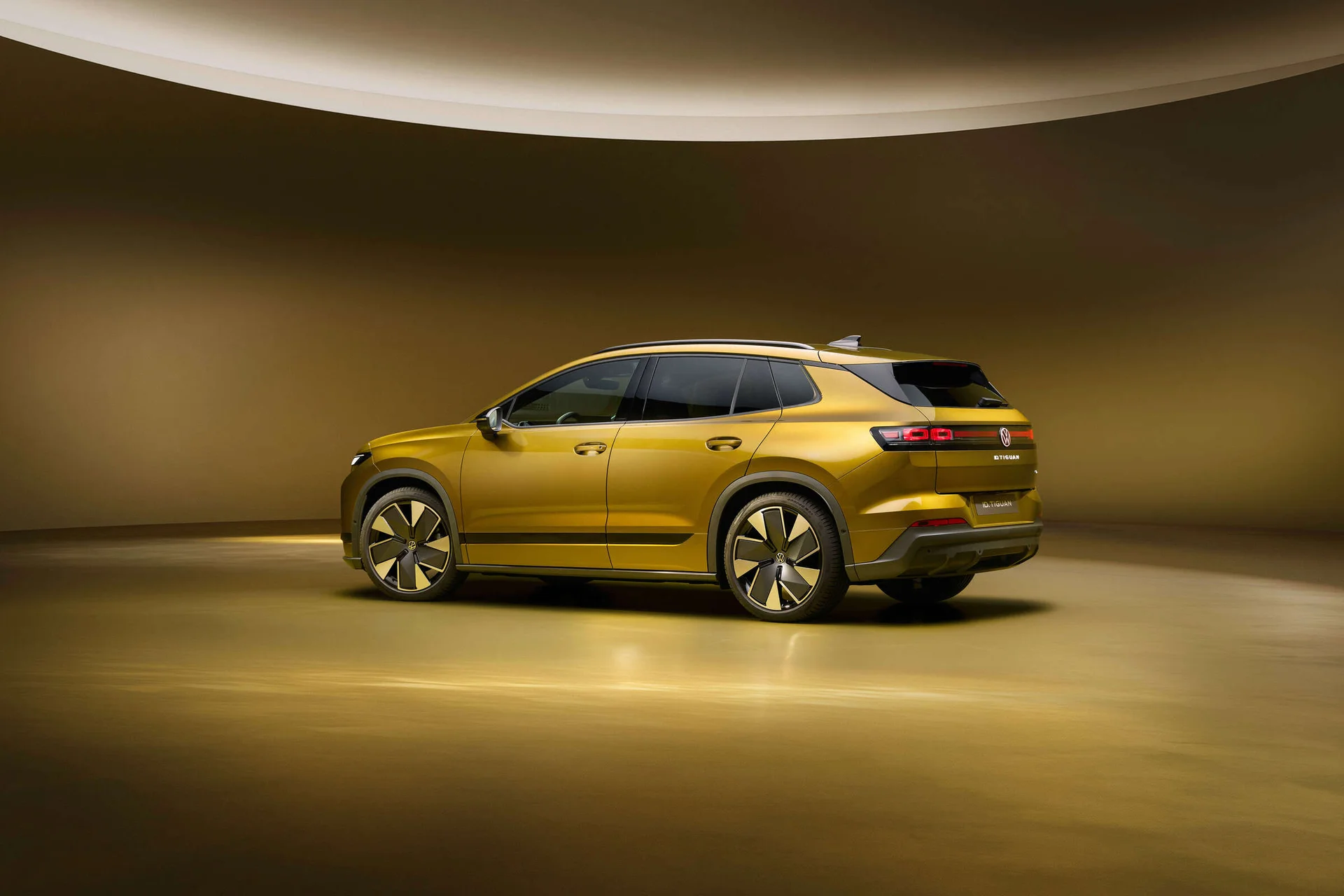
The Volkswagen ID. Tiguan, the electric SUV that replaces the ID.4, costs from €38,635 in Ireland. Volkswagen Ireland says orders open on 9 November, with the first cars arriving in April 2027.
That entry price is for the Life with the 58 kWh battery and includes the SEAI grant and VRT relief. It matters more than most launches: the ID.4 is Ireland's best-selling electric car in 2026, and in October it was the country's best-selling new car of any kind.
Volkswagen ID. Tiguan prices and trims
Three versions are available to order in Ireland at launch, with a sportier R-Line to follow later.
| Version | Battery | WLTP range | Price |
|---|---|---|---|
| Life | 58 kWh | up to 450 km (280 miles) | €38,635 (Ireland) |
| Life | 77 kWh | up to 600 km (373 miles) | €43,821 (Ireland) |
| Launch Edition | 58 kWh | up to 450 km (280 miles) | €43,821 (Ireland) |
| Entry model | 58 kWh | up to 450 km (280 miles) | from €42,695 (Germany) |
| UK | not yet announced |
(Prices correct at 4 November 2026. The Irish entry price includes the SEAI grant and VRT relief. German prices are before any incentives.)
The bigger battery costs €5,186 more in Ireland and adds up to 150 km of WLTP range. The Launch Edition costs the same as the Life 77 kWh but keeps the smaller battery, and spends the difference on equipment instead: 20-inch alloy wheels, metallic paint, a panoramic sunroof, tinted windows, a powered tailgate and an exterior style pack.
Equipment highlights include 19-inch alloys, heated front seats, a heated steering wheel, three-zone climate control, a 15-inch touchscreen, a 10-inch driver display, a parking camera and wireless phone charging. Volkswagen Ireland hasn't said which of those are standard on the Life.
Every Irish version stays under the €50,000 price limit for the SEAI grant of up to €3,500 that applies to applications from 1 August 2026, and should qualify for VRT relief, which Budget 2027 extended to the end of 2028. In Germany, the ID. Tiguan costs €2,115 more than the ID.4 it replaces, which starts at €40,580 there.
Range, charging and performance
The ID. Tiguan comes with two batteries and three power outputs. According to Volkswagen, the 58 kWh version has 140 kW (190 hp), rear-wheel drive and a WLTP range of up to 450 km. The 77 kWh battery comes with either 210 kW (286 hp) and rear-wheel drive, for up to 600 km, or 220 kW (299 hp) and all-wheel drive, for up to 560 km (348 miles).
Charging is where the two batteries differ most. The 58 kWh battery charges at up to 105 kW on a DC charger and goes from 10 to 80% in about 26 minutes, which adds roughly 315 km (196 miles) of WLTP range. The 77 kWh battery peaks at 165 kW and takes about 29 minutes for the same 10-80%, adding around 420 km (261 miles). Every version has an 11 kW on-board charger for home and AC public charging.
The rear-wheel-drive 58 kWh model reaches 0-100 km/h in 8.5 seconds and has a top speed of 160 km/h (99 mph). The 210 kW version cuts that to 6.7 seconds, the all-wheel-drive model to 6.1 seconds, and both top out at 180 km/h (112 mph). Towing capacity is 1,800 kg for the 58 kWh car and 2,000 kg for the 77 kWh versions.
At 4.62 m long, with a 2.77 m wheelbase, the ID. Tiguan is a mid-size SUV like the ID.4. Volkswagen quotes up to 534 litres of boot space, plus a 32-litre front boot.
When you can get one
Irish orders open on 9 November, and Volkswagen Ireland expects deliveries in April 2027, after the busy 271 registration period.
Volkswagen opened pre-sales in Germany and many other European countries on 13 October. UK prices and order dates haven't been announced.
The ID. Tiguan is one of five new electric Volkswagens for Ireland. The updated ID.3 Neo and the ID. Polo are already in showrooms, the ID. Cross compact SUV arrives in February 2027 and the ID. Polo GTI in March, with an ID.3 GTI expected later in 2027. Volkswagen Ireland hasn't yet published prices for those models.
(Prices and specifications correct at 4 November 2026.)