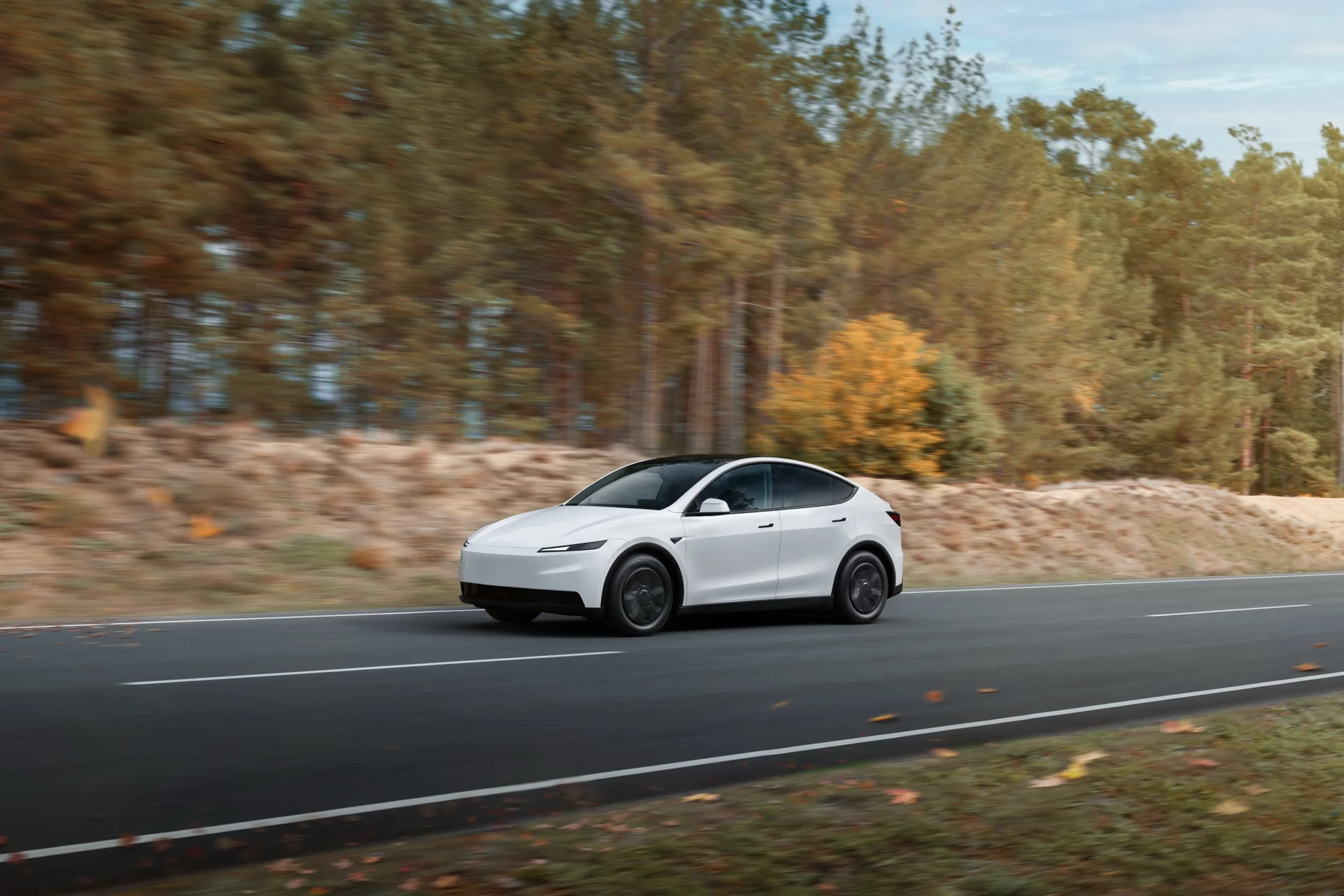
Latvia has become the tenth EU country to approve Tesla's Full Self-Driving (Supervised), which Tesla now calls Tesla Assisted Driving in Europe. The UK isn't on the list: the system isn't approved for British roads, and Tesla hasn't given a UK launch date.
Latvia's Road Traffic Safety Directorate (CSDD) announced on 26 October that it recognises the provisional EU type approval issued in the Netherlands, and Tesla Europe says the rollout to Latvian owners will begin soon.
How Tesla FSD got approved in Europe
The approvals all go back to one decision. On 10 April 2026, the Dutch vehicle authority RDW granted a European type approval for FSD (Supervised), valid only in the Netherlands for now. It was the first approval in Europe, and it followed more than a year and a half of testing on RDW's test track and on public roads, including over 3,000 hours of its own tests and data from 1.8 million km driven with the system in Europe.
Other EU countries can then choose to recognise the Dutch approval on their own territory. The ten that have done so are the Netherlands, Lithuania, Estonia, Denmark, Belgium, Slovenia, Czechia, Croatia, Slovakia and Latvia. Latvia's CSDD says it based its decision on RDW's documentation, discussions with other national authorities and changes Tesla made to the software: a lower limit on how far over the speed limit the car can be set to drive, stronger driver monitoring, and speed offsets that reset after each trip.
Despite the name, the car doesn't drive itself. RDW is clear that "a vehicle with FSD Supervised is not self-driving". It's a Level 2 driver assistance system that can take over steering, braking and acceleration on many roads, but the driver stays responsible and must be ready to take control at any moment. A camera checks that your eyes are on the road, though your hands don't have to stay on the wheel. Reading or looking away isn't allowed, and repeated inattention can lock you out of the system for a while. CSDD adds that drivers remain liable for traffic offences and accidents, and that snow, mud and road salt can affect the cameras.
In the Netherlands, Tesla charges a subscription of €99 a month including VAT, which works out at €1,188 a year. RDW says the European software isn't the same as the US version, because EU rules on driver assistance are stricter, and since the approval it has raised the frequency of Tesla's mandatory safety reports from yearly to monthly. RDW says nearly 40,000 Teslas have driven about 24 million km with the system in the Netherlands without relevant incidents.
Tesla FSD in the UK and Ireland
For UK owners, the Dutch approval doesn't help. Great Britain left the EU's vehicle type-approval system after Brexit, so a decision by RDW, or even an EU-wide approval, doesn't apply on British roads. Tesla would need approval from British regulators, and no such approval has been announced. Tesla hasn't given a date for a UK launch.
The UK is writing its own rules for automated driving. The Automated Vehicles Act 2024 sets up a legal framework for self-driving cars, where the company rather than the driver is responsible while the system is in control, and the government's implementation programme aims to bring it into force in 2027. That law is aimed at genuinely self-driving cars, though. Supervised FSD, where you're still the driver, is a driver assistance system and would be approved separately.
Ireland is part of the EU system, so its route is shorter. In May, the Department of Transport confirmed that Tesla was in talks with the National Standards Authority of Ireland (NSAI), and that Ireland could allow the system if the EU approved it. Ireland hasn't recognised the Dutch approval so far, and no Irish launch date or price has been announced.
What's next
The bigger step is EU-wide approval. RDW has applied to the European Commission for the approval to cover the whole EU, which needs a majority vote of member states in the responsible committee. If it passes, Tesla could offer the system in every EU country, including Ireland, without waiting for each national regulator.
The vote is now expected in December, and Tesla needs a qualified majority of at least 15 countries. Germany has reportedly said it will back the system if Tesla renames it, which it has now done, and limits how far over the speed limit it can drive, while France and Sweden have objected to the speed offset feature. None of the EU governments involved has published its position.
For UK drivers, that vote won't change anything directly. Until a British regulator approves the system, Tesla owners in Great Britain will have to make do with Tesla's existing Autopilot features.
(Prices and approvals correct at 29 October 2026.)