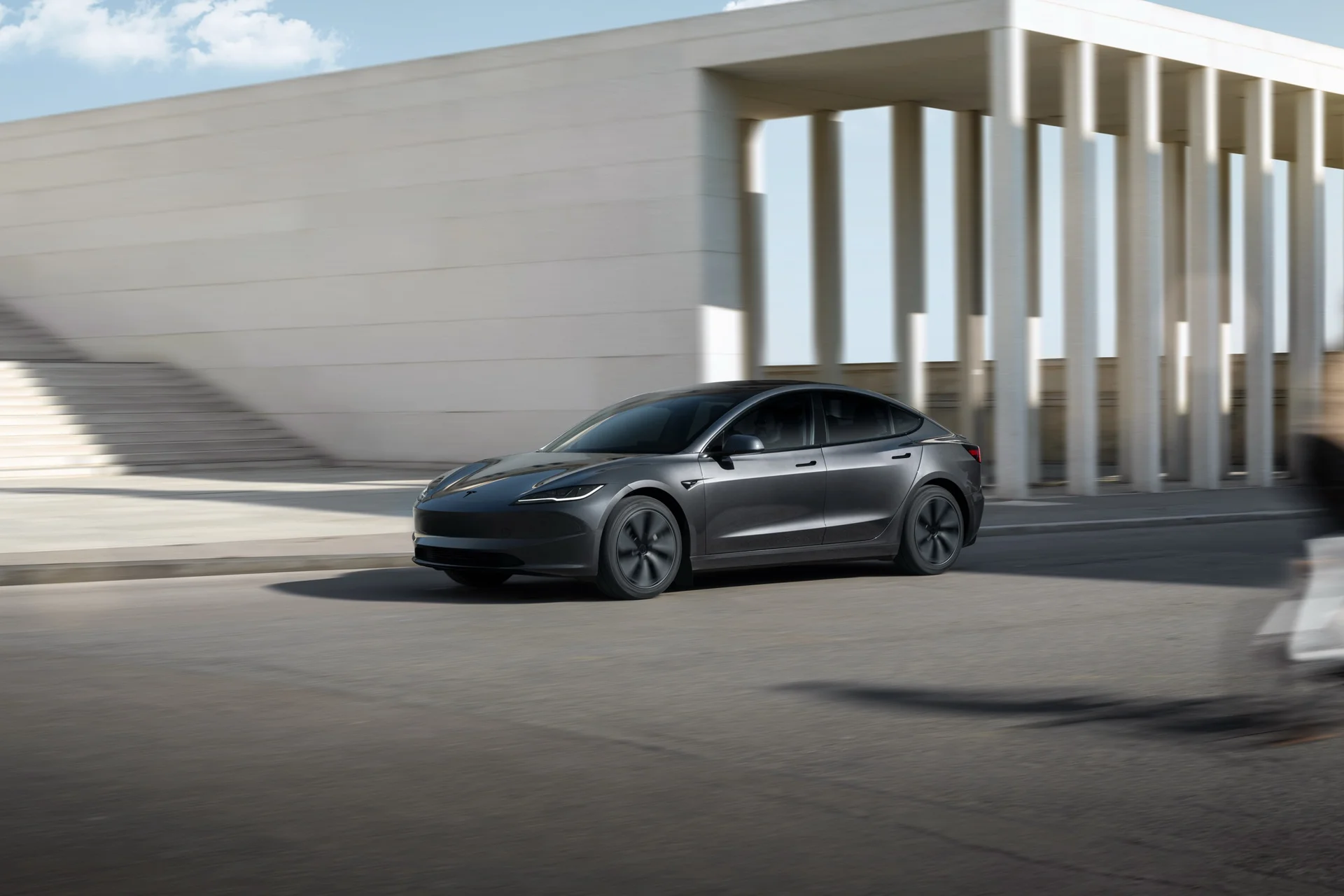
Tesla FSD in Europe has a new name and a much tighter speed limit. On 3 November, the Dutch vehicle authority RDW approved an update that renames FSD (Supervised) as Tesla Assisted Driving and cuts the most the system can be set to drive above the speed limit from +50% to +10%.
The changes arrive over the air on cars with Tesla's hardware 4.0 (HW4) or later, in the ten EU countries where the system is already allowed. They're also the two conditions Germany set for backing an EU-wide approval, which makes them more important than they look.
What changes for Tesla owners
The biggest change is the speed margin. Tesla Assisted Driving can be set to drive a percentage above or below the posted limit, which RDW describes as a margin for safety and traffic flow. Until now that margin could go up to +50%. From this update it's capped at +10%, and it resets to 0% every time you start the car. Other speed-related functions are also switched off by default at each start.
In practice that's a big difference. On a road with a 100 km/h (62 mph) limit, the old maximum allowed the system to be set to 150 km/h (93 mph); now it's 110 km/h (68 mph). On a 130 km/h (81 mph) motorway, the ceiling drops from 195 km/h (121 mph) to 143 km/h (89 mph). In a 50 km/h (31 mph) zone it's 55 km/h (34 mph), not 75 km/h (47 mph). And because the margin goes back to zero at every start, drivers who want any offset have to choose it again each trip.
The new name appears on the touchscreen, in the owner's manual and in other driver information. RDW says the rename doesn't change how the system works. It's still a driver assistance system: the car can steer, brake and accelerate on many roads, but the driver stays responsible and must be ready to take over at any moment.
RDW says it checked how Tesla had implemented the changes and how the car behaves with them, and found no adverse or unintended effects on the system or the car's driving. Because the changes are minor, the April 2026 type approval stays valid under the same conditions and didn't need amending. RDW has informed the nine other countries that recognise its approval: Belgium, Croatia, Czechia, Denmark, Estonia, Latvia, Lithuania, Slovakia and Slovenia.
Nothing changes on price. In the Netherlands, Tesla charges €99 a month including VAT for the system, or €1,188 a year.
Why it matters for the EU vote
So far, Tesla Assisted Driving is only legal country by country. RDW granted a provisional European type approval in April, valid in the Netherlands, and nine other member states have chosen to recognise it on their roads. To offer the system everywhere in the EU, Tesla needs an EU-wide approval, which is being assessed by the Technical Committee on Motor Vehicles (TCMV), made up of member-state representatives.
That vote needs a qualified majority: at least 15 of the 27 member states, together representing at least 65% of the EU's population. The ten countries that already allow the system are mostly smaller ones, so the larger countries decide the outcome. Germany, the EU's most populous country, said it would back EU-wide approval if Tesla renamed the system and capped the speed offset at 10%. Both conditions are now met. Italy, the third most populous, said on 29 October that it supports a swift European approval, after Deputy Prime Minister and Transport Minister Matteo Salvini spoke with Elon Musk. Italy hasn't approved the system for its own roads.
Not everyone is convinced. Sweden, France and the European Transport Safety Council have raised concerns about speeding, which is the issue this update targets. Croatia shared those concerns but has since approved the system. RDW says the TCMV's discussions are confidential and won't comment on them. The vote is now expected in December at the earliest.
The approvals so far cover HW4 cars only, and an EU-wide approval is expected to follow suit. Owners of older HW3 cars will most likely have to wait for Tesla's planned hardware upgrade.
Ireland and the UK
Ireland is part of the EU system, so an EU-wide approval would cover Irish roads without a separate national decision. Ireland hasn't recognised the Dutch approval so far, and Tesla hasn't announced an Irish launch date or price.
The UK is on a different track. Great Britain left the EU's type-approval system after Brexit, so neither RDW's approval nor an EU vote applies on British roads. Tesla would need approval from British regulators, and none has been announced. UK owners are still limited to Tesla's existing Autopilot features.
(Prices and approvals correct at 4 November 2026.)