
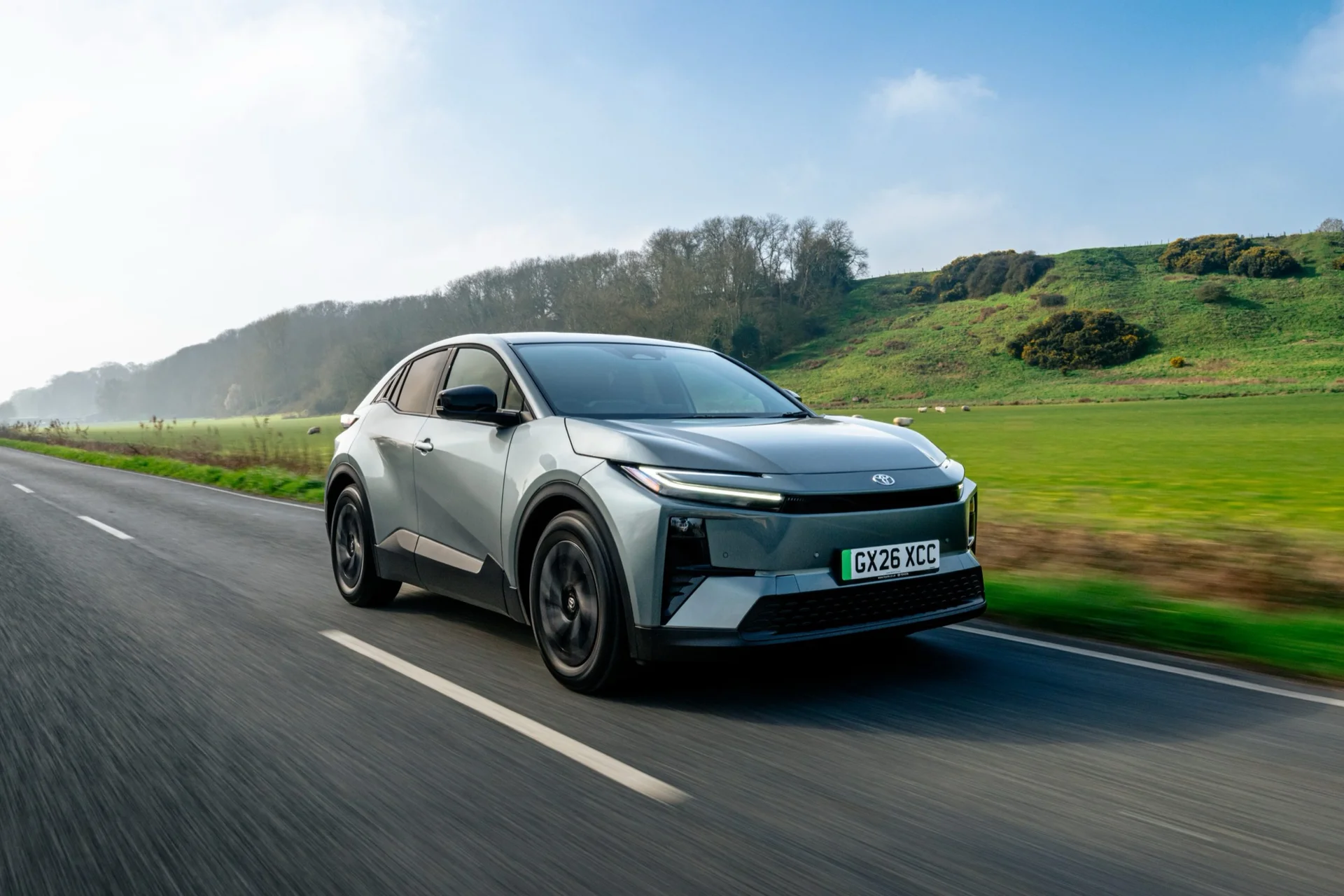
The C-HR has spent a decade being the Toyota for people who don't want to be seen in a sensible Toyota, all creases and attitude over a hybrid that sips fuel. In this Toyota C-HR+ review we look at the first fully electric version, which keeps the coupé roofline but is a different car underneath. The big-battery version manages 607 km (376 miles) on the WLTP cycle. It starts at €37,444 in Ireland, including the SEAI grant and VRT relief, and at £32,995 in the UK with the Electric Car Grant.
It's built on the same eTNGA platform as the bZ4X, and Toyota sells it alongside the petrol-electric C-HR rather than in place of it. Every version charges from 10% to 80% in about 28 minutes.
Key specs
| 57.7kWh FWD | 77kWh FWD | 77kWh AWD | |
|---|---|---|---|
| Irish price | from €37,444 | not listed | not listed |
| UK price | £32,995 (with grant) | from £35,495 (with grant) | not sold in the UK |
| Battery (usable) | 54kWh | 72kWh | 72kWh |
| WLTP range | 458 km (284 miles) | 607 km (376 miles) | 501-507 km |
| Peak DC charging | 150 kW | 150 kW | 150 kW |
| 10-80% DC charge | about 28 minutes | about 28 minutes | about 28 minutes |
| AC charging | 11 kW | 11 kW (22 kW on UK Excel) | 22 kW |
| Power | 123 kW (167 hp) | 165 kW (224 hp) | 252 kW (343 hp) |
| 0-100km/h | 8.4 seconds | 7.3 seconds | 5.2 seconds |
| Boot | 416 litres | 416 litres | 416 litres |
| Length | 4,530 mm | 4,530 mm | 4,530 mm |
| Grants | SEAI; UK £1,500 | SEAI; UK £1,500 | n/a in UK |
(Prices correct at 29 October 2026. The Irish price includes the €3,500 SEAI grant and VRT relief and excludes delivery. UK prices are on the road and include the £1,500 Electric Car Grant.)
Prices and trims
The C-HR+ is priced to sit just below the bZ4X, which is the larger, more practical Toyota on the same platform. Across Europe, the cheapest version is about €37,000-€42,000 before local incentives.
| Market | Entry price | Range-topper |
|---|---|---|
| Ireland | €37,444 (Sport, 57.7kWh) | not listed |
| Netherlands | €37,995 | not listed |
| Germany | €41,990 (Active) | €53,990 (Lounge AWD) |
| France | €35,600 (with Toyota discount) | not listed |
| UK | £34,495 (£32,995 with grant) | £40,995 (£39,495 with grant) |
(Prices correct at 29 October 2026. German prices are Toyota's list prices before delivery. The French price includes a €4,000 Toyota discount for private buyers on orders placed by 2 November 2026.)
In Ireland, Toyota lists the C-HR+ Sport with the 57.7kWh battery from €37,444. That includes the €3,500 SEAI grant and the maximum VRT relief, and excludes delivery. Toyota Ireland's site also describes the 77kWh version and its 606 km range, but doesn't list a price for it yet.
UK buyers choose from three trims, all front-wheel drive. The Icon costs £34,495 on the road, or £32,995 after the grant, and comes with the smaller battery, 18-inch alloys, a 14-inch touchscreen, a 7-inch digital driver display, a heated steering wheel, two wireless phone chargers, wireless Apple CarPlay and Android Auto, and blind-spot monitoring with Safe Exit Assist, which warns you before you open a door into a passing cyclist.
The Design is the one most buyers should look at. It costs £36,995, or £35,495 with the grant, and adds the 77kWh battery, a powered tailgate and rear privacy glass, with 20-inch wheels as a £1,250 option. The Excel costs £40,995, or £39,495 with the grant, and adds a powered driver's seat, a 360-degree camera, front cross-traffic alert, lane change assist, headlight washers and a 22 kW on-board charger. Its £905 Premium Pack brings a JBL sound system and a fixed glass roof.
The C-HR+ falls into Band 2 of the UK Electric Car Grant, so it gets £1,500 rather than the full £3,750 that some rivals qualify for. In Germany, Toyota is taking €7,000 off for private buyers on orders until the end of 2026, and eligible buyers can get up to €6,000 more from the new state incentive.
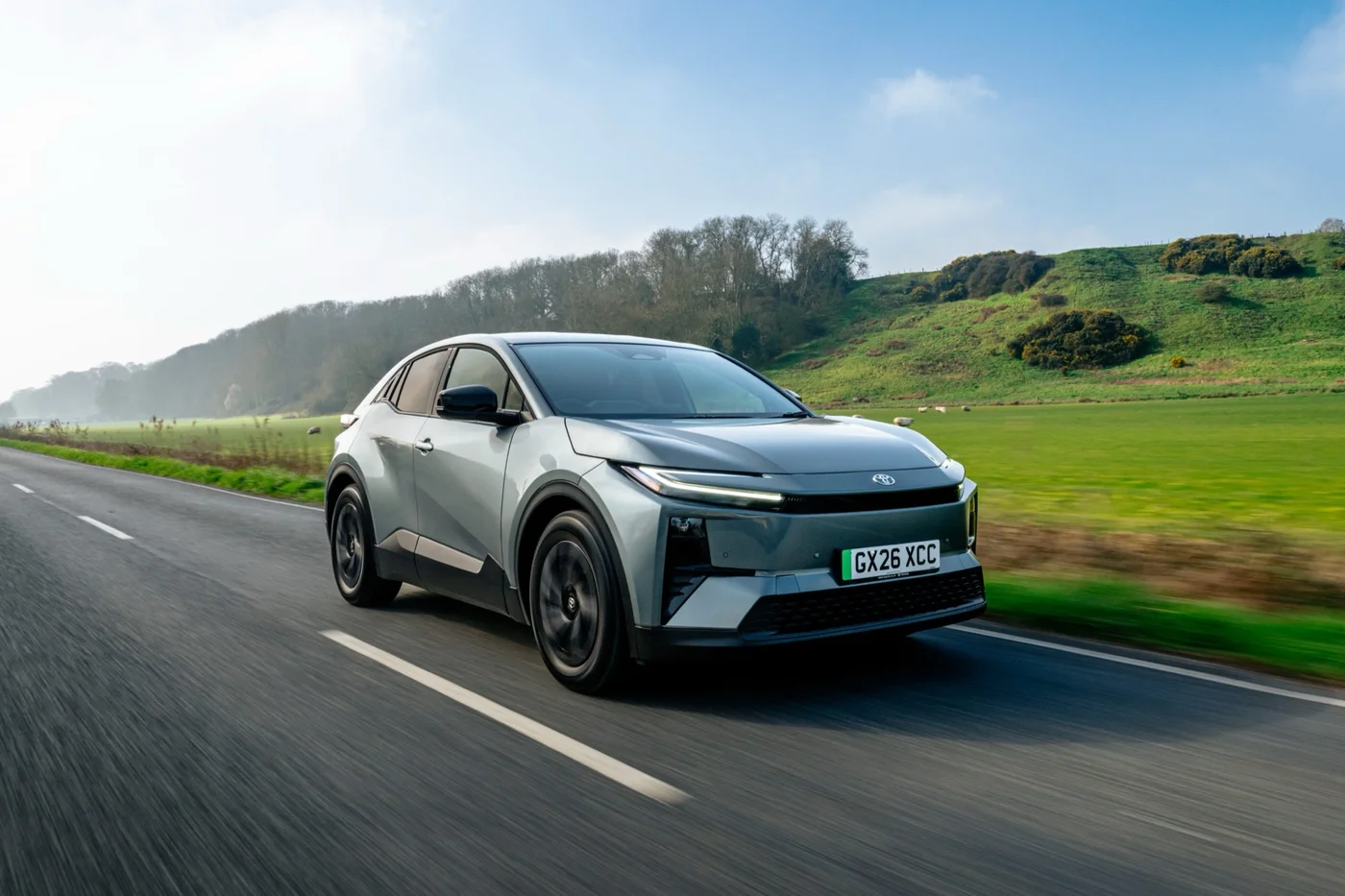
Source: Toyota
Battery, range and charging
There are two batteries: 57.7kWh gross (54kWh usable) and 77kWh gross (72kWh usable). The smaller one gives 458 km (284 miles) on the WLTP cycle, the larger one 607 km (376 miles) in front-wheel-drive form. That's enough for most people to charge once a week, and long motorway days need one stop rather than two. The UK Excel's bigger 20-inch wheels cut its official range to 344 miles.
Efficiency is the C-HR+'s strong point. Toyota quotes 13.4 kWh/100km for both front-wheel-drive versions, which is very good for an SUV this size and helps explain why the big battery goes so far. The all-wheel-drive version uses 15.5-15.7 kWh/100km and manages 501-507 km.
All versions charge at up to 150 kW on DC, and 10-80% takes about 28 minutes. That's on a par with the Kia EV3 (29-31 minutes) and quicker than the Nissan Leaf (35 minutes), and every C-HR+ has battery preconditioning, and Toyota says the 28 minutes still applies at -10°C if you warm the battery for 40 minutes first. You can start it manually from the touchscreen or schedule it before you leave.
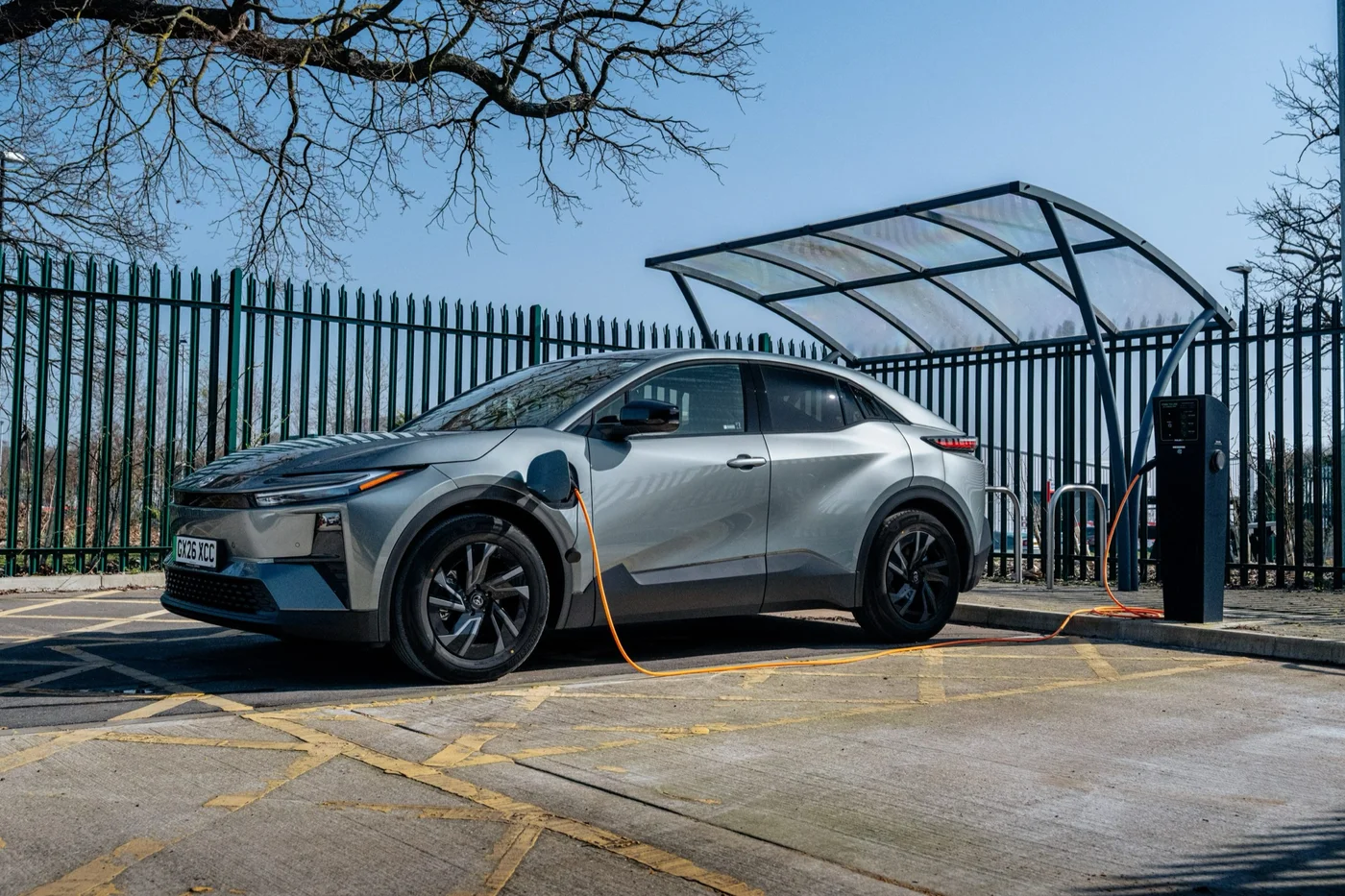
Source: Toyota
On AC, most versions have an 11 kW charger, which fills the 77kWh battery from 10% to 100% in about seven hours on a three-phase wallbox. The UK Excel and the European all-wheel-drive car have a 22 kW charger, which cuts a full charge to about 3.5 hours on a fast public AC post.
Performance
The entry version has 123 kW (167 hp) and does 0-100km/h in 8.4 seconds (0-62mph in the same time in the UK), which is brisk enough. Top speed is 140 km/h (86 mph), which is low, but you'd only notice it on a German Autobahn.
The 77kWh front-wheel-drive car has 165 kW (224 hp), cuts the 0-100km/h time to 7.3 seconds and has a top speed of 160 km/h (99 mph). Both share the same front motor torque figure of 268.6 Nm.
In Europe there's also an all-wheel-drive version with a second, 88 kW motor at the back, for 252 kW (343 hp) in total. It does 0-100km/h in 5.2 seconds and reaches 180 km/h. It isn't offered in the UK.
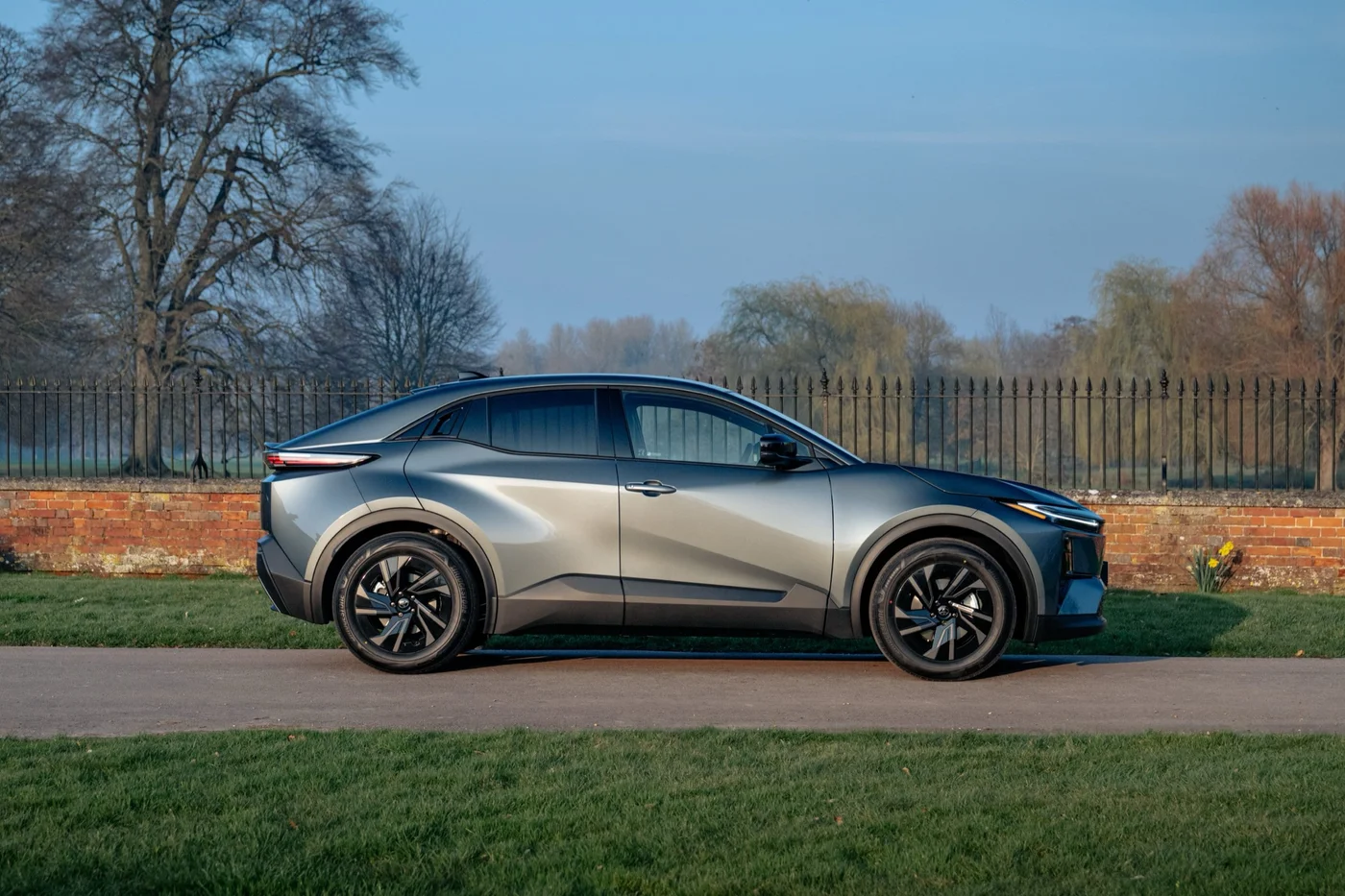
Source: Toyota
Size and practicality
At 4,530 mm long, 1,870 mm wide and 1,595 mm tall, the C-HR+ is a mid-size SUV, and it sits on a long 2,750 mm wheelbase, which frees up rear legroom. The coupé roofline is lower at the back than a boxier SUV's, so try the rear seats if you carry tall passengers.
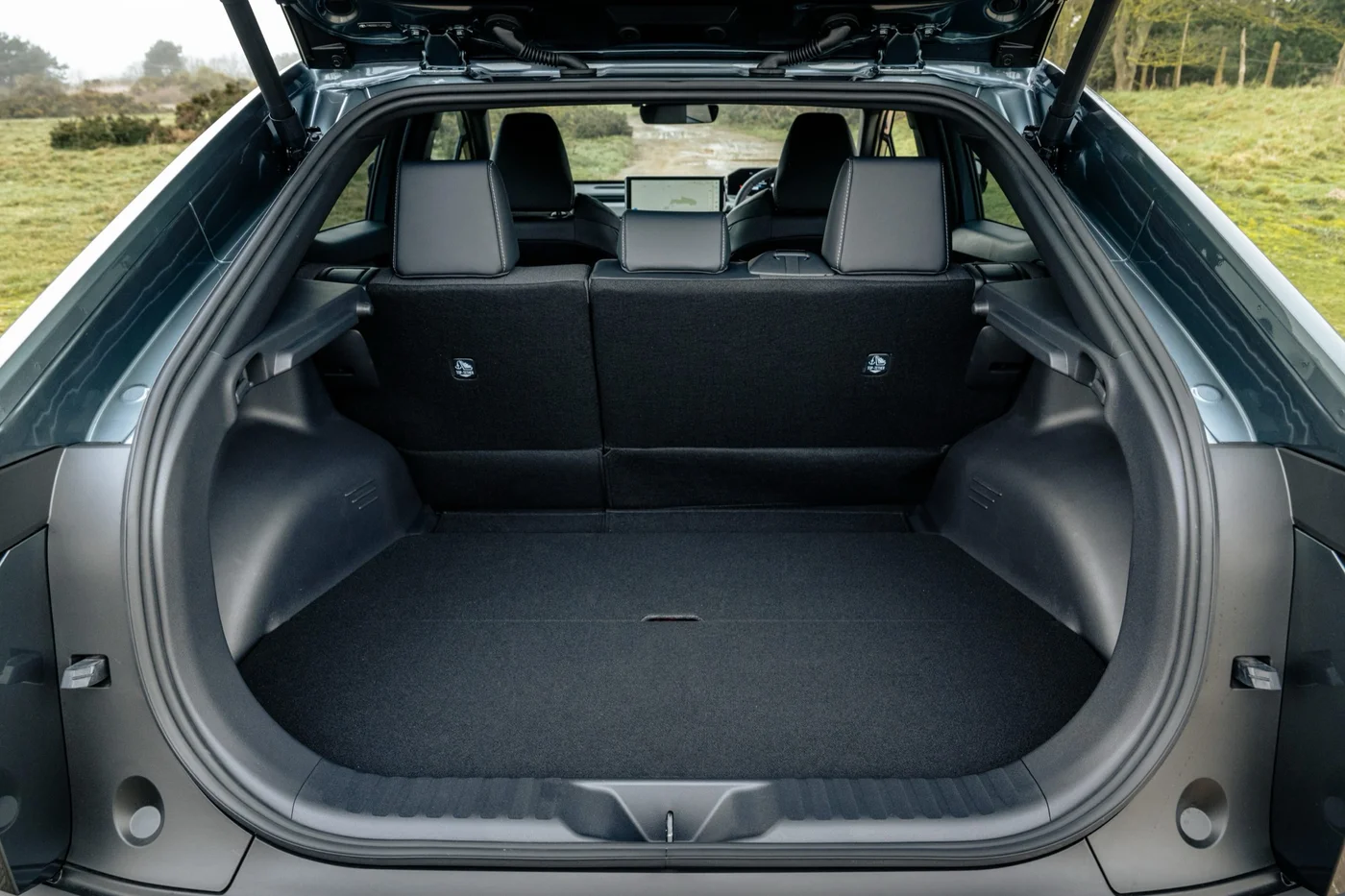
The boot holds 416 litres, measured to the parcel shelf and including the underfloor compartment, which is a useful place to keep the charging cables. That's more than the hybrid C-HR and about average for the class. The rear seats split 60:40 and fold to leave an almost flat floor. Toyota doesn't quote a front storage compartment.
Source: Toyota
Towing is modest. The 77kWh front-wheel-drive car can pull 750 kg, braked or unbraked, enough for a small trailer but not a caravan. The 57.7kWh car isn't rated to tow at all in Germany, and Toyota UK's tow bar options are only for the Design and Excel. The European all-wheel-drive version can tow 1,500 kg. Ground clearance is 182-185 mm, and the kerb weight ranges from 1,810 kg to 1,950 kg in the UK.
Tech and equipment
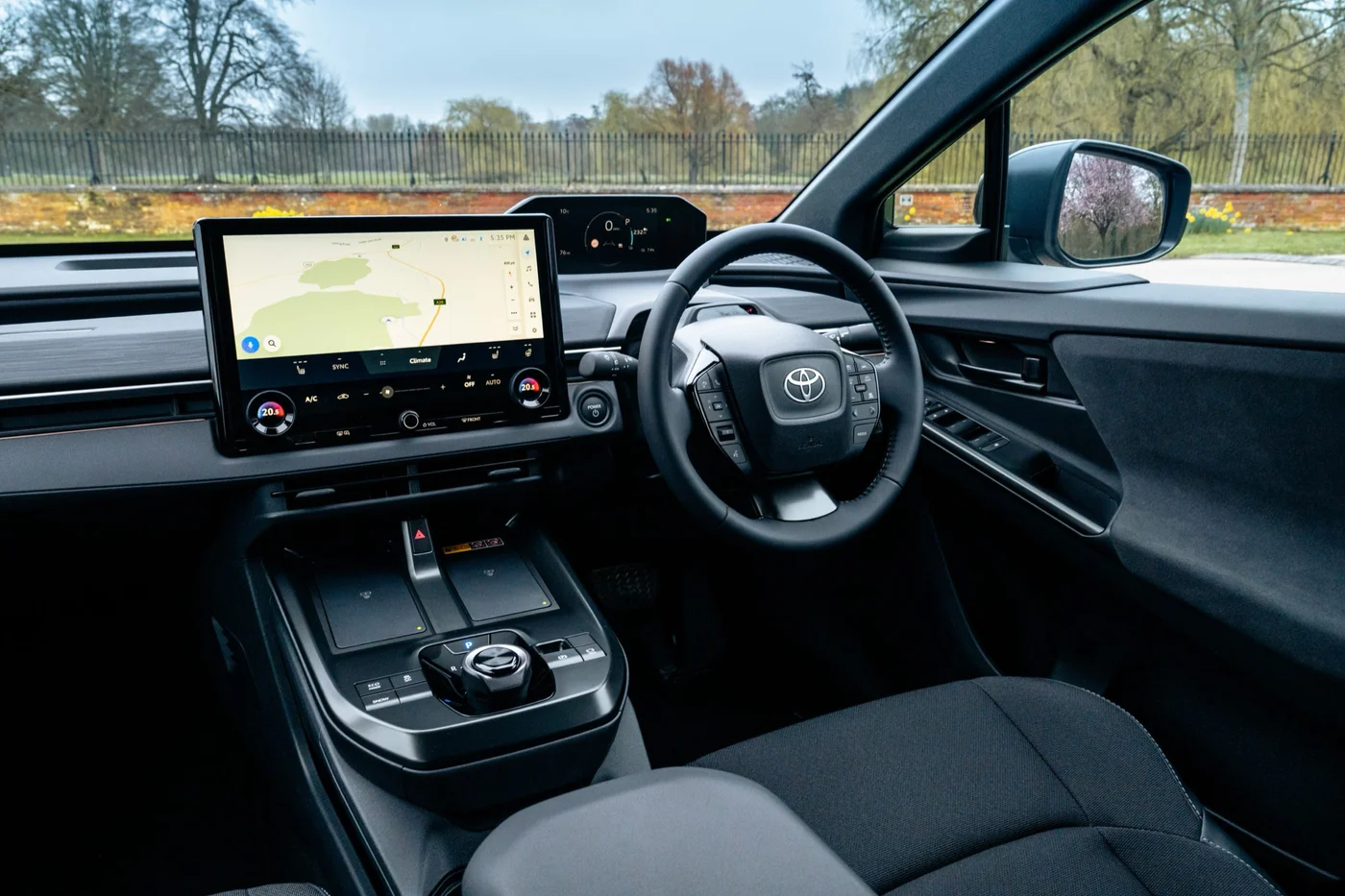
Every C-HR+ has a 14-inch central touchscreen running Toyota Smart Connect, with cloud-based navigation, a voice assistant and wireless smartphone mirroring. Behind the steering wheel sits a 7-inch digital driver display, mounted high on top of the dashboard.
Source: Toyota
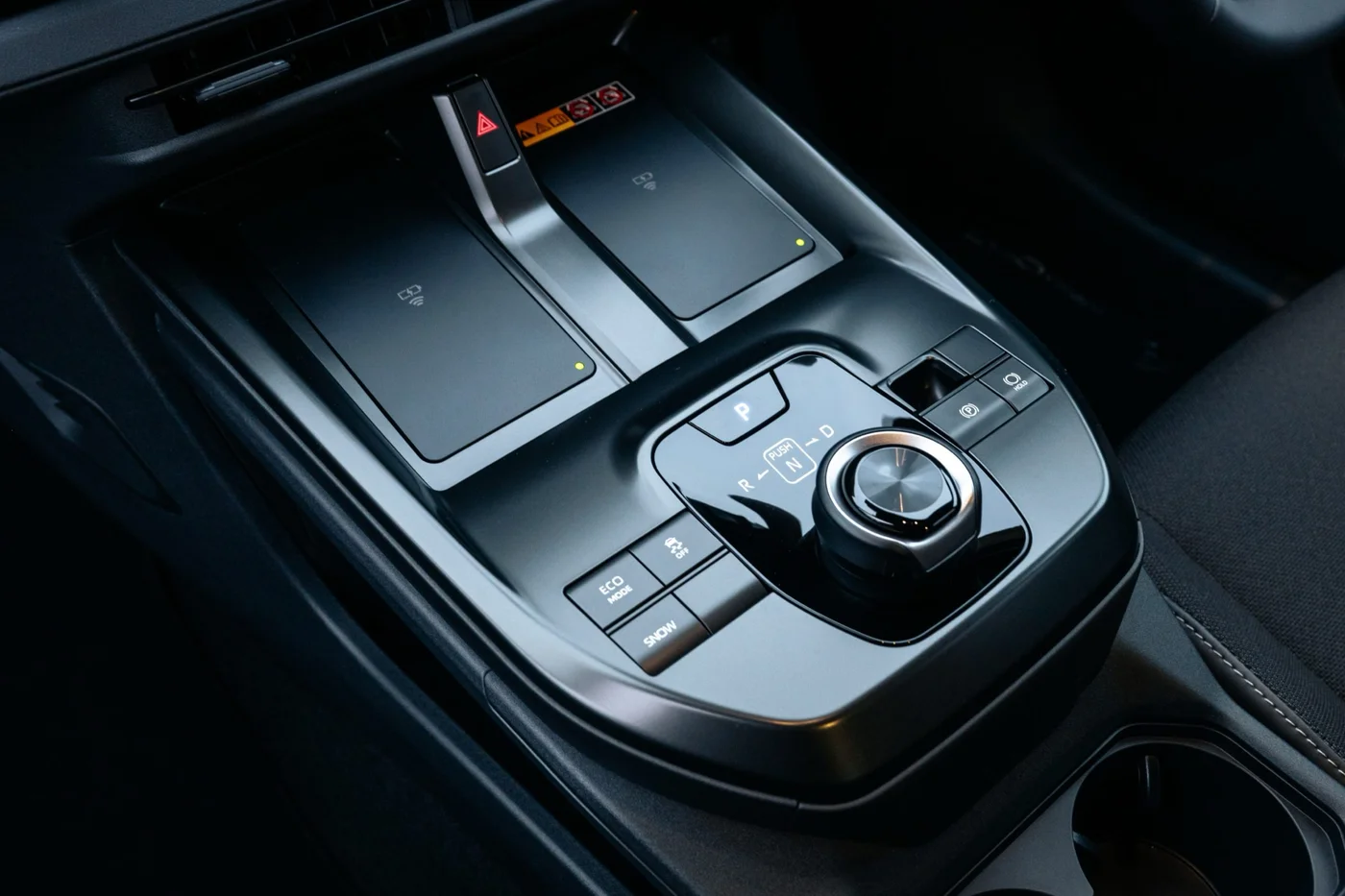
German-spec cars list a heat pump, heated front seats and a heated steering wheel as standard on every trim. The heat pump matters in winter, when it takes far less energy than a resistive heater to warm the cabin.
The Excel's Premium Pack adds a nine-speaker JBL system and a fixed glass roof without a sunshade. Toyota's battery warranty is eight years as standard, and it extends to ten years if the battery passes a health check at each service.
Source: Toyota
Safety
Euro NCAP gave the C-HR+ five stars in 2025, with 88% for adult occupant protection, 85% for child occupant protection, 80% for vulnerable road users and 79% for safety assist. Those are solid scores across the board.
Toyota Safety Sense is standard and includes autonomous emergency braking with pedestrian and cyclist detection, adaptive cruise control, lane keeping and lane tracing, traffic sign recognition, a driver-monitoring camera and an emergency stop function that brings the car to a halt in its lane if the driver stops responding. German-spec cars also get front and rear parking sensors with automatic braking as standard. The Excel adds lane change assist, front cross-traffic alert and the 360-degree camera.
Rivals
Kia EV3. The obvious alternative, and a little cheaper. It costs from €36,790 in Ireland including grants and from £31,555 in the UK with the grant, and the long-range version manages up to 605 km (375 miles). It's shorter, with a boxier body.
Nissan Leaf. The new Leaf is also a low crossover now, and it's cheaper in both markets: from €36,095 in Ireland with the SEAI grant and £28,849 in the UK, where it gets the full £3,750 grant. The 75kWh version has a WLTP range of 623 km (387 miles).
Toyota bZ4X. If you like the idea of the C-HR+ but need more space, the bZ4X shares its platform and costs more: from €42,204 in Ireland including the grant and £38,495 in the UK. Its range is up to 567 km (352 miles).
Toyota C-HR+ review: our verdict
The C-HR+ makes most sense in 77kWh form. A WLTP range of 607 km from a battery that size reflects how efficient it is, and the Design trim gets you that battery with most of the useful kit for £35,495 in the UK after the grant. Irish buyers will have to wait for Toyota to publish the bigger battery's price, but the 57.7kWh Sport's €37,444 is competitive.
The main drawback in the UK is the smaller grant, which leaves the Leaf and EV3 cheaper there. Charging is only average at 28 minutes, though it matches the EV3's. Towing is limited, and the 140 km/h top speed of the entry car is low.
Strengths:
- Long range from the 77kWh battery, thanks to low energy use
- Five-star Euro NCAP rating
- Battery preconditioning on every version
Weaknesses:
- Average 150 kW charging speed
- Only £1,500 of UK grant
- 750 kg towing limit on UK cars
FAQs
Does the Toyota C-HR+ qualify for the Electric Car Grant?
Yes. It's in Band 2 of the UK Electric Car Grant, which gives £1,500 off every version. That brings the UK price down to £32,995 for the Icon.
Does the Toyota C-HR+ qualify for the SEAI grant?
Yes. Toyota Ireland's prices include the €3,500 SEAI grant for private buyers, subject to approval, as well as VRT relief. The C-HR+ Sport costs from €37,444 before delivery.
How long does the Toyota C-HR+ take to charge?
About 28 minutes from 10% to 80% at a DC charger of 150 kW or more, with either battery. On an 11 kW home or public AC charger, a full charge of the 77kWh battery takes about seven hours.