
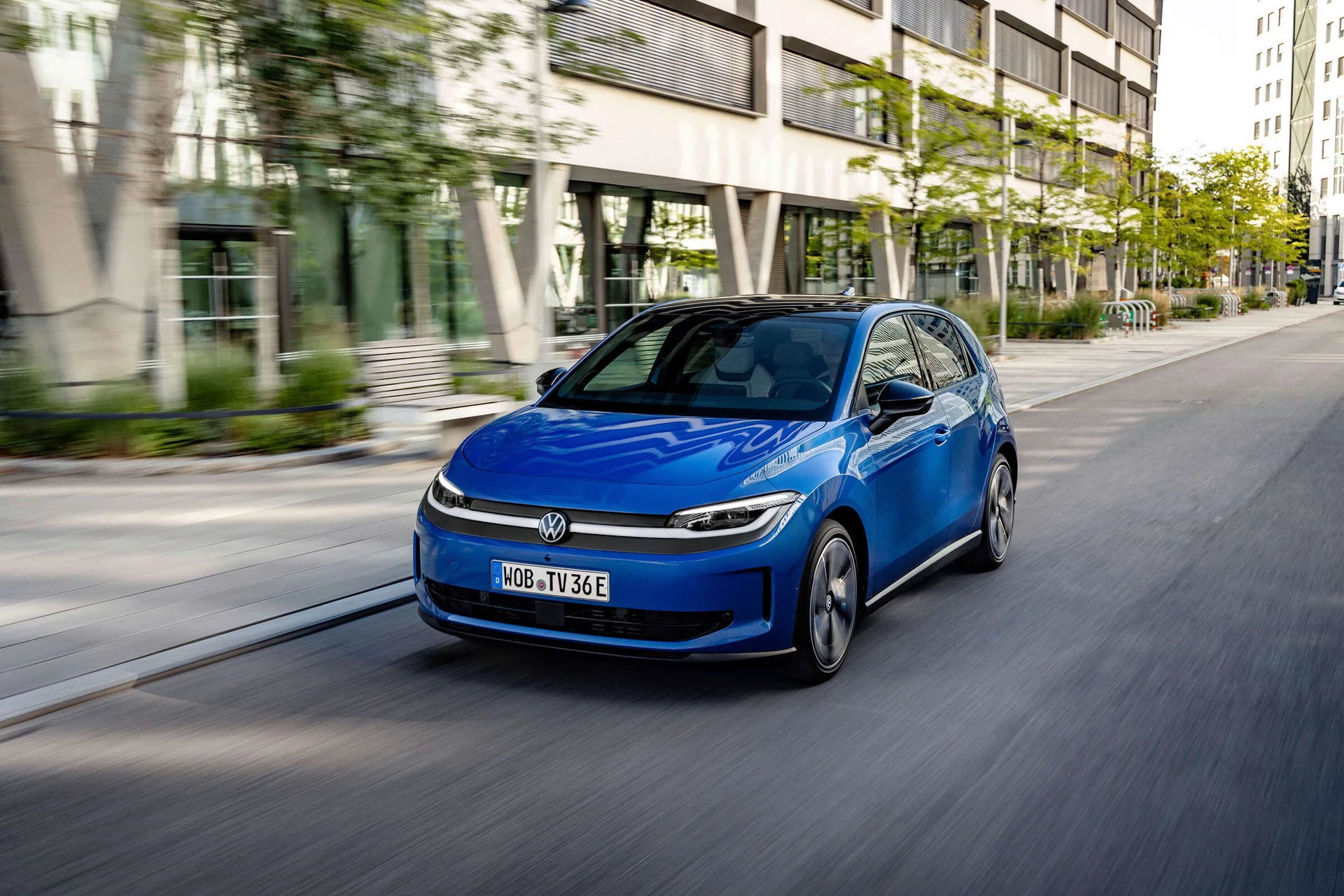
For more than 50 years the Polo has been the sensible small car people buy when they don't want to think too hard about it. The VW ID. Polo keeps the name and the sensible bit, but swaps the petrol engine for a battery, and it has just been named German Car of the Year 2027 for its trouble.
It starts at €24,995 in Germany and from €19,885 in Ireland once the SEAI grant and VRT relief are taken off. In the UK it starts at £23,945, before the £1,500 Electric Car Grant. There are two batteries: a 37kWh LFP pack with a WLTP range of up to 331 km (206 miles), and a 52kWh battery good for up to 454 km (282 miles).
Key specs
| 37kWh | 52kWh | |
|---|---|---|
| Irish price | from €19,885 (after grant) | not yet published |
| UK price | from £23,945 | from £25,555 (Launch Edition) |
| Battery (usable) | 37kWh LFP | 52kWh NMC |
| WLTP range | 323-331 km (201-206 miles) | 452-454 km (281-282 miles) |
| Peak DC charging | 88 kW | 105 kW |
| 10-80% | about 23 min | about 24 min |
| AC charging | 11 kW | 11 kW |
| Power | 85 kW (114 hp) or 99 kW (133 hp) | 155 kW (208 hp) |
| 0-100km/h | 10.6 or 9.5 sec | 7.1 sec |
| Boot | 441 litres | 441 litres |
| Length | 4,053 mm | 4,053 mm |
| UK grant | £1,500 | £1,500 |
(Specifications from Volkswagen. Prices correct at 4 November 2026.)
Volkswagen ID. Polo prices and trims
The ID. Polo is cheapest in Ireland once incentives are counted, and costs around €25,000 before incentives in Germany and the Netherlands.
| Market | 37kWh | 52kWh |
|---|---|---|
| Ireland | from €19,885 | not yet published |
| Germany | from €24,995 | from €33,795 |
| Netherlands | from €25,990 | not checked |
| UK | from £23,945 | from £25,555 (Launch Edition) |
(Prices correct at 4 November 2026. The Irish price includes the SEAI grant and VRT relief. The UK price is before the £1,500 Electric Car Grant. The Dutch price rose by €1,000 on 1 October.)
Source: Volkswagen
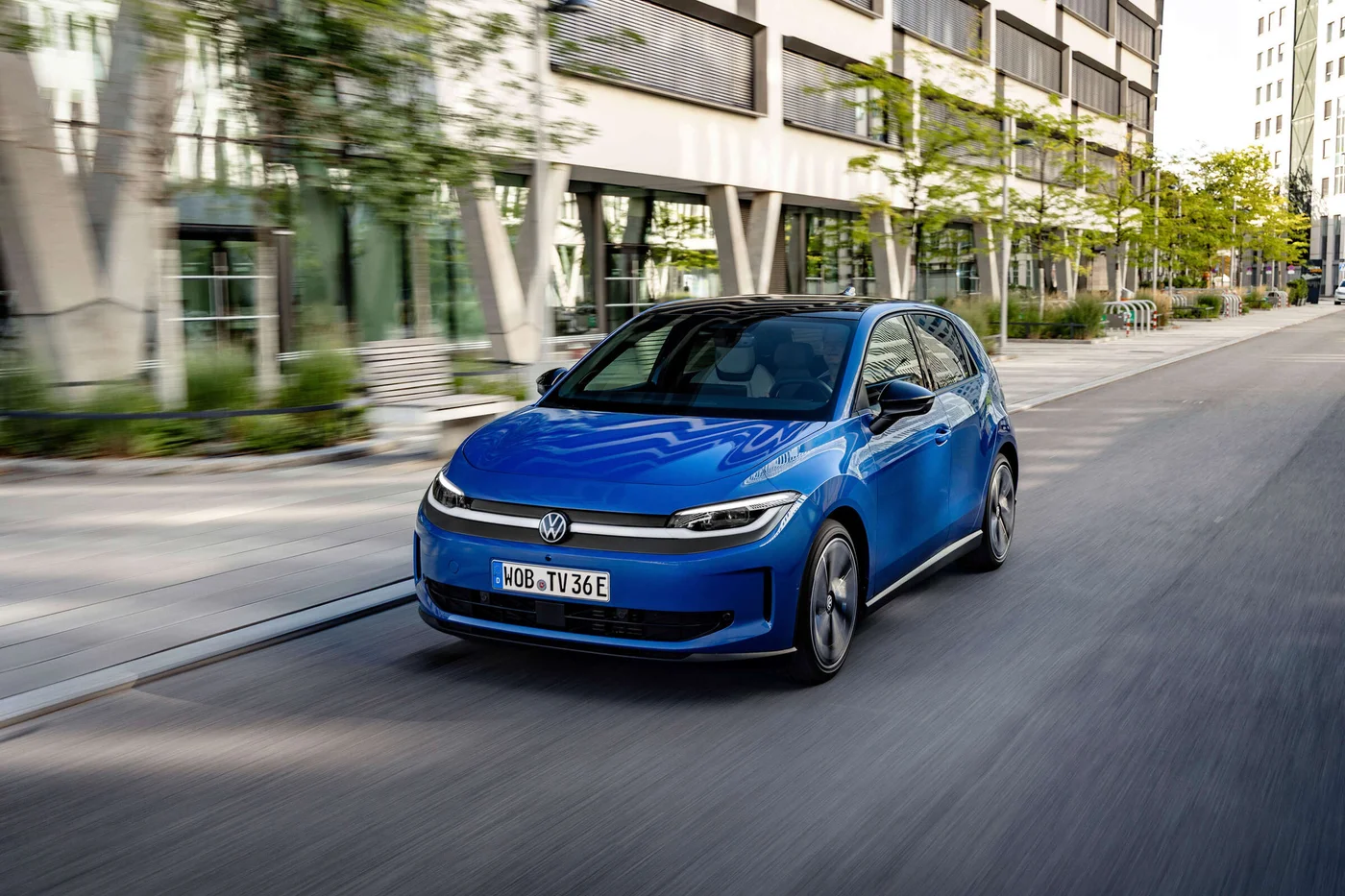
In Germany there are three trims. The entry Trend comes only with the 37kWh battery and the 85 kW motor, and it isn't bare: LED headlights with automatic main beam, a 10-inch digital instrument display, a 13-inch touchscreen, automatic air conditioning, lane-keeping with Emergency Assist and blind-spot warning are all standard.
The Life adds adaptive cruise control, a rear-view camera, front and rear parking sensors, front cross-traffic alert, voice control, wireless Apple CarPlay and Android Auto, wireless phone charging and a height-adjustable boot floor. In Germany it costs from €29,195 with the 37kWh battery and the 99 kW motor, or €33,795 with the 52kWh battery and the 155 kW motor.
The Style adds LED matrix headlights, a light bar across the front, 3D LED rear lights, sports comfort seats, ambient lighting, heated seats and steering wheel and two-zone climate control. Options include a 425-watt Harman Kardon sound system, a panoramic glass roof and 12-way electric front seats with a massage function.
The UK range skips the Trend, so the Life is the entry point at £23,945 with the 37kWh battery. Limited-run Launch Editions cost from £25,555: the Life Launch Edition adds two-zone climate control and heated front seats and steering wheel, while the Style Launch Edition adds a panoramic roof, massage seats, a 360-degree camera and privacy glass. Volkswagen UK lists every ID. Polo version, with either battery, as eligible for the £1,500 band of the Electric Car Grant, which brings the entry price down to £22,445. UK cars arrive in Volkswagen retailers from 6 November.
In Ireland, the €19,885 starting price is for the 37kWh car with the 85 kW motor, after the SEAI grant of up to €3,500 and VRT relief. Volkswagen Ireland says the ID. Polo is now in showrooms, but hasn't published prices for the other versions yet. Every version should come in well under the SEAI grant's €50,000 price limit.
Battery, range and charging
The ID. Polo is very efficient, which is why its range is competitive with relatively small batteries. Volkswagen quotes WLTP consumption of 13.3 kWh/100 km (133 Wh/km) for the 52kWh Life, and 13.6 to 13.8 kWh/100 km for the 37kWh cars.
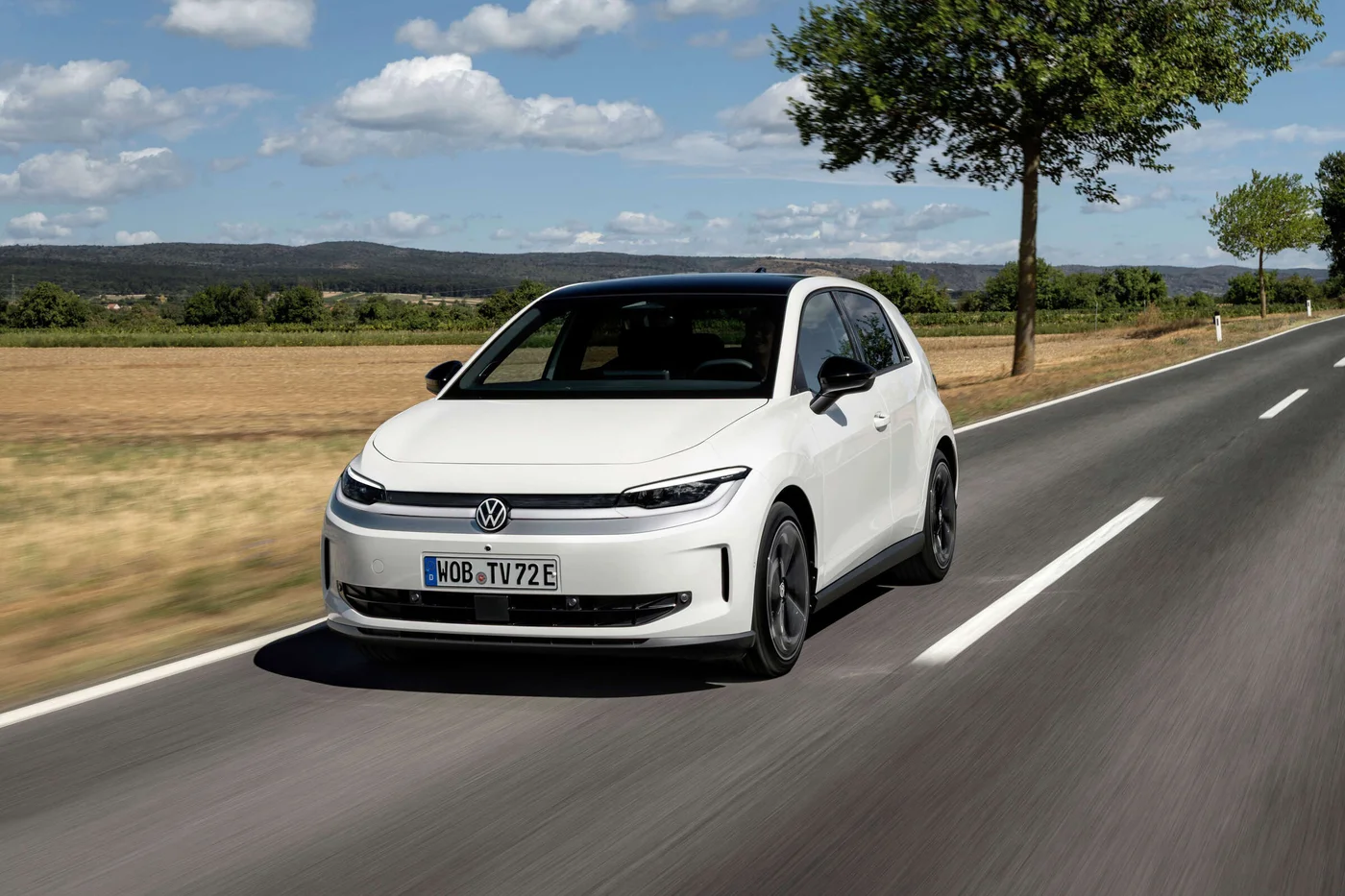
The 37kWh battery uses lithium iron phosphate (LFP) cells in a cell-to-pack design. LFP cells are generally cheaper and longer-lasting than nickel-based ones, and better suited to regular charging to 100%. Volkswagen quotes 323 km (201 miles) for the Trend and up to 331 km (206 miles) for the 99 kW Life.
The 52kWh battery uses nickel manganese cobalt (NMC) cells and gives a WLTP range of up to 454 km (282 miles) in the Life and 452 km (281 miles) in the Style.
Source: Volkswagen
DC charging peaks at 88 kW on the 37kWh battery and 105 kW on the 52kWh battery. Neither number is high, but because the batteries are small, a 10-80% charge takes about 23 and 24 minutes. In that time, the 52kWh car adds around 318 km (198 miles) of WLTP range, and the 37kWh car around 230 km (143 miles).
Every version has an 11 kW on-board charger for home wallboxes and public AC points, so the 52kWh battery charges from empty to full at home in roughly five hours. A heat pump is optional, and Volkswagen says it can improve range, especially in winter.
The ID. Polo also has vehicle-to-load (V2L). With an adapter in the charging port, it can supply up to 3.6 kW from a 230-volt socket, enough to run an electric bike charger, a laptop or camping kit.
Performance
None of the ID. Polos is slow, and the 52kWh car is properly quick for a supermini. All of them drive the front wheels, and all are limited to 160 km/h (99 mph).
The entry 85 kW (114 hp) motor gets from 0-100km/h (0-62mph) in 10.6 seconds. The 99 kW (133 hp) version cuts that to 9.5 seconds. With the 52kWh battery comes a 155 kW (208 hp) motor and 290 Nm of torque, and the time drops to 7.1 seconds.
For more, the ID. Polo GTI arrives in Ireland in March 2027, with sportier suspension and steering. Volkswagen hasn't confirmed its final specification for Ireland and the UK yet.
Size and practicality
Source: Volkswagen
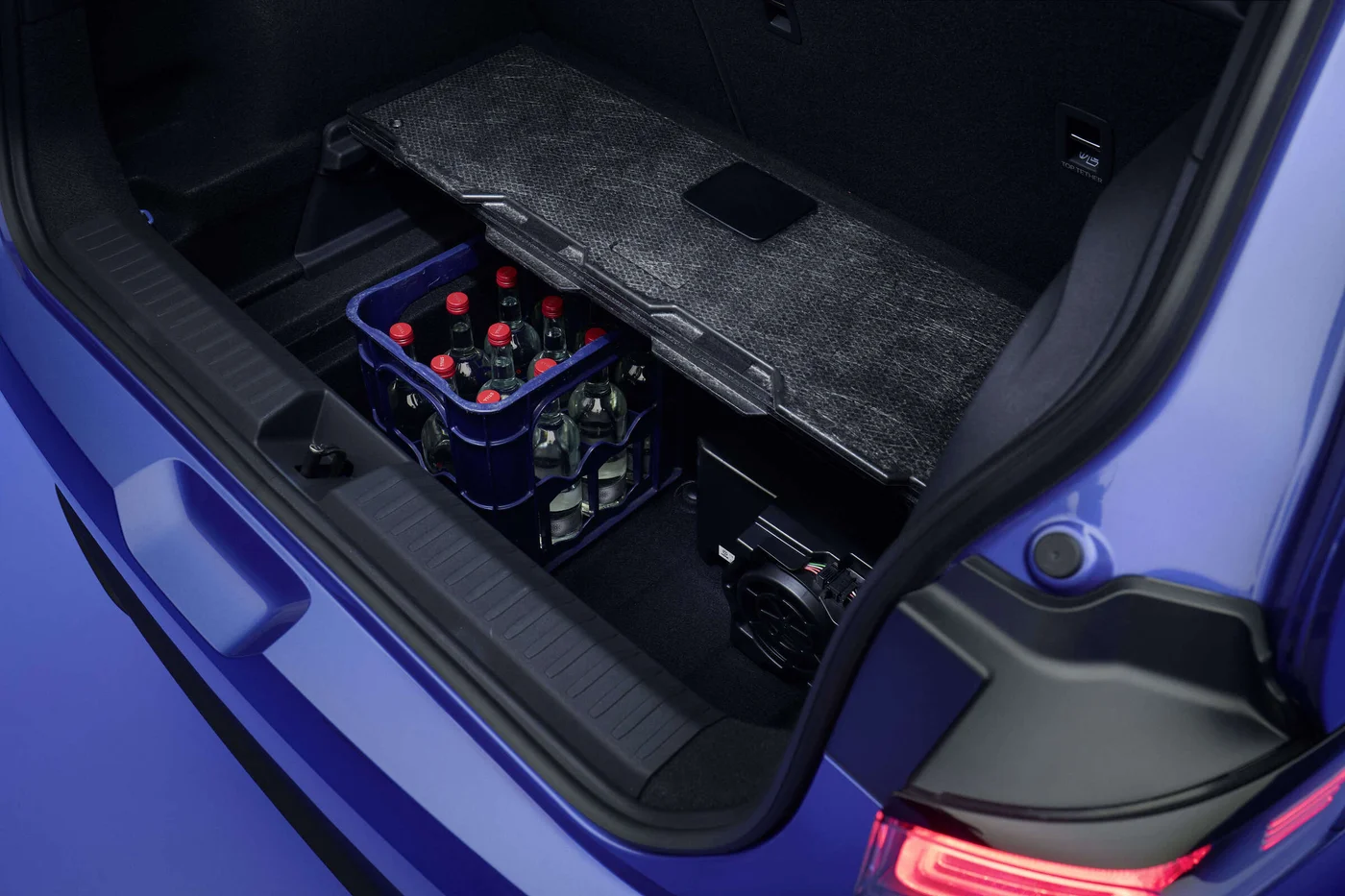
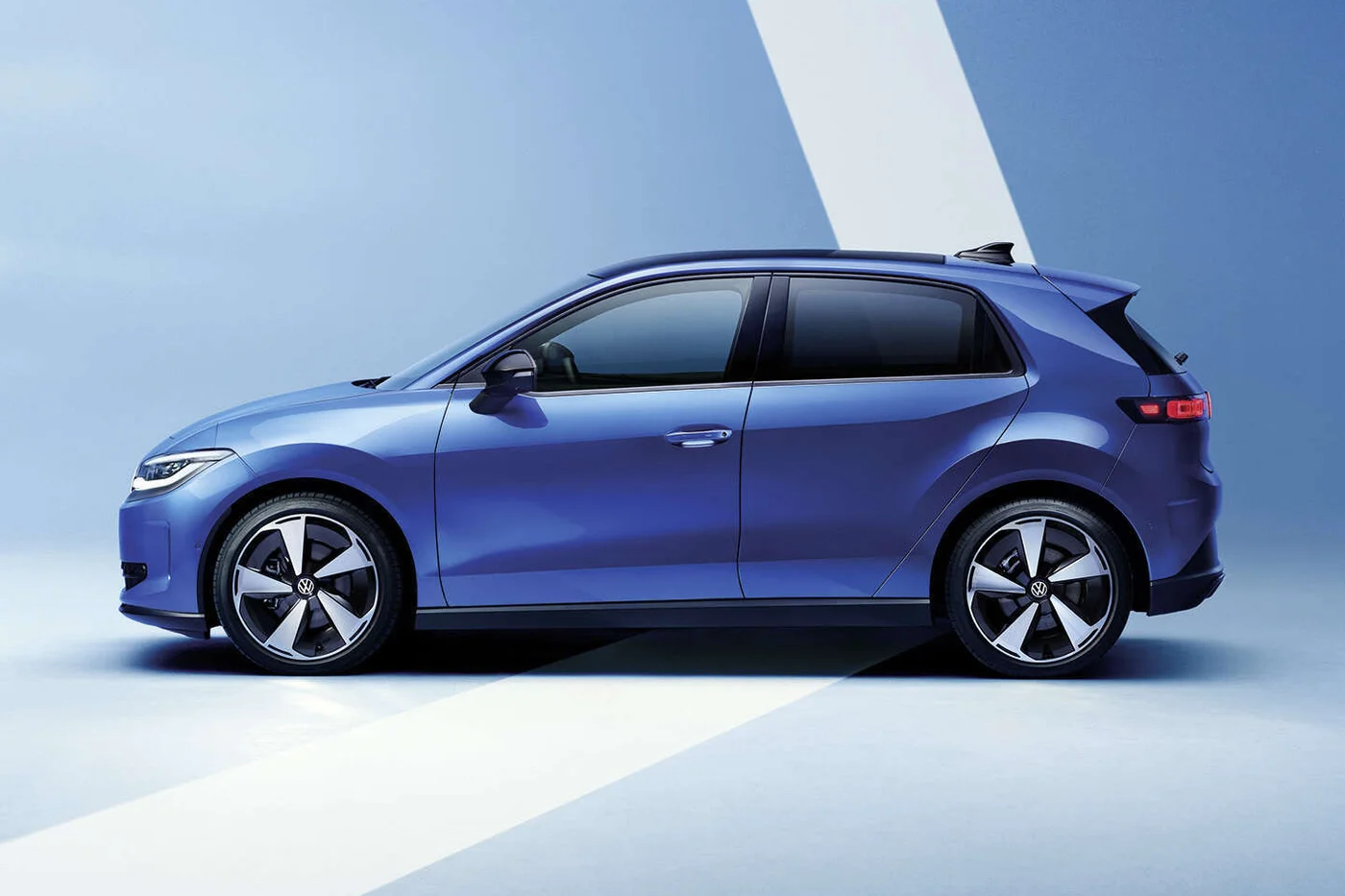
The ID. Polo's biggest advantage over the petrol Polo is space. At 4,053 mm long, 1,816 mm wide and 1,530 mm tall, it's a little longer than a traditional supermini, and its 2,600 mm wheelbase is long for its size.
The boot holds 441 litres, or 1,240 litres with the rear seats folded. The petrol Polo manages 351 and 1,125 litres, so the electric car has 90 litres more with the seats up. The Life and Style have a height-adjustable boot floor, which gives you a flat load area or a deeper boot.
Every ID. Polo can be ordered with a detachable, lockable tow bar, with a nose weight of 75 kg. That's enough to carry two electric bikes on a rack. The 155 kW versions can tow up to 1,200 kg, which Volkswagen says is enough for a small caravan.
Source: Volkswagen
Tech and equipment
Source: Volkswagen
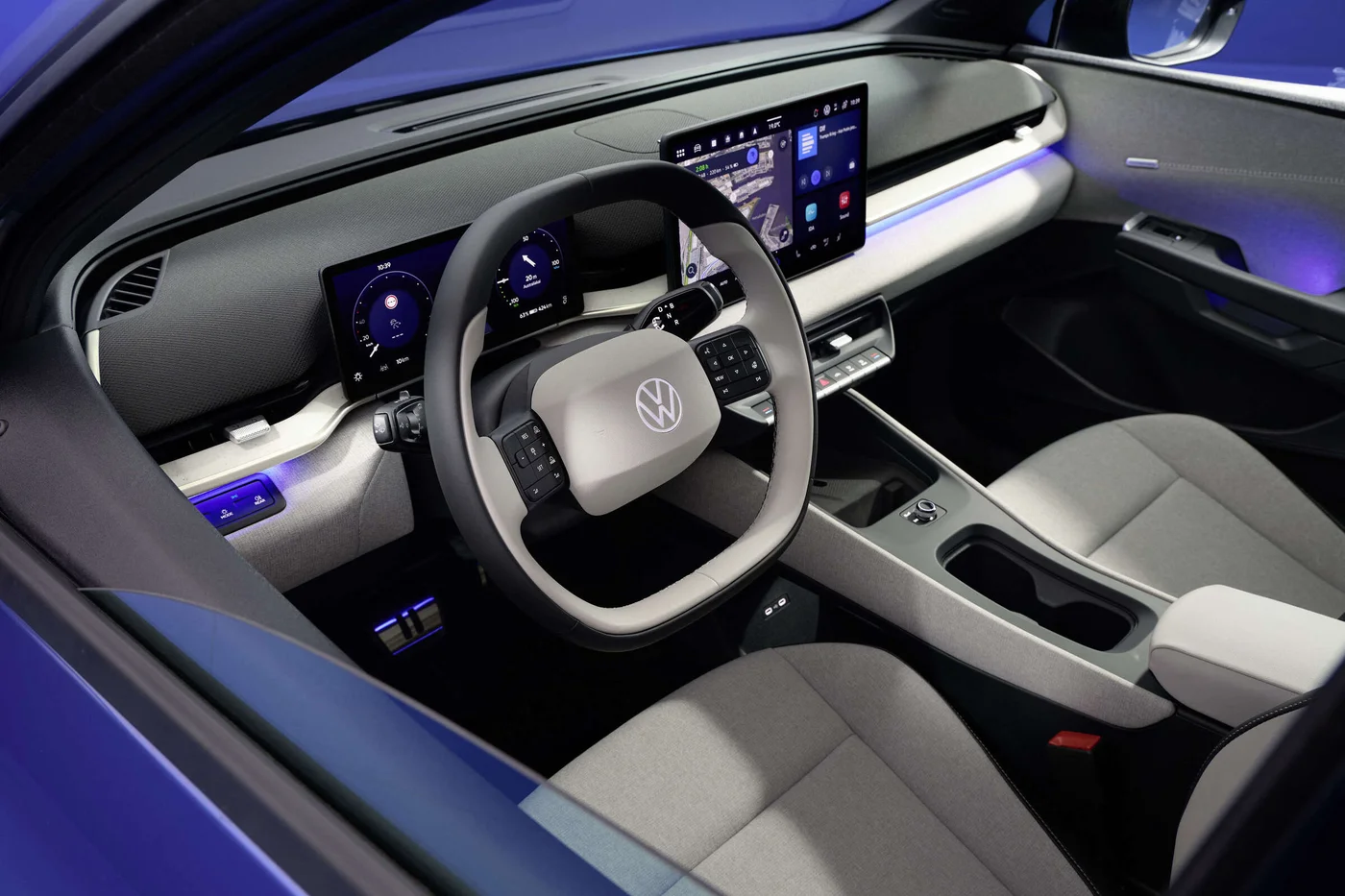
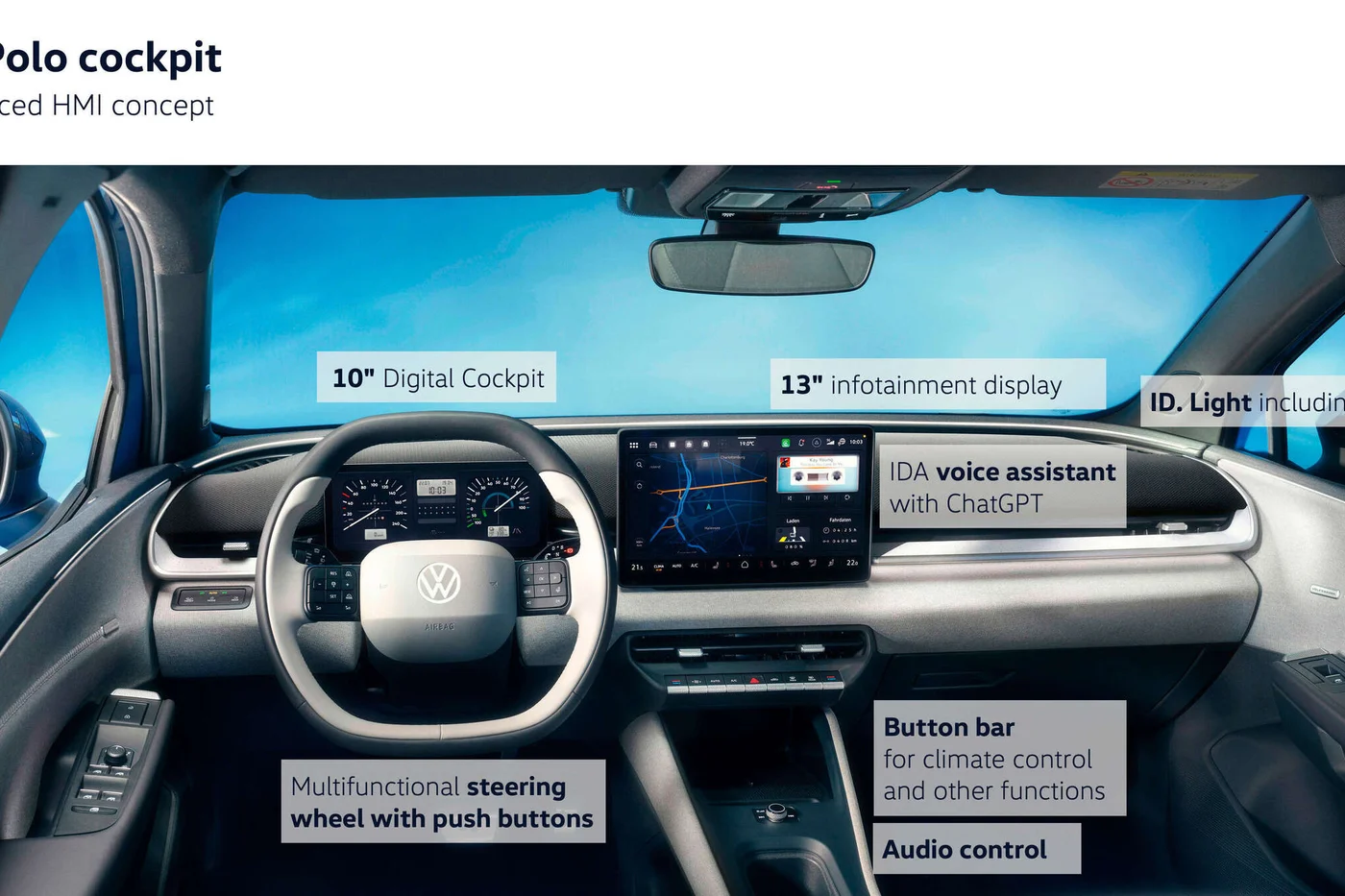
There are physical buttons on the steering wheel instead of touch-sensitive pads, and a row of buttons below the screen for the climate control and other main functions.
Every ID. Polo has a 10-inch digital instrument display and a 13-inch touchscreen (Volkswagen UK quotes 12.9 inches). The IDA voice assistant now uses ChatGPT, and the ID. Light strip under the windscreen is standard. On the Style it extends into the doors and shows warnings there too.
Source: Volkswagen
Driver assistance is generous for a small car. Lane-keeping with Emergency Assist and blind-spot warning are standard on every version, the Life adds adaptive cruise control, and an optional Connected Travel Assist can recognise traffic lights. One-pedal driving is standard.
Safety
Euro NCAP hasn't tested the ID. Polo yet. Its sister car, the Cupra Raval, which is built on the same platform, scored five stars under Euro NCAP's stricter 2026 rules with its optional Safety Pack, and four stars without it. That's a good sign, but it isn't a rating for the Volkswagen.
Rivals
| Car | Price | WLTP range |
|---|---|---|
| Cupra Raval | from €26,995 (Ireland), £23,785 (UK) | 443 km (52kWh) |
| Hyundai Ioniq 3 | from €27,995 (Ireland, Netherlands), £18,495 (UK, after grant) | 497 km (Long Range) |
| Renault 5 | from £23,945 (UK, 52kWh, after grant) | 430 km (52kWh) |
(Prices correct at 4 November 2026.)
The Cupra Raval is the ID. Polo's sister car, built on the same platform, with sharper styling and a sporty VZ version. Its 52kWh battery gives 443 km, slightly less than the Volkswagen. The Hyundai Ioniq 3 is bigger and goes furthest on its 61kWh battery, and in the UK it gets the full £3,750 Electric Car Grant, which makes it the cheapest of the four there. The Renault 5 is the style choice, with up to 430 km from its 52kWh battery and the full £3,750 UK grant included in its £23,945 price.
Our verdict
The ID. Polo does what a Polo has always done: it's the sensible, well-equipped small car that most buyers can choose without regret. The difference is that it's now electric, roomier than the petrol car and, in Ireland, cheaper to buy once the grant and VRT relief are counted.
The 37kWh car suits most drivers. Its LFP battery is durable, its 323-331 km range covers most weeks of commuting, and the €19,885 Irish price makes it one of the cheapest new electric cars you can buy. The 52kWh version is worth the extra if you regularly drive long distances, and it's much quicker.
Source: Volkswagen
There are compromises. DC charging peaks at 105 kW, which is modest, the heat pump costs extra, and the Hyundai Ioniq 3 goes further on a charge. In the UK, the smaller £1,500 grant puts it at a disadvantage against rivals that get the full £3,750. Demand is also strong: Volkswagen says more than 50,000 people have ordered one since April, and in the Netherlands, new orders won't be delivered until well into 2027.
Strengths: price, efficiency, 441-litre boot, physical buttons, V2L as standard.
Weaknesses: modest DC charging, heat pump optional, smaller UK grant than some rivals, no Euro NCAP rating yet.
FAQs
How much is the Volkswagen ID. Polo?
It starts at €19,885 in Ireland including the SEAI grant and VRT relief, €24,995 in Germany and €25,990 in the Netherlands. In the UK, it costs from £23,945 before the £1,500 Electric Car Grant.
What is the Volkswagen ID. Polo's range?
Volkswagen quotes a WLTP range of up to 331 km (206 miles) with the 37kWh battery and up to 454 km (282 miles) with the 52kWh battery.
Does the VW ID. Polo qualify for the Electric Car Grant?
Yes. Volkswagen UK lists every ID. Polo version as eligible for the £1,500 band of the Electric Car Grant. In Ireland, it qualifies for the SEAI grant of up to €3,500 and VRT relief, which are already included in the €19,885 starting price.
How big is the ID. Polo's boot?
It holds 441 litres with the seats up and 1,240 litres with them folded, 90 litres more than the petrol Polo with the seats up.