
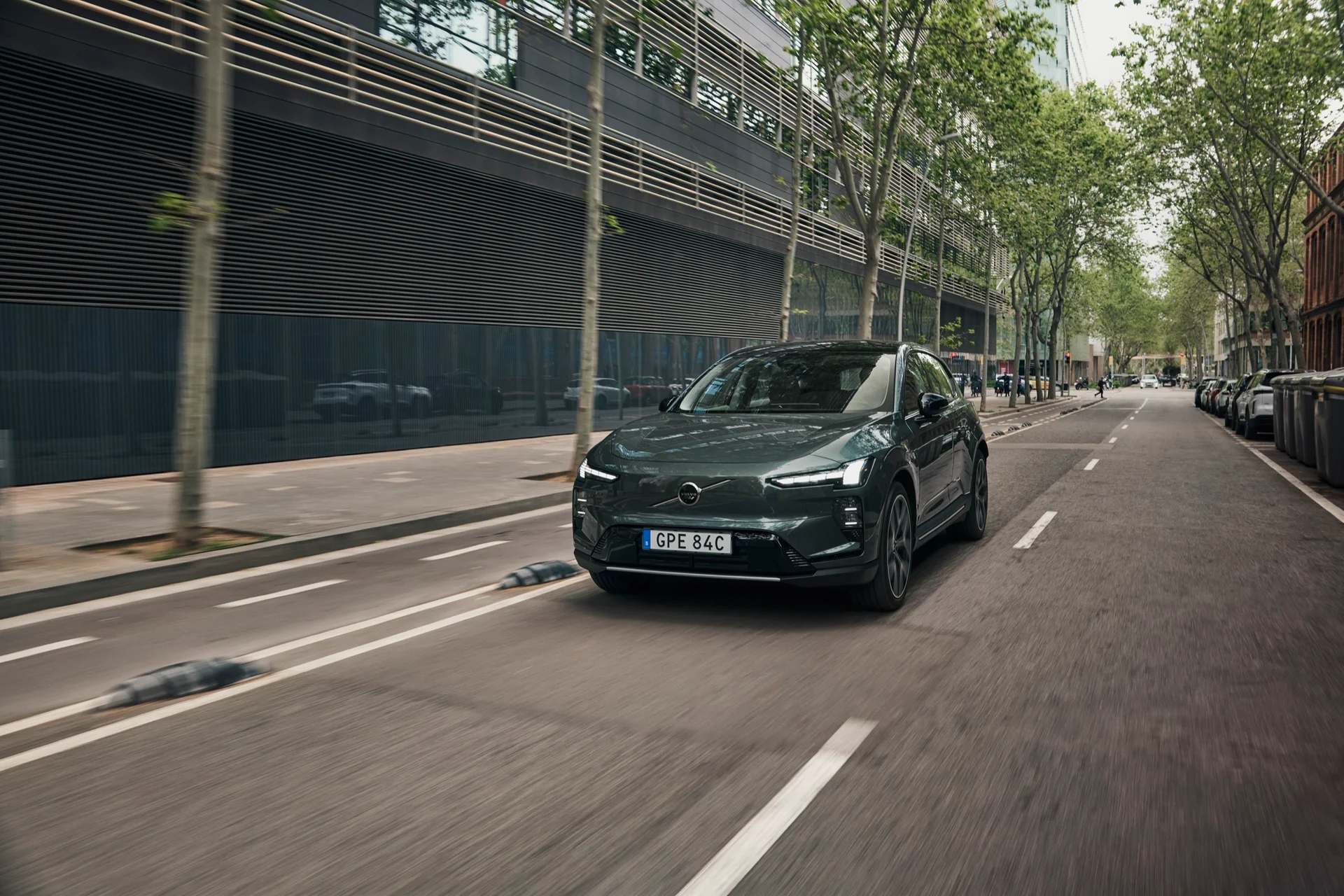
Volvo will reveal a new electric car for Europe in 2027, aimed at what it calls "a large, lower priced market segment". The company confirmed the plan in its third-quarter results on 23 October and says the first customers will get their cars after summer 2027.
That's all Volvo has officially said about the car itself. It hasn't given a name, size, price or range, so anyone looking for a new Volvo electric car in 2027 has a timeline to work with, but not much else yet.
What Volvo has confirmed about the new electric car
Volvo describes the model as its "next global BEV car" and says it will strengthen its lead in electric cars while improving its margins. It's one of three new cars Volvo will reveal in 2027, alongside two models made only for China.
The car is part of a bigger plan announced in September: 13 all-new cars between now and the end of 2030, the largest product push in Volvo's 99-year history. Seven are for Western markets and six for China. Volvo says the Western cars will be built on its SPA2 and SPA3 architectures and run its HuginCore computer platform, and that the range will expand into segments where it doesn't currently sell a car. It's also changing how it sells cars, promising simpler, transparent pricing, special versions with fast delivery, and an all-inclusive care package.
Several details are reported but not confirmed by Volvo. Reports say the new car will be the second model on SPA3, after the EX60, and that it will be called the EX50. One report expects it to be built at Volvo's new factory near Košice in Slovakia. Volvo hasn't confirmed any of these, and it hasn't said whether the car will be an SUV.
If it does use SPA3, it would share its basic technology with the EX60, an 800V platform where the battery cells form part of the car's structure. That's what lets even the entry-level EX60 P6 charge at up to 350 kW, for 10-80% in 16 minutes, with a WLTP range of up to 611 km (380 miles).
Why Volvo needs a cheaper car
Volvo's results show why it wants more volume in Europe. In the third quarter, it made an operating loss of SEK 3.7 billion (excluding joint ventures and one-off items), an EBIT margin of -5.6%, on revenue of SEK 66.9 billion, down from SEK 86.4 billion a year earlier.
Europe is the bright spot. Electric cars made up 45% of Volvo's European sales in the quarter, compared with 32% worldwide. China and the US went the other way: Volvo's revenue in China fell by almost 50% as Chinese brands cut prices, and in the US it was hit by tariffs and the end of incentives for electrified cars.
Volvo is responding with another SEK 5 billion of savings, which will cut about 2,500 jobs worldwide, 2,000 of them in Sweden. It plans to concentrate production in five dedicated plants and is exploring building cars for other Geely brands at its Ghent and Chengdu factories. It's also sharing more suppliers and parts with Geely to lower the cost of each car, which matters for a cheaper model.
The EX60 shows both the strength and the problem. Volvo says it has taken more than 50,000 European orders and will be one of its most profitable models, but production is ramping up more slowly than planned because of its new cell-to-body construction.
What it means for Irish and UK buyers
The EX60 is a premium car with a premium price: it starts at €62,990 in Germany, €66,695 in Ireland and £56,860 in the UK. That puts it above the €50,000 limit for the SEAI grant in Ireland and the £37,000 limit for the UK's Electric Car Grant.
Volvo hasn't said how much the new car will cost or which markets will get it first. If it's priced well below the EX60, it could come within reach of the SEAI grant and VRT relief in Ireland. In the UK, the grant also depends on how the government rates a car's manufacturing emissions, so a lower price alone wouldn't guarantee it qualifies.
(Prices correct at 4 November 2026.)
For now there's nothing to order. Volvo plans to reveal the car in 2027, with deliveries starting after summer. We'll update this story when Volvo confirms the name, specifications and prices.