
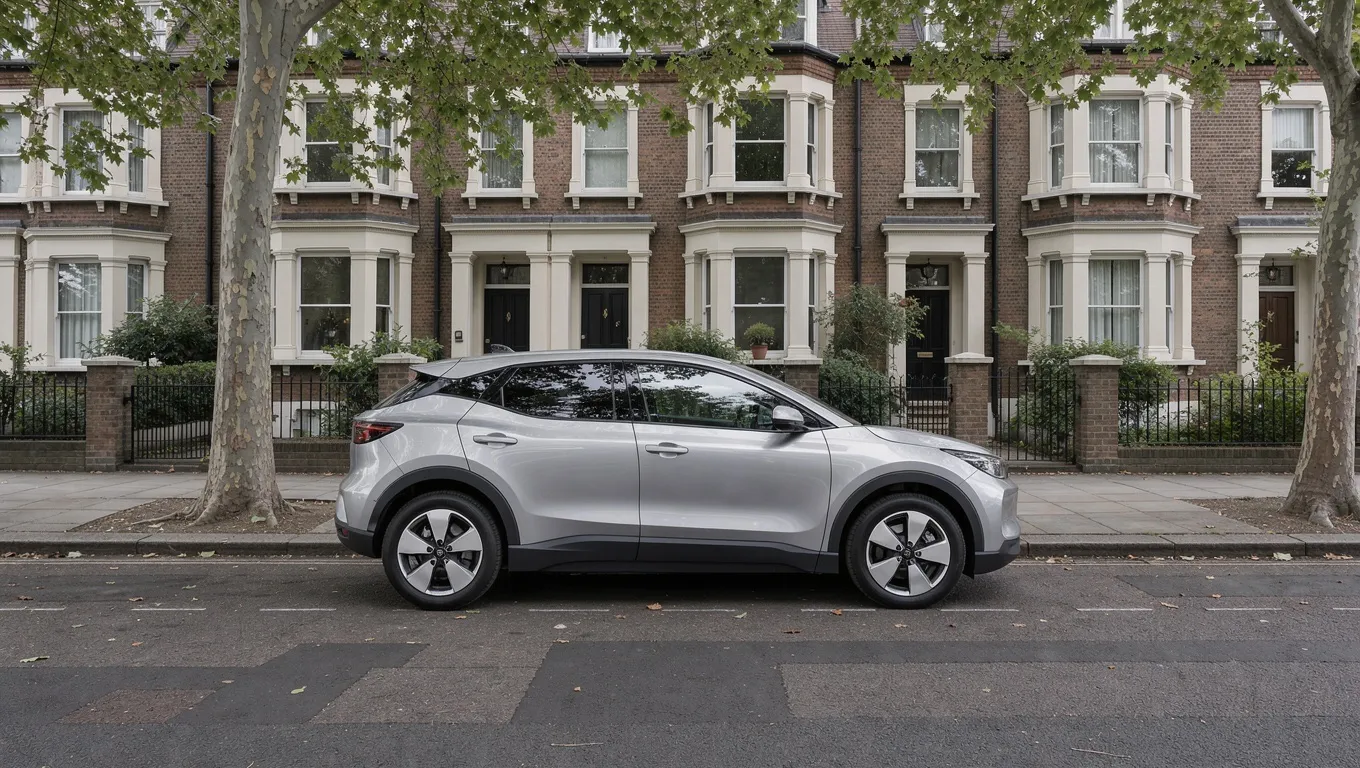
Drivers in England without a driveway no longer need planning permission to charge at home through a cross-pavement charging channel. A new permitted development right came into force on 21 October, and the government says it will save households up to £300 on installation.
Cross-pavement charging lets you run a cable from a charger on your house to a car parked on the street, through a narrow channel set into the pavement so nobody trips over it. It means you can charge on a domestic electricity tariff instead of paying public charging prices, and the government says home charging can cost as little as 2p per mile.
What's changed for cross-pavement charging
Until now, many households needed a planning application as well as permission from the council's highways team, which added cost and time. The new right removes the planning application for approved cross-pavement solutions. The existing rights for home charge points have also been widened, so you can fit a charger on or next to a house or block of flats even when there's no off-street parking.
The planning change is only one of several permissions, though. You still need your council's approval to put anything in the public pavement, and it decides whether your street is suitable. The government's guidance for councils lists the other consents that may apply: a section 50 licence or permit for street works, permission under section 178 of the Highways Act, and a traffic order if a parking bay is involved. Councils look at the pavement width and construction, parking outside the house, yellow lines and nearby crossings, and pipes or cables under the surface.
There are limits too. The right doesn't apply in conservation areas, to scheduled monuments or within the grounds of listed buildings, and a charger fixed to a house next to the pavement must leave at least 1.5 metres of footway. Installing a channel also doesn't give you the parking space outside your home. When it's no longer needed, it has to be removed and the pavement put back.
The change covers England only. Road works are devolved, so drivers in Scotland, Wales and Northern Ireland should check with their own roads authority.
What it costs and what you can save
There's no fixed price for a channel. It depends on the street, the supplier and the council's scheme. Some councils install the channel and charge the resident a one-off fee or a subscription, while others approve suppliers who own and maintain the channel themselves. The charger is usually your cost, but households with council permission for a cross-pavement solution can claim a government grant of 75% of the cost of a home charge point, up to £500. The government has also given councils in England £25 million through the EV Pavement Channels Grant to pay for channels.
The savings come from the price of electricity. Here's what 10,000 miles a year costs in a car that covers 3.5 miles per kWh:
| How you charge | Price per kWh | Cost per mile | 10,000 miles |
|---|---|---|---|
| Home, energy price cap | 26.32p | 7.5p | £752 |
| Public, slow and fast chargers | 54p | 15.4p | £1,543 |
| Public, rapid chargers | 82p | 23.4p | £2,343 |
(Prices correct at 4 November 2026. The home rate is Ofgem's average direct debit cap for October to December 2026, which excludes VAT until March 2027. Public prices are Zapmap's October 2026 averages for pay-as-you-go charging.)
Moving from rapid chargers to a home charger on the price cap saves about £1,600 a year at that mileage, and a cheap overnight EV tariff would save more, which is where the government's 2p-per-mile figure comes from. The government puts the possible running-cost saving at up to £1,750.
Consultations closing on 16 December
The government has also opened two consultations, both closing on 16 December 2026. The first proposes changing the building regulations so new buildings come with chargers, and could require charge points in new and refurbished covered car parks. The second looks at giving tenants and leaseholders a quicker, more consistent way to get a charge point installed, and the government is considering making it harder for landlords and freeholders to refuse.
Both matter to the same group of drivers: the households without a private driveway, who have had to rely on public charging. EVA England's research found that 60% of petrol and diesel drivers without off-street parking would never consider an electric car. If you're in that position and want a channel, the first step is to ask your council whether it runs a cross-pavement scheme.