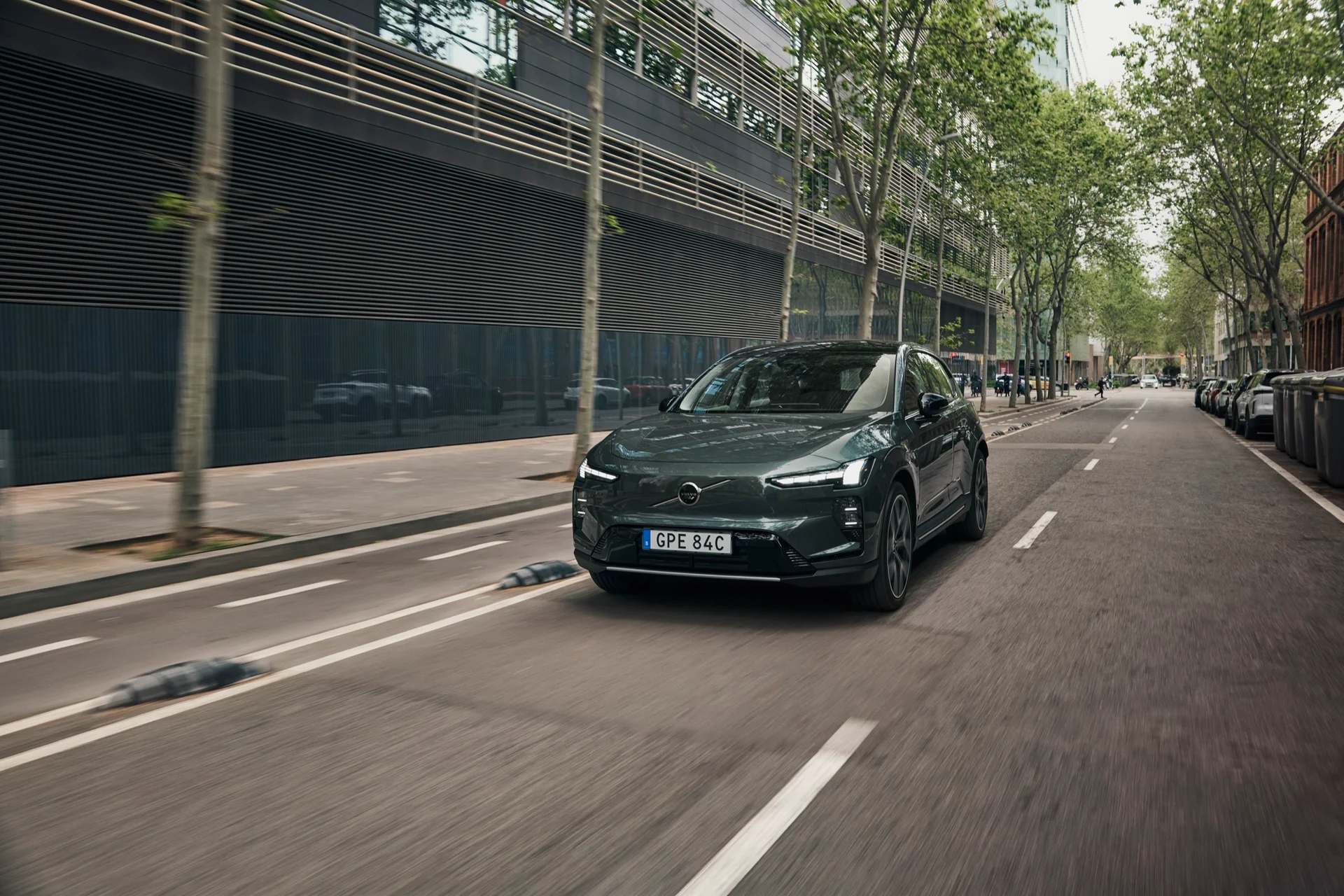
Volvo says it's taking longer than planned to ramp up production of the EX60, its new electric SUV, even though orders in Europe have passed 50,000. The admission came in Volvo's third-quarter results on 23 October, and it means some buyers will be waiting longer for their cars.
Why production is behind
Volvo calls the EX60 a big success and expects it to be one of its most profitable models. The problem is building it. Volvo puts the slow ramp-up down to new industrial technology, naming the car's cell-to-body battery, and says built volumes are steadily improving.
The EX60 is the first car on Volvo's new SPA3 platform, and it brings several new manufacturing methods at once. Cell-to-body means the battery cells form part of the car's structure, rather than sitting in a separate pack bolted underneath. Megacasting replaces many smaller body parts with a few large aluminium castings. Both save weight and space, which helps range, but they're big changes on the production line at Torslanda in Sweden, where the EX60 is built.
Volvo hasn't said how far behind plan it is. Electrek reports that around 5,000 EX60s have been built so far, a figure Volvo hasn't confirmed. The delay isn't limited to Europe either: Volvo has told US customers that availability will stay limited in the short term, and that it expects much more stock at US dealers in early 2027.
The timing is difficult for Volvo. The same results showed an operating loss and a plan to cut around 2,500 jobs, mostly in Sweden. Volvo's chief executive has said the EX60 is central to the company's turnaround, and that the financial benefit will only come once production volumes rise.
The EX60 range and prices
The EX60 is a mid-size electric SUV. It's the first Volvo with Google's Gemini assistant built into the infotainment system, and it runs on HuginCore, Volvo's own central computing system, with features added over time through over-the-air updates.
The headline figures are range and charging. There are three versions, and even the entry-level P6 charges at up to 350kW. Volvo quotes 16 minutes for a 10-80% charge on both the P6 and P10, and says that at 400kW, the car can add up to 340 km (211 miles) of range in around ten minutes:
| Version | Battery | WLTP range | Peak DC charging | 10-80% |
|---|---|---|---|---|
| P6 (rear-wheel drive) | 83kWh | 611 km (380 miles) | 350kW | 16 min |
| P10 (all-wheel drive) | 95kWh | 660 km (410 miles) | 400kW | 16 min |
| P12 (all-wheel drive) | not confirmed | up to 810 km (503 miles) | not confirmed | not confirmed |
(Battery is nominal capacity. Figures from Volvo.)
The EX60 starts at €62,990 in Germany and €66,695 in Ireland for the P6, and at £56,860 in the UK, where the flagship P12 costs from £64,860. For comparison, the electric Mercedes GLC starts at €72,085 in Ireland and £60,350 in the UK. At these prices the EX60 is above the limit for the SEAI grant in Ireland and the Electric Car Grant in the UK, which only covers cars costing up to £37,000.
(Prices correct at 28 October 2026. The Irish price excludes delivery charges. Dutch and French prices not yet confirmed.)
What it means if you've ordered one
If you're waiting for an EX60, expect delivery dates to slip. Volvo hasn't said how the delay affects individual markets, including Ireland and the UK, so check with your retailer for an updated date. When the car first went on sale, UK deliveries of the P6 and P10 were planned for September 2026 and the P12 for January 2027, with the first European deliveries starting in the summer.
If you haven't ordered yet, the long order book is worth bearing in mind. With more than 50,000 orders already in Europe and production still ramping up, new orders join the back of a long queue. Ask your retailer for a realistic delivery date before you commit, especially if you're replacing a car on a fixed date, such as the end of a lease.
Volvo's next new electric car is due in 2027. Until then, the EX60 carries Volvo's electric line-up in Europe, and its results will show whether Torslanda is catching up. The next update is due with Volvo's fourth-quarter results early next year.