Prices and trims
The B05 is one of the cheapest family-sized EVs you can buy in most of Europe, and the entry price is lowest in France and the Netherlands.
| Market | Entry version | From |
|---|
| Netherlands | Life 56.2kWh | €25,995 |
| France | Life | €25,400 |
| Germany | Life 56.2kWh | €27,900 |
| Ireland | Style 56.2kWh | €28,998 after SEAI grant and VRT relief |
| UK | 67.1kWh | £30,495 |
(Prices correct at 17 November 2026. Irish prices are published only with the SEAI grant and VRT relief already taken off. Grants may apply elsewhere. Delivery and dealer charges are extra in some markets.)
In mainland Europe there are two trims, Life and Design. Life comes with either battery, and Design only with the bigger one. In the Netherlands, the Life costs €25,995 with the 56.2kWh battery and €28,995 with the 67.1kWh, and the Design €30,495. In Germany, the Design starts at €31,900.
The Life is already well equipped, with 19-inch alloy wheels, automatic climate control, a heat pump, a 360-degree camera, a wireless phone charger, online navigation, Apple CarPlay and Android Auto, over-the-air updates and the full set of driver-assistance systems. The Design adds eco-leather seats, heated front seats and steering wheel, electrically adjustable front seats, a panoramic glass roof with an electric sunshade, 64-colour ambient lighting and a 12-speaker sound system.
Irish buyers choose between Style, with the 56.2kWh battery, at €28,998, and Design, with the 67.1kWh battery, at €32,984, both quoted after the SEAI grant and VRT relief. The Design adds eco-leather, ambient lighting, heated front seats and a Launch Control mode.
The UK gets one specification, equivalent to the Design with the 67.1kWh battery, for £30,495 on the road. Private buyers pay £28,995 once Leapmotor's £1,500 Leap Grant comes off. That's Leapmotor's own discount, not the government's Electric Car Grant, so company car buyers pay the full price. At 4%, its benefit-in-kind rate for 2026/27 is low, and it sits in VED band A.
Battery, range and charging
Both batteries use LFP chemistry. The 56.2kWh battery has a WLTP range of 401 km and the 67.1kWh battery 482 km (300 miles), which is competitive for the money: the 58kWh VW ID.3 Neo manages 494 km and the 58.3kWh Kia EV4 440 km. If you regularly drive long distances, the bigger battery is worth the €3,000 extra it costs in the Netherlands.
Leapmotor quotes a 30-80% charge in about 17 minutes at up to 174 kW. That peak is well ahead of the ID.3 Neo's 105 kW and the EV4's 101 kW in the same versions. Like the B10, though, Leapmotor quotes a 30-80% time rather than the 10-80% figure most rivals use, so the numbers don't compare directly. Expect around 11 kW on AC, which fills the bigger battery overnight from a home wallbox.
The heat pump is standard on every version, and you can pre-heat the battery from the Leapmotor app before a rapid charge, which keeps charging speeds up in cold weather. The app can also schedule charging, so you can make the most of a cheap overnight tariff.
As in the B10, the cells are built straight into the floor of the car rather than into a separate battery pack. Leapmotor calls this Cell-to-Chassis, and says it raises energy density by 13%, saves weight, stiffens the body to 34,500 Nm per degree and frees up interior space.
Performance
With 160 kW (218 hp) and 240 Nm going to the rear wheels, the B05 is quick for a family hatchback. Leapmotor quotes 0-100km/h in 6.7 seconds using Launch Control, which is quicker than the EV4 58.3kWh at 7.5 seconds. Euro NCAP's test car, a 67.1kWh Design, weighed 1,801 kg.
The motor is oil-cooled, which Leapmotor says keeps its temperature in check at higher speeds and helps both efficiency and longevity. It weighs only about 60 kg, and Leapmotor quotes 94% efficiency. The rear motor is built into the rear suspension to save weight, and the weight distribution is 50:50 front to rear.
Driving and comfort
Leapmotor set the B05 up to be the more engaging car in its range. It uses MacPherson struts at the front and an integrated multi-link rear axle, tuned for European roads with Stellantis' chassis engineers, and rear-wheel drive with a 50:50 weight split should give it a balanced feel. There are no adaptive dampers.
What you can change sits in the touchscreen. There are three driving modes, Comfort, Standard and Sport, and Launch Control is there for full-power standing starts.
Road tests are broadly positive but not gushing. Most describe the B05 as tidy and predictable rather than fun. The steering is usually described as light, and opinions on the ride differ: some find it supple, while others say it's on the firm side and fidgety over small bumps around town.
The most common complaint isn't about the chassis at all. Several tests found the driver-assistance systems overeager, with frequent warnings and interventions. It's stable on the motorway, though, and as an everyday family car it does the job well.
Size and practicality
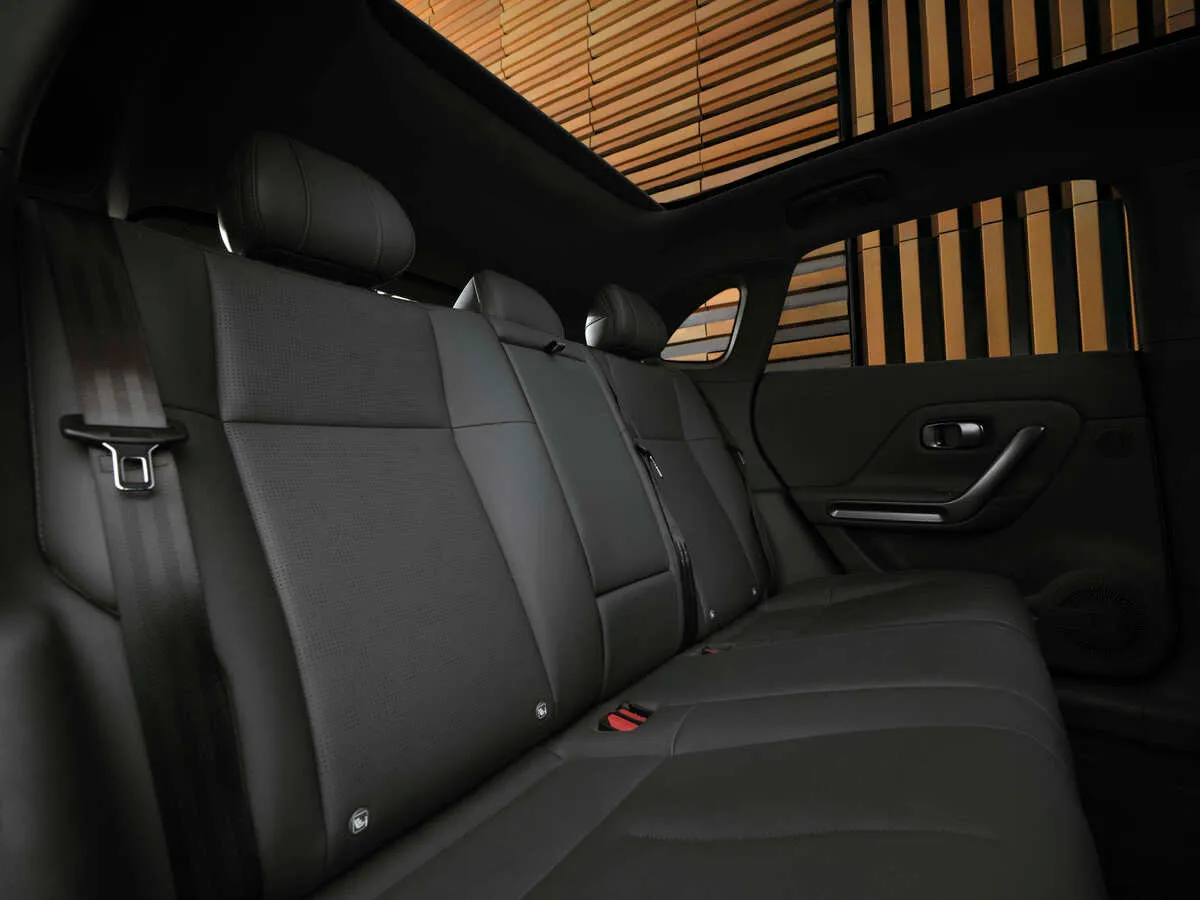
At 4,430 mm long, 1,880 mm wide and 1,520 mm high, on a 2,735 mm wheelbase, the B05 is the same length as a Kia EV4 hatchback and 165 mm longer than an ID.3. That long wheelbase, the same as the bigger B10's, makes for generous rear space, and Leapmotor says shoulder room and headroom in the back are particular strengths. The rear backrest reclines up to 27 degrees, and there are air vents for rear passengers.
The boot is the weak point. It holds 345 litres with the seats up and 1,400 litres with them folded, against 385 litres in the ID.3 Neo and 435 litres in the EV4. The coupé-like roofline is partly to blame, though it helps the B05 to a very low drag coefficient of 0.26. There are 25 storage spaces around the cabin, a 60:40 split rear seat, and two ISOFIX points with top tethers on the outer rear seats.
The front seats fold completely flat, which is useful if you want to rest during a long charging stop.
Tech and equipment
The cabin is built around a 14.6-inch 2.5K touchscreen and an 8.8-inch driver display, running Leapmotor's own Leap OS 4.0 Plus software with real-time navigation, voice control that works for both front seats, and 4G wi-fi. Apple CarPlay and Android Auto are standard.
As in other Leapmotors, a lot of functions live in the screen, and there are few physical buttons beyond those on the steering wheel. The app does a lot: remote climate control, locking, seat and steering wheel heating, finding the car and sending a route to it before you get in. Your phone works as the key, with an NFC card as a back-up, and software updates arrive over the air. Pet Mode, Camping Mode and Cleaning Mode are standard too.
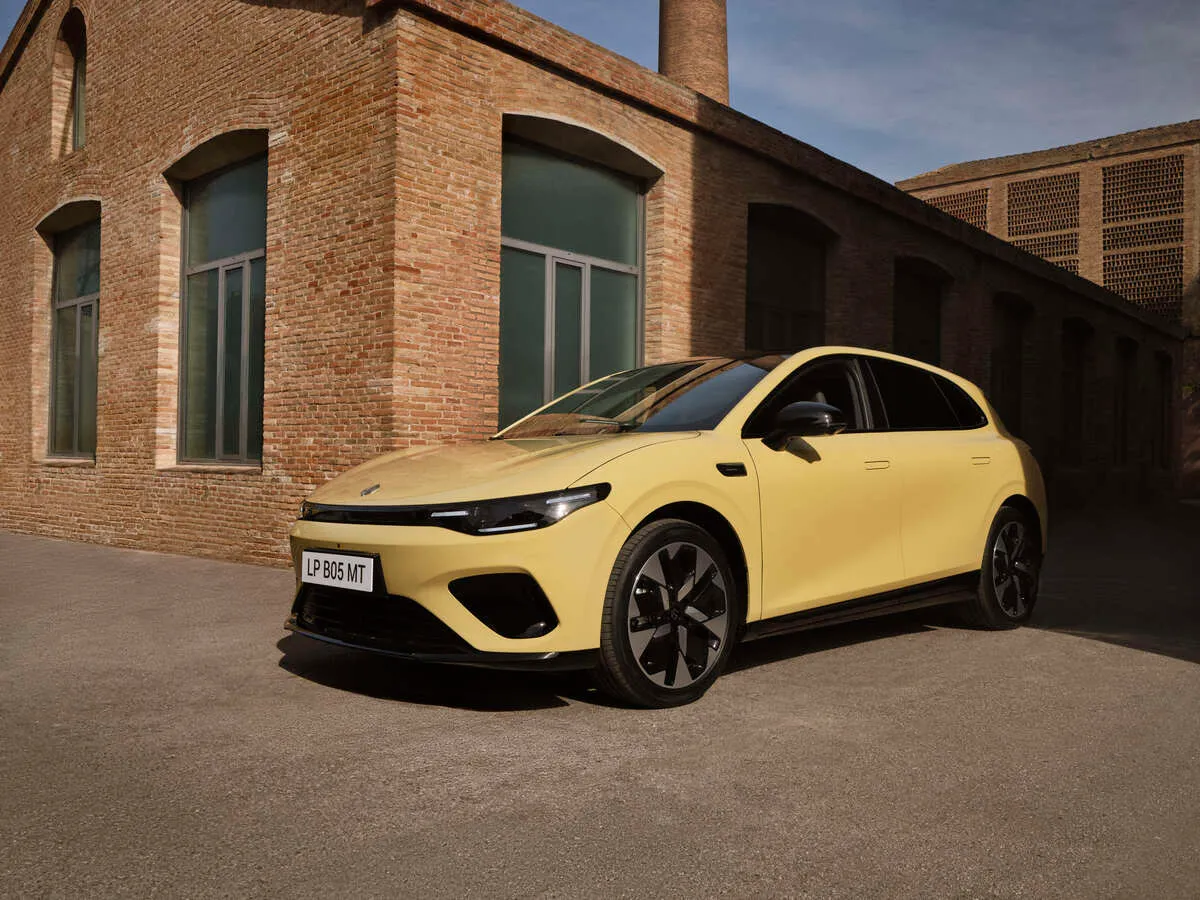
The frameless doors and flush door handles give the B05 a more upmarket look than its price suggests, and the panoramic roof with its electric sunshade comes on the Design and UK cars.
The UK warranty runs for four years or 60,000 miles, with the battery covered for eight years or 100,000 miles. In the Netherlands, the battery warranty is eight years or 160,000 km.
Safety
Euro NCAP awarded the B05 five stars in September 2026 under its new 2026 tests, with scores of 66% for Safe Driving, 77% for Crash Avoidance, 92% for Crash Protection and 89% for Post-Crash Safety. It scored full marks in the side barrier and side pole tests, and the rear passengers were fully protected in the frontal, side and rear impact tests.
Seven airbags are standard, including a centre airbag between the front seats, which Euro NCAP credited with reducing injuries in side impacts. There are 21 driver-assistance systems, using 14 cameras and sensors, including adaptive cruise control with traffic jam assist, automatic lane changes, blind-spot detection, rear cross-traffic braking and a warning for opening a door into a cyclist's path.
Rivals
The B05's obvious rivals are the family hatchbacks from Volkswagen, Kia and Hyundai, all of which cost more in Germany for less range.
| Car | From (Germany) | Battery | WLTP range | Boot |
|---|
| Leapmotor B05 67.1kWh Design | €31,900 | 67.1kWh | 482 km | 345 litres |
| VW ID.3 Neo 50kWh | €33,995 | 50kWh | 417 km | 385 litres |
| Kia EV4 58.3kWh | €37,590 | 58.3kWh | 440 km | 435 litres |
| Hyundai Ioniq 3 Long Range | €32,950 | 61kWh | 497 km | 441 litres |
(German list prices before incentives, checked 17 November 2026. The Kia and Hyundai batteries are gross capacities.)
VW ID.3 Neo: the updated ID.3 costs €2,095 more than the B05 Design in Germany with a smaller battery and 65 km less range, though it has a 40-litre bigger boot and VW's large dealer network. The 58kWh version goes slightly further than the B05. See our VW ID.3 Neo specs and prices.
Kia EV4: the EV4 hatchback is the same length but has a much bigger boot, at 435 litres, and the 81.4kWh version goes up to 625 km. The 58.3kWh car costs €5,690 more than the B05 Design in Germany for 42 km less range. Read our Kia EV4 review and see the Kia EV4 specs and prices.
Hyundai Ioniq 3: Hyundai's new hatchback is smaller on the outside but has a 441-litre boot and 15 km more range than the B05, for about €1,000 more in Germany. It's front-wheel drive and less powerful. Read our Hyundai Ioniq 3 review and see the Hyundai Ioniq 3 specs and prices.
Inside Leapmotor's own range, the Leapmotor B10 family SUV shares the B05's motor and batteries, with a 430-litre boot and a higher driving position, at a higher price.
Our verdict
The B05 makes most sense if you want a family-sized EV with plenty of range and equipment for the least money, and you don't need a big boot. You get rear-wheel drive, a heat pump, five Euro NCAP stars and quick charging for less than an ID.3 Neo, EV4 or Ioniq 3 in most markets. We'd go for the 67.1kWh battery: the extra 81 km of range is worth the price difference, and in the UK it's the only option anyway. Buyers who regularly fill the boot, or who want a sharper drive, should look at the rivals above.
Strengths:
- 174 kW peak charging, against 105 kW for the ID.3 Neo and 101 kW for the EV4
- 482 km of WLTP range for less than an EV4 58.3kWh's 440 km
- Heat pump and 360-degree camera standard on every version
- 92% for Crash Protection in Euro NCAP's 2026 tests
Weaknesses:
- A 345-litre boot, well short of the EV4's 435 litres and the Ioniq 3's 441
- Road tests find the driver-assistance warnings overeager
- Driving modes and many other controls are only in the touchscreen
- Leapmotor doesn't publish a 10-80% charging time, so comparing charging with rivals is harder
Leapmotor B05 FAQs
Does the Leapmotor B05 qualify for the Electric Car Grant? Leapmotor offers its own £1,500 Leap Grant to UK private buyers, taking the price to £28,995. That's a manufacturer discount and separate from the government's Electric Car Grant.
Is the Leapmotor B05 rear-wheel drive? Yes. Every B05 has a single 160 kW (218 hp) motor driving the rear wheels, with a 50:50 weight distribution.
How big is the Leapmotor B05's boot? It holds 345 litres with the rear seats up and 1,400 litres with them folded, smaller than most rivals in this class.