
BMW i3 crosses Europe with under 3 hours of charging

From the top of Norway to the tip of Spain, the new i3 spent less than three hours plugged in.

Updated

Share:
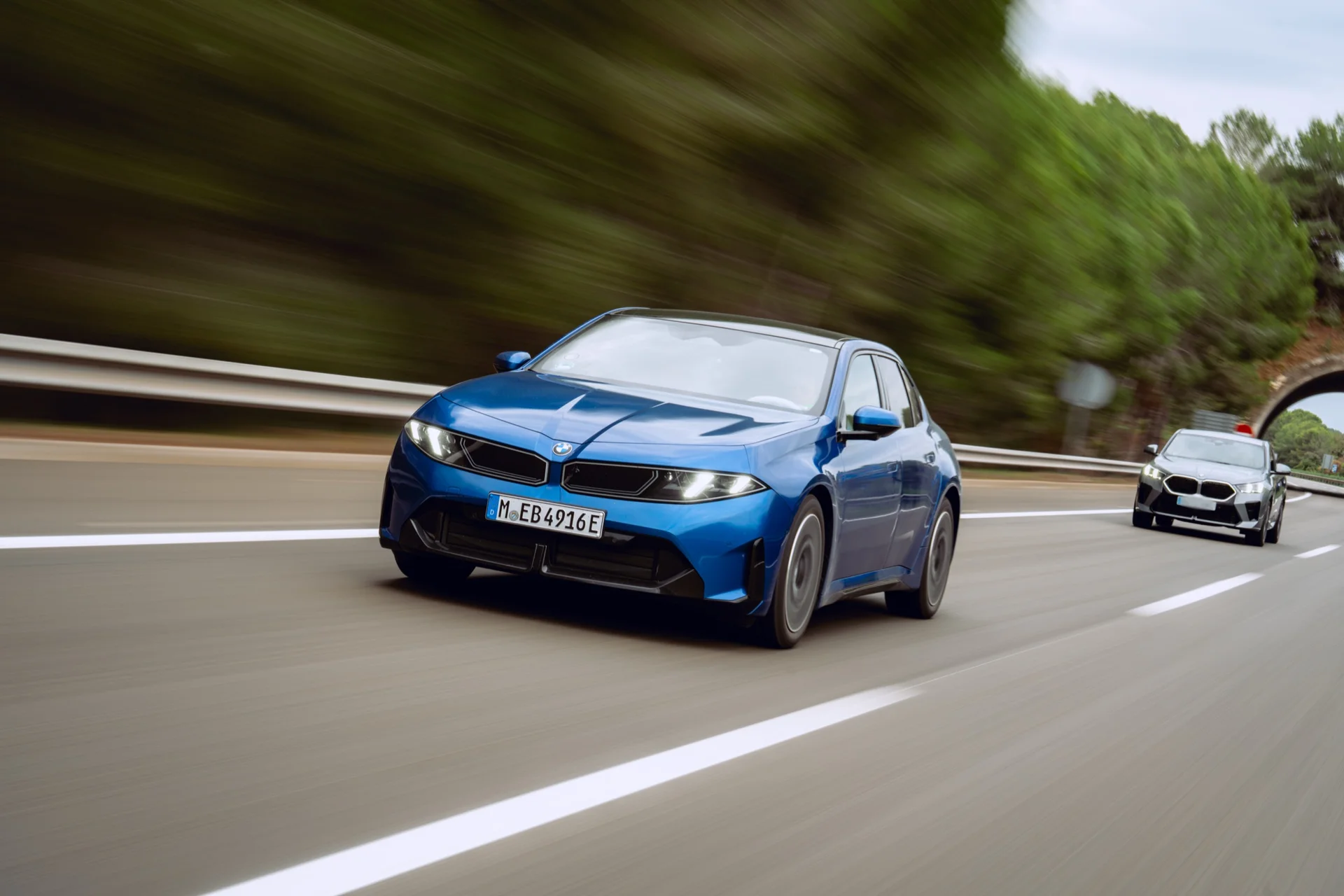
Blue BMW i3 50 xDrive on a motorway during the North Cape to Tarifa drive
Source: BMW

BMW has driven its new i3 50 xDrive the length of Europe, 5,886.7 km from Norway's North Cape to Tarifa in Spain, and spent just 2 hours, 45 minutes and 54 seconds charging along the way. The car averaged 12.5 kWh per 100 km, which is better than the i3's best official WLTP figure.

The run, on a route known as the Paneuropeana, connects the northernmost point of mainland Europe you can reach by car with the southernmost. BMW says it beat the previous record for the route, set in 2017, by more than seven hours.

How the drive went

The i3 covered the distance in 3 days, 2 hours and 41 minutes of driving, across eight countries, at an average of 79.7 km/h. It charged only at public chargers on the national networks along the route, and the checkpoints were fixed in advance but the charging stops weren't. One engineer drove the record car alone, with a second i3 and an iX3 50 xDrive along as support. BMW says all three cars had the same hardware and software as the cars customers can order.

FigureBMW i3 50 xDrive on the drive
Distance5,886.7 km (3,658 miles)
Driving time3 days, 2 h 41 min
Total charging time2 h 45 min 54 s
Average speed79.7 km/h (50 mph)
Average consumption12.5 kWh/100 km
Average charging power275 kW

(Figures from BMW. Official WLTP consumption for the i3 50 xDrive is 13.4-18.0 kWh/100 km.)

Put another way, the car spent under 4% of its time on the move plugged in, or about 28 minutes of charging for every 1,000 km. That's what a big battery and a high average charging speed do together: the i3 can add up to 423 km of WLTP range in ten minutes at a 400 kW charger, and averaging 275 kW across a whole trip means it was spending most of its charging time near the top of its curve, not trickling in at the end.

At 12.5 kWh per 100 km, the 108.7 kWh battery would cover about 870 km from full to empty. That's short of the official 912 km WLTP figure, which is the best case for the most efficient wheel and trim combination, but it's a useful guide to what a long trip looks like at a steady pace.
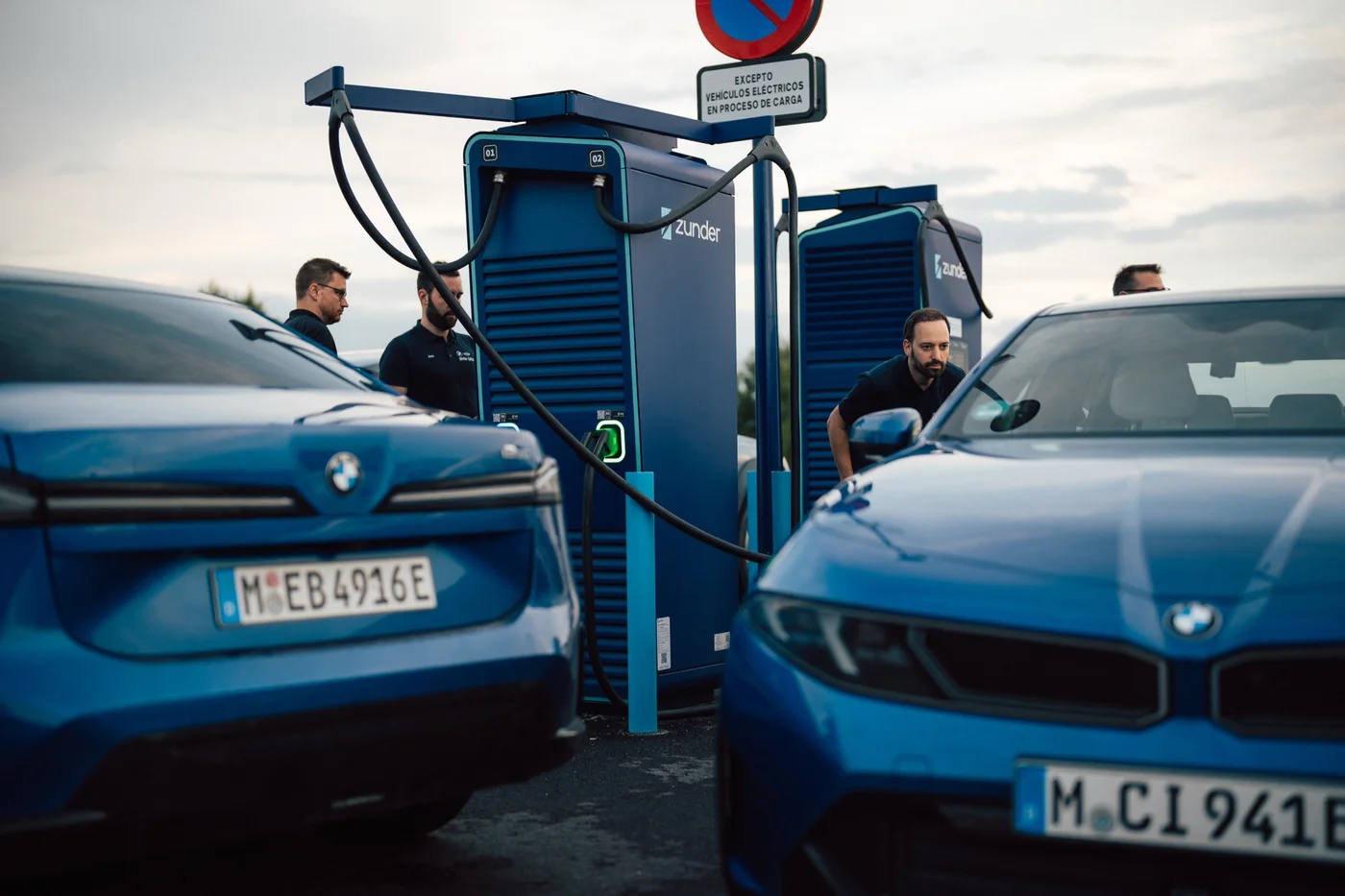
Two BMW i3 50 xDrive cars plugged in at a fast charger during the record drive

Source: BMW

Get the latest EV news and reviews straight to your inbox

Unsubscribe any time. See our privacy policy.

What it means for a normal long trip

Treat this as a best case, not a typical one. An average of 79.7 km/h over more than 5,800 km includes plenty of country roads and towns, and consumption climbs quickly at motorway speeds of 120-130 km/h. It also helps to have a team planning each stop around fast, working chargers. Your own trip will use more energy and more time at chargers.

Even so, the efficiency is striking for a car with 345 kW (469 hp) and a 4.7-second 0-100 km/h time. BMW puts it down to a drag coefficient of 0.21, the lowest of any BMW so far, motors that lose 40% less energy than the previous generation, low rolling-resistance tyres on 19-inch aero wheels, and motors that handle more than 95% of braking, recovering energy as they do.

For running costs, the energy used on the whole drive works out at roughly 735 kWh. At the average UK rapid charging price of 82p per kWh in October, that's about £600, or about £10.25 per 100 km. At ESB's Irish pay-as-you-go rate of €0.83 per kWh for fast and high-power chargers, it's about €610. Charging at home on an overnight tariff would cost a fraction of that, but on a trip this long most of the energy has to come from public chargers.

Prices and the i3 range

The i3 50 xDrive costs from €66,685 in Ireland, €65,900 in Germany, €63,946 in the Netherlands and £53,425 in the UK. The cheaper i3 40 xDrive, with a smaller battery, 300 kW charging and up to 710 km of WLTP range, starts at €57,891 in the Netherlands, €59,900 in Germany and £47,925 in the UK, and isn't yet priced in Ireland. Neither qualifies for the SEAI grant, VRT relief or the UK's Electric Car Grant. Both versions charge from 10% to 80% in 21 minutes.

(Prices correct at 4 November 2026. Charging prices from Zapmap's October 2026 index and ESB's rates from 2 November 2026.)

For the full specs, trims and rivals, read our BMW i3 review, or see the i3 in our EV database.