
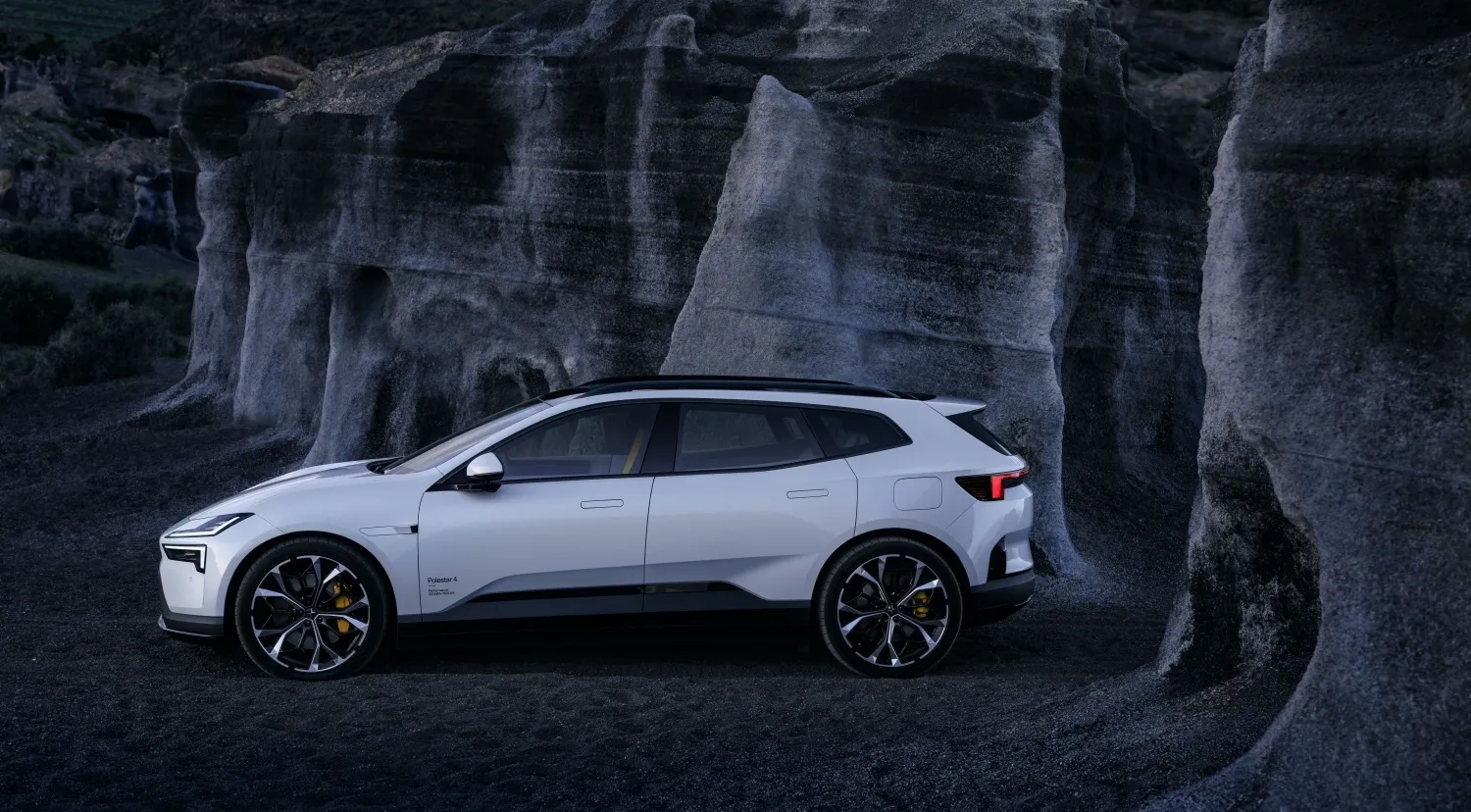
The Polestar 4 SUV is the more practical version of the Polestar 4, with a proper rear window, a taller roof and slightly more boot space than the coupé. It's also cheaper: prices start from €56,690 in Ireland and £54,750 in the UK, around €2,000 (£2,000) less than the equivalent coupé, for a 100 kWh electric SUV with a WLTP range of up to 630 km (391 miles).
Polestar 4 SUV key specs
| Rear motor | Dual motor | |
|---|---|---|
| Irish price | €56,690 | not yet confirmed |
| UK price | £54,750 | £60,750 |
| Battery | 100 kWh | 100 kWh |
| WLTP range | 630 km (391 miles) | 600 km (373 miles) |
| Peak DC charging | 200 kW | 200 kW |
| 10-80% | 30 min | 30 min |
| AC charging | 11 kW | 11 kW |
| Power | 200 kW (272 hp) | 400 kW (544 hp) |
| 0-100 km/h | 7.3 sec | 3.9 sec |
| Boot | 530 litres | 530 litres |
| Length | 4,840 mm | 4,840 mm |
| Irish VRT relief / UK grant | No / No | No / No |
(Prices and specs from Polestar, correct at 29 October 2026. Battery capacity is Polestar's quoted figure.)
Prices and trims
There are two versions, both with the same 100 kWh battery: the rear-wheel-drive Rear motor and the four-wheel-drive Dual motor. In Europe, the Rear motor starts at €55,800 in the Netherlands, €56,690 in Ireland, €56,800 in France and €57,900 in Germany. The Dual motor costs €59,800 in the Netherlands, €64,800 in France and €65,900 in Germany, while Polestar Ireland hasn't listed a Dual motor price yet. In the UK, the SUV costs £54,750 as a Rear motor and £60,750 as a Dual motor.
| Market | Rear motor | Dual motor |
|---|---|---|
| Netherlands | €55,800 | €59,800 |
| Ireland | €56,690 | not yet confirmed |
| France | €56,800 | €64,800 |
| Germany | €57,900 | €65,900 |
| UK | £54,750 | £60,750 |
(Prices from Polestar's national websites, correct at 29 October 2026.)
That makes the SUV the cheaper body style. In the UK, it undercuts the coupé by £2,000 as a Rear motor and £3,000 as a Dual motor, and in Ireland the Rear motor is €2,000 less than the coupé's €58,690. Polestar UK is also taking £4,000 off every Polestar 4 SUV ordered between 1 October 2026 and 6 January 2027, as long as you buy outright or with Polestar's own loan rather than on contract hire. In the Netherlands, there's an extra €3,000 of trade-in value on stock cars ordered by 30 November.
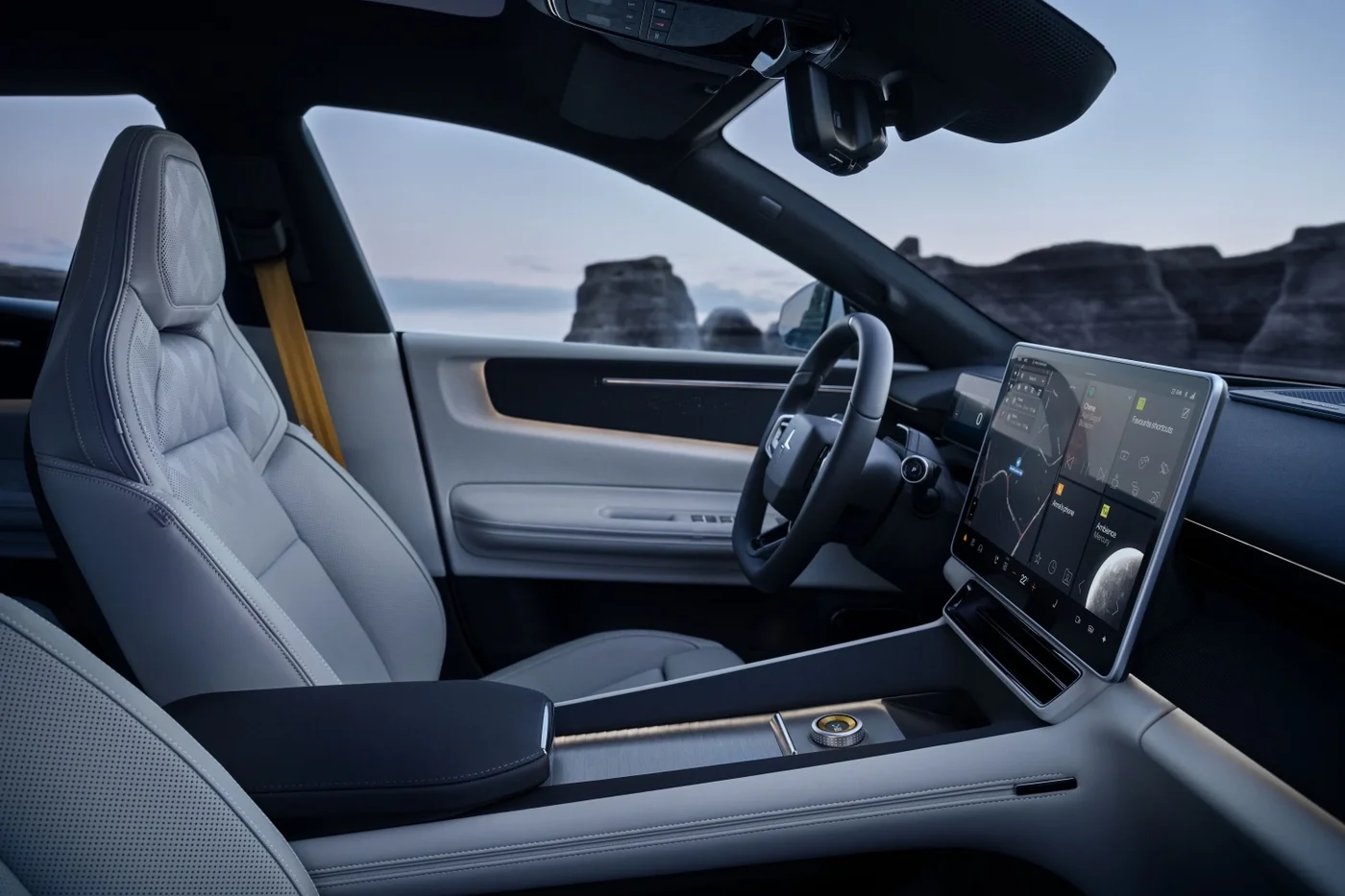
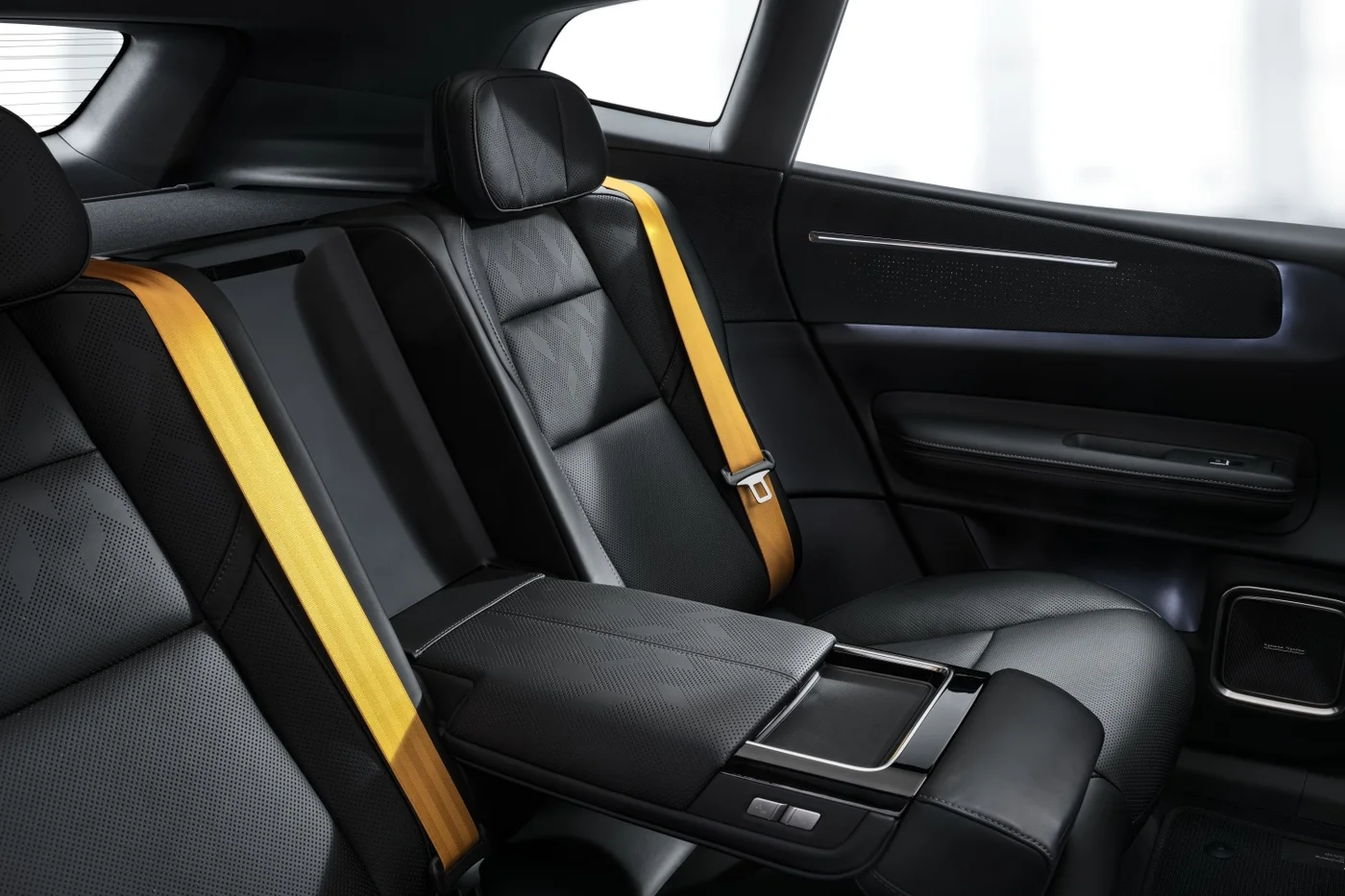
Standard equipment is generous. Every car gets a panoramic glass roof, a heated rear window with a wiper, a power tailgate, heated front seats, 360-degree cameras, a 15.4-inch centre screen with Google built in, and 20-inch alloy wheels. The Dual motor adds diamond-cut 20-inch wheels and gold-striped seatbelts.
Source: Polestar
The options come in packs. The Pilot pack adds Pilot Assist, lane change assist and a parking assistant. The Comfort pack brings 12-way power front seats, a heated steering wheel and heated rear seats. The Plus pack is the big one: a 14.7-inch head-up display, Harman Kardon audio with 12 speakers, pixel LED headlights, three-zone climate control, electrically reclining rear seats, a hands-free tailgate and a small touchscreen for rear passengers. The Prime pack bundles all three with privacy glass, and Auto Express reports it costs £4,000 in the UK.
The Dual motor can also have a Performance pack, which Auto Express prices at £3,500 in the UK. It brings 22-inch forged wheels, gold Brembo front brakes and adaptive ZF dampers with stiffer springs and anti-roll bars. A Nappa upgrade adds Bridge of Weir leather, ventilated and massaging front seats and a 16-speaker Harman Kardon system.
At these prices, neither version qualifies for the Electric Car Grant in the UK, which only covers cars costing up to £37,000. In Ireland, the SUV is priced above €50,000, the level at which VRT relief on electric cars stops.
Battery, range and charging
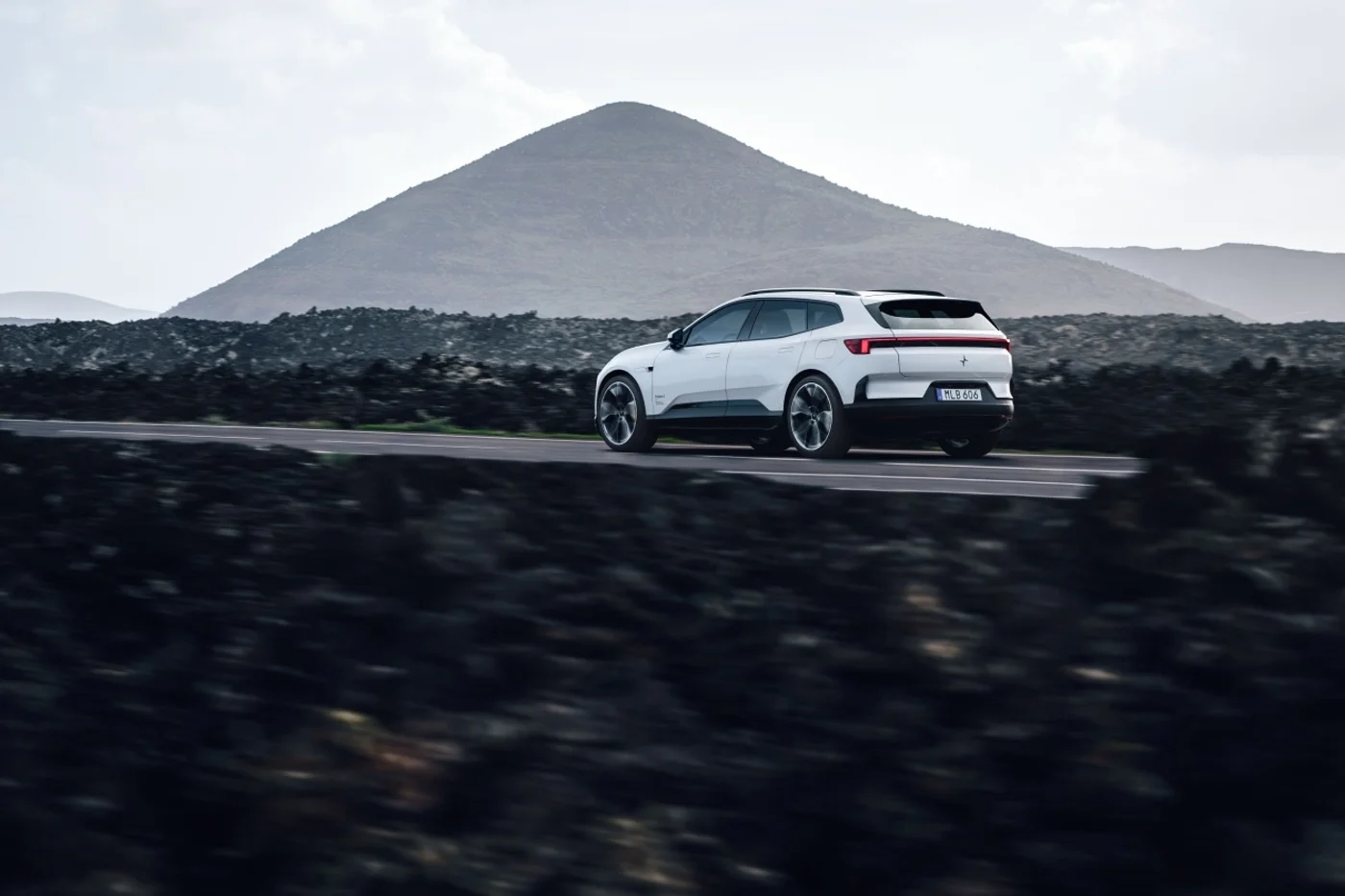
Both versions use a 100 kWh battery, and the Rear motor goes furthest, with a WLTP range of 630 km (391 miles). That's 10 km more than the Rear motor coupé, which is a little surprising for a taller car. The Dual motor manages 600 km (373 miles). Polestar quotes energy use of 17.8 kWh/100 km for the Rear motor and 19.0-21.6 kWh/100 km for the Dual motor, so the four-wheel-drive version costs noticeably more to run, especially on bigger wheels.
Source: Polestar
In practice, 630 km means a full charge covers a week of commuting for most drivers, and long motorway trips with a single stop. Real-world range will be lower, particularly at motorway speeds and in cold weather, but there's plenty in hand.
The battery runs at 400 volts rather than the 800 volts of some rivals, and peak DC charging is 200 kW. Polestar quotes 30 minutes for a 10-80% charge on a fast enough charger, which adds roughly 440 km (275 miles) of WLTP range in half an hour. That's competitive, but some rivals are much quicker: Volvo quotes 16 minutes for the same charge in the EX60.
At home, the 11 kW on-board charger fills the battery from empty in 11 hours on a three-phase wallbox, which most Irish and UK homes don't have. On a typical 7 kW home charger, an overnight charge will still add several hundred kilometres. The SUV also supports Plug & Charge, so you plug in at compatible public chargers and pay without an app or card, and vehicle-to-load can power external devices at up to 3.3 kW using an adapter that's sold separately.
Performance
Neither version is slow. The Rear motor has 200 kW (272 hp) and 343 Nm, which is enough for 0-100 km/h in 7.3 seconds (0-60mph in 7.1). The Dual motor doubles the power to 400 kW (544 hp) and 686 Nm, and cuts the 0-100 km/h time to 3.9 seconds (0-60mph in 3.8). Both have a top speed of 200 km/h (124 mph).
The Dual motor's figures are those of a sports car, and most drivers will never use all of it. Its front motor can disconnect when it isn't needed, to save energy. Unless you need four-wheel drive or regularly tow heavy loads, the Rear motor makes more sense: it's cheaper, it goes further and it's quick enough.
Both versions have three steering settings and three levels of regenerative braking, including one-pedal driving. The Rear motor weighs 2,265 kg and the Dual motor 2,375 kg.
Size and practicality
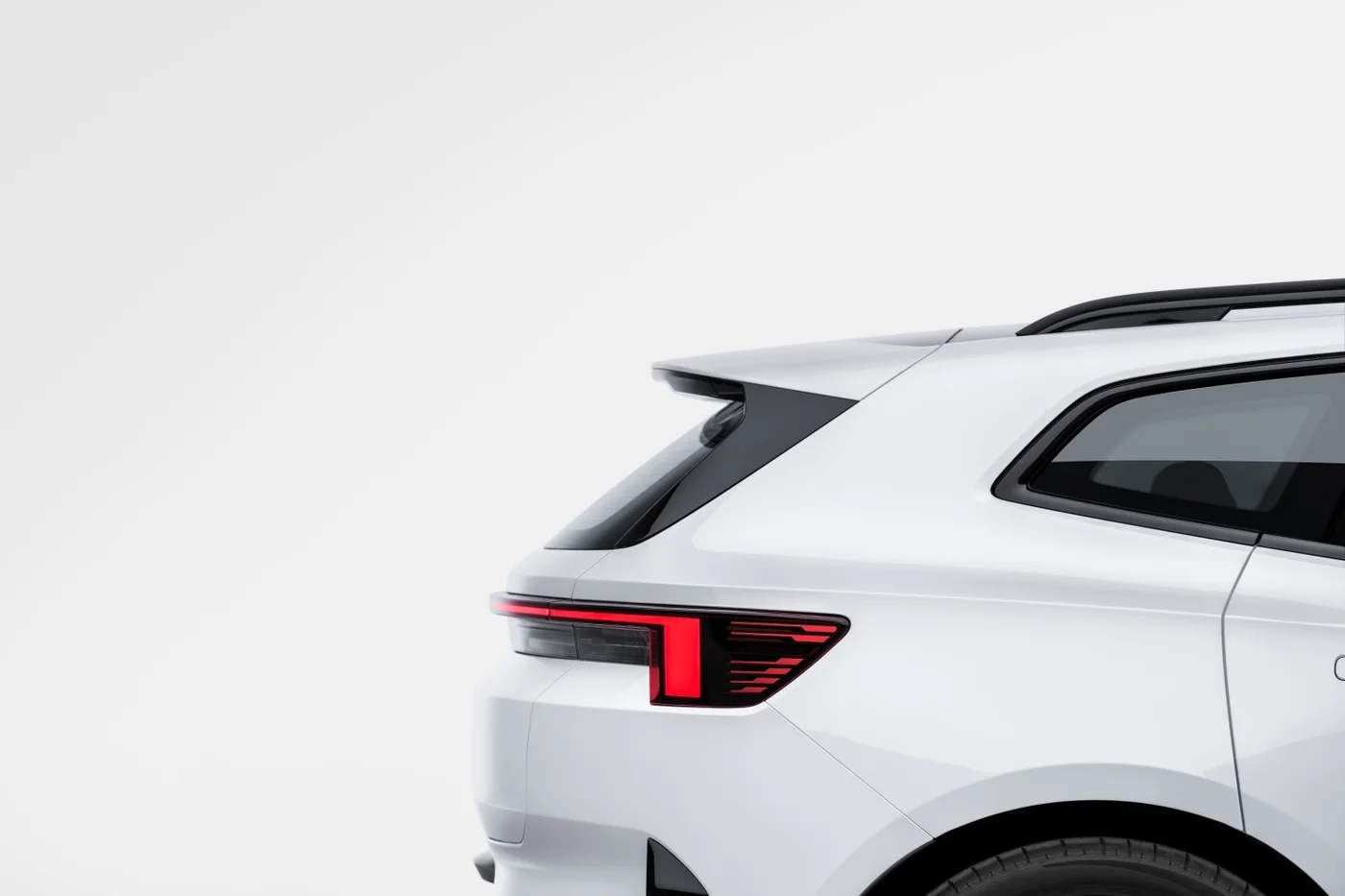
The big change from the coupé is at the back. The Polestar 4 coupé has no rear window and relies on a camera feeding a digital mirror. The SUV has a conventional heated rear window with a wiper and a normal mirror. You can still order the 8.9-inch digital mirror, which helps when the boot is loaded to the roof.
Source: Polestar
The SUV is 4,840 mm long, 1,994 mm wide (2,139 mm including mirrors) and 1,556 mm tall, so it's 22 mm taller than the coupé. The 2,999 mm wheelbase is unchanged and long for the class, which is good news for rear legroom. Auto Express reports that the SUV has 2.5 cm more rear headroom than the coupé.
Source: Polestar
Source: Polestar
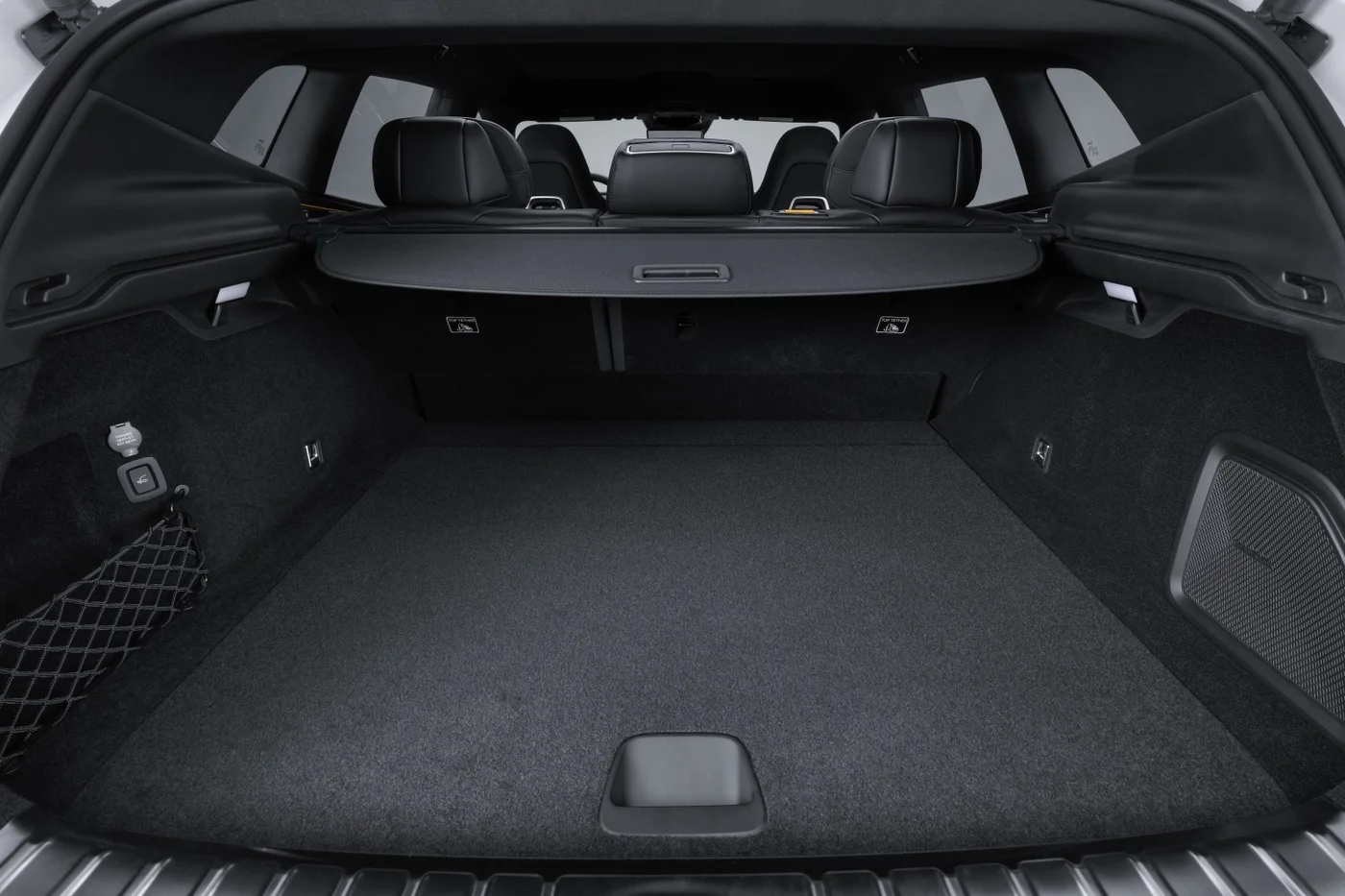
The boot holds 530 litres up to the rear seatbacks, including the space under the floor, which is 6 litres more than the coupé. Load it to the roof and that rises to 655 litres, and with the 60/40 split rear seats folded there's 1,665 litres. The boot opening is also much taller than the coupé's, at 571 mm against 490.5 mm, so bulky items are easier to fit. There's a 15-litre front storage compartment for cables.
The Rear motor can tow up to 1,500 kg and the Dual motor up to 2,000 kg, with a folding towbar available as an extra, and the standard roof rails take 100 kg. There are ISOFIX mountings on the rear seats. The turning circle is 11.64 metres.
Tech and equipment
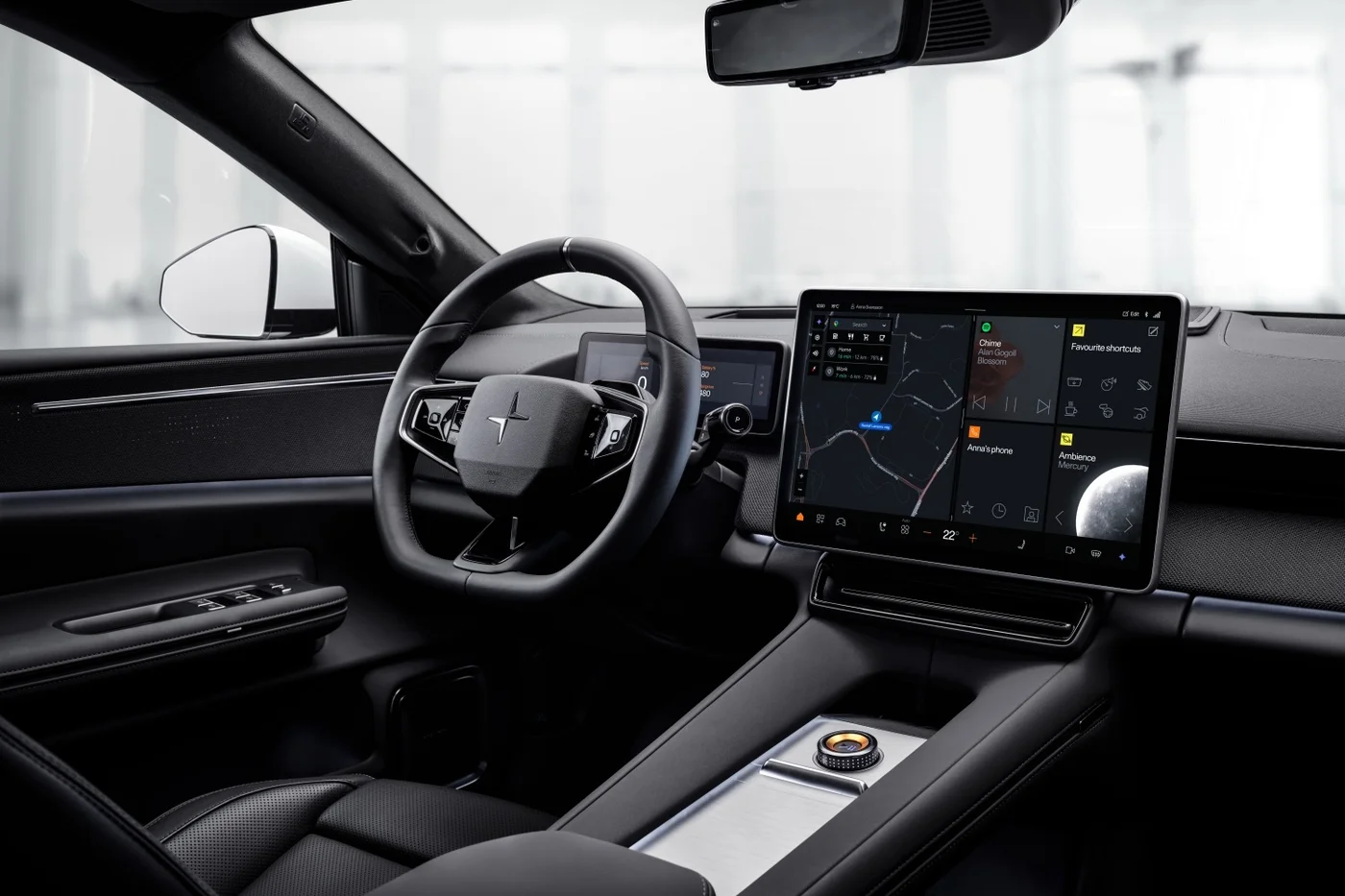
The cabin is dominated by a 15.4-inch centre screen running Google built-in, with Google Maps, Google Assistant and Gemini, so you can ask the car to change the climate settings or plan a route. Wireless Apple CarPlay is standard too. The driver gets a 10.2-inch display behind the wheel, and the Plus pack adds the 14.7-inch head-up display.
Source: Polestar
Connectivity is 5G, with over-the-air updates and the first 12 months of Connected services plus included, which covers apps, streaming and browsing. You can unlock the car with a phone, an ultra-wideband key or an NFC key card, and up to six driver profiles store seat, mirror and steering settings. There's a built-in dashcam, although it needs a memory card.
Standard audio is an eight-speaker system, while the Plus pack's Harman Kardon setup has 12 speakers and 1,320 watts. Every car has a heat pump to make the most of the battery in cold weather, and preconditioning can be scheduled from the Polestar app.
Safety
The Polestar 4 SUV hasn't been tested separately by Euro NCAP. The Polestar 4 coupé it's based on scored five stars in 2025, with 92% for adult occupant protection, 85% for child occupants, 81% for vulnerable road users and 79% for safety assist.
Standard safety kit includes seven airbags, automatic emergency braking and steering for cars, cyclists and pedestrians, blind spot monitoring with steering assist, rear collision warning, cross traffic alert with braking and an exit warning for passengers opening doors into traffic. Adaptive cruise control is standard, while Pilot Assist, which also steers, comes with the Pilot pack.
Rivals
Source: Polestar
The Polestar 4 coupé costs more, at €58,690 in Ireland and £56,750 in the UK, for a WLTP range of 620 km (385 miles) and less headroom, so the SUV is the better buy unless you prefer the coupé's styling.
The Volvo EX60 is the Polestar's Swedish cousin and a closer rival than it looks. The rear-wheel-drive P6 costs €66,695 in Ireland, €62,990 in Germany and £56,860 in the UK, with a WLTP range of 611 km (380 miles), and it charges much faster: 10-80% in 16 minutes.
The Tesla Model Y Long Range RWD is cheaper in the UK at £44,990, according to Electrive's report of its February 2026 launch, with a WLTP range of 616 km (383 miles). It has a smaller battery but better efficiency, and Tesla's Supercharger network.
Our verdict
The Polestar 4 SUV fixes the coupé's biggest weakness, the missing rear window, and it's cheaper, roomier and goes slightly further on a charge. The Rear motor is the pick: 630 km of range, decent performance and a generous standard specification for €56,690 or £54,750, with Polestar UK's £4,000 discount making it better value still.
The weaknesses are charging and price. A 30-minute 10-80% charge is fine, but the Volvo EX60 takes about half as long, and the most desirable equipment sits in option packs that push the price up quickly. It's also too expensive for the UK's Electric Car Grant or Irish VRT relief.
Strengths: long range, roomy cabin and big boot, real rear window, strong standard equipment, cheaper than the coupé
Weaknesses: slower charging than the fastest rivals, key features in paid packs, no grant or VRT relief
FAQs
What's the difference between the Polestar 4 SUV and the coupé? The SUV has a glass rear window and a conventional mirror, 22 mm more height, 2.5 cm more rear headroom (according to Auto Express), a slightly bigger boot with a taller opening and roof rails. It's also cheaper and has a 10 km longer WLTP range in Rear motor form.
What is the Polestar 4 SUV's range? Polestar quotes a WLTP range of 630 km (391 miles) for the Rear motor and 600 km (373 miles) for the Dual motor.
Does the Polestar 4 SUV qualify for the Electric Car Grant? No. The UK Electric Car Grant only applies to cars costing up to £37,000, and the Polestar 4 SUV starts at £54,750.