
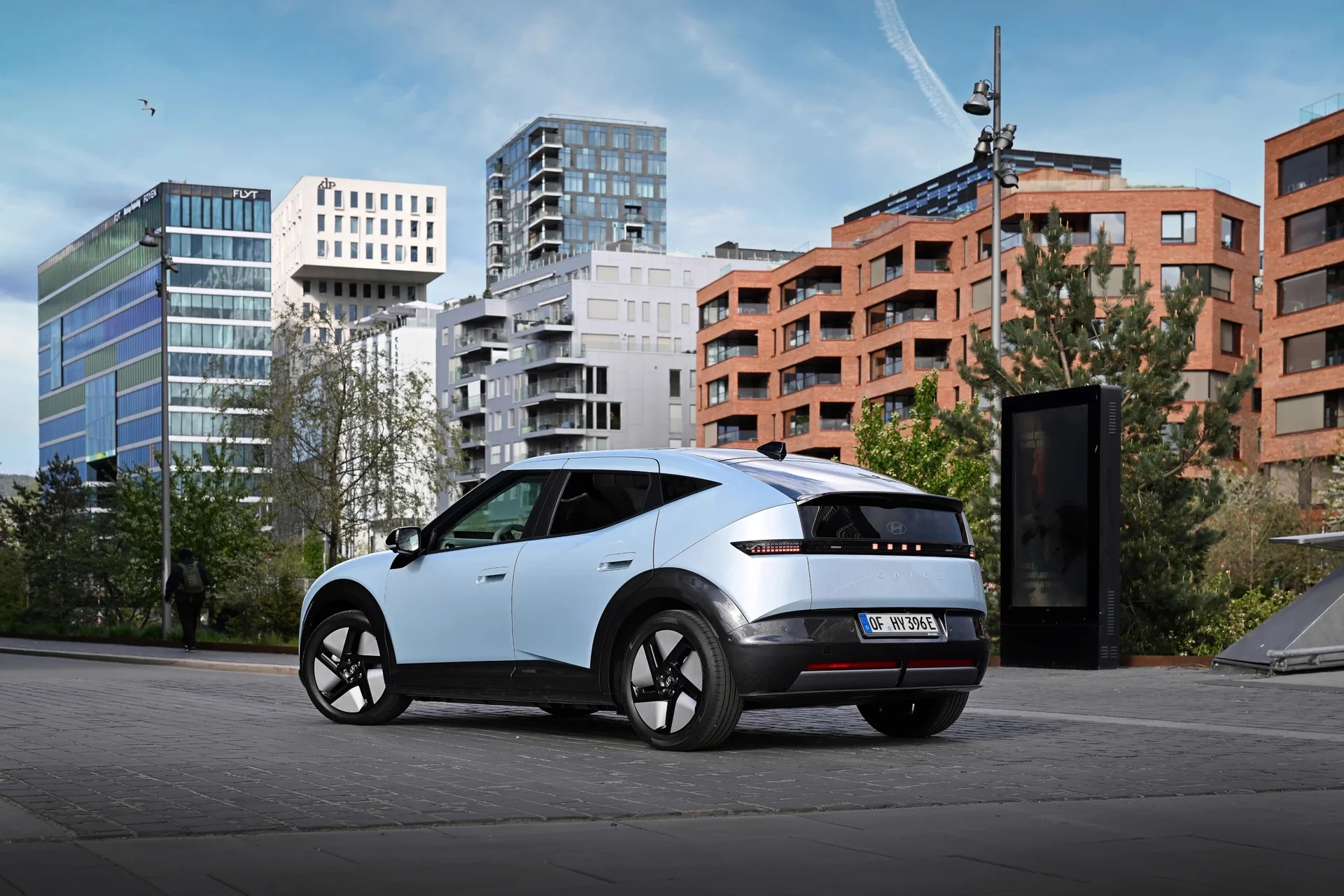
The Ioniq 3 is Hyundai's smallest and cheapest electric car so far, and it was designed in Europe with European buyers in mind. Prices start at €27,995 in the Netherlands and Ireland, €28,950 in Germany and €29,995 in France. In the UK, where every version gets the full £3,750 Electric Car Grant, it starts at £18,495.
You get a choice of a 42.2kWh or 61kWh battery. The bigger one gives a WLTP range of up to 497 km (308 miles), which is a lot for a car that's just over four metres long.
Key specs
| Standard Range | Long Range | |
|---|---|---|
| Battery | 42.2kWh | 61kWh |
| WLTP range | 344 km (214 miles) | 497 km (308 miles) |
| Power | 107.8 kW (147 PS) | 99.5 kW (135 PS) |
| Torque | 250 Nm | 250 Nm |
| 0-100km/h | 8.8 seconds | not published |
| 10-80% DC charge | about 29 minutes | about 30 minutes |
| Boot | 441 litres | 441 litres |
| Length | 4,155 mm | 4,155 mm |
Prices
| Market | Standard Range | Long Range |
|---|---|---|
| Netherlands | €27,995 | €31,995 |
| Ireland | €27,995 | not yet published |
| Germany | €28,950 | €32,950 |
| France | €29,995 | €33,995 |
| UK (after grant) | £18,495 | £21,995 |
(Prices correct at 28 October 2026. French prices are before the income-based government incentive, and the UK price includes the £3,750 Electric Car Grant.)
The Long Range battery adds €4,000 in most markets, and it's the version most buyers should look at.
Incentives can bring the price down further. In France, the Ioniq 3 qualifies for an income-based government incentive worth between €3,600 and €6,000, which can take the entry price down to €23,995. In the Netherlands, prices already include VAT, registration tax and delivery, and Hyundai is offering up to €750 off selected cars until the end of December.
Trim names vary from country to country. The Netherlands gets six versions: Select, Trend and Vision are available with either battery, while the N Line, Prime and N Line Evo only come with the 61kWh pack. The range tops out at €41,995. The UK has four: Advance, Premium, Ultimate and N Line Evo, from £18,495 to £28,195 after the grant. In the UK, the smaller battery is only offered on the entry Advance trim, while in Germany you can have the 61kWh battery on the entry Select, which brings the Long Range price down to €32,950.
Range and charging
The Long Range Ioniq 3 has a WLTP range of 497 km (308 miles). That's further than the Cupra Raval, Renault 5 or Volkswagen ID Polo can manage on a charge.
The Standard Range car's 344 km (214 miles) is more than enough if most of your driving is local and you can charge at home. It's also the more powerful car: unusually, the smaller battery is paired with the stronger motor, 147 PS against 135 PS. Both have the same 250 Nm of torque.
On a fast public charger, Hyundai quotes around 29 minutes from 10% to 80% for the Standard Range and around 30 minutes for the Long Range. Like any EV, it charges more slowly in cold weather. Higher trims have battery pre-conditioning, which warms the battery on the way to a charger so it charges faster in winter. In the UK it's standard from the Premium trim upwards, and it's worth having if you use public chargers often.
At home, a 7kW wallbox charges the Standard Range from 10% to 100% in about six hours 20 minutes, and the Long Range in about eight and a half. Either way, it's full by the morning. Faster 11kW home charging is available as an option on some versions, if your house has a three-phase supply.
Source: Hyundai
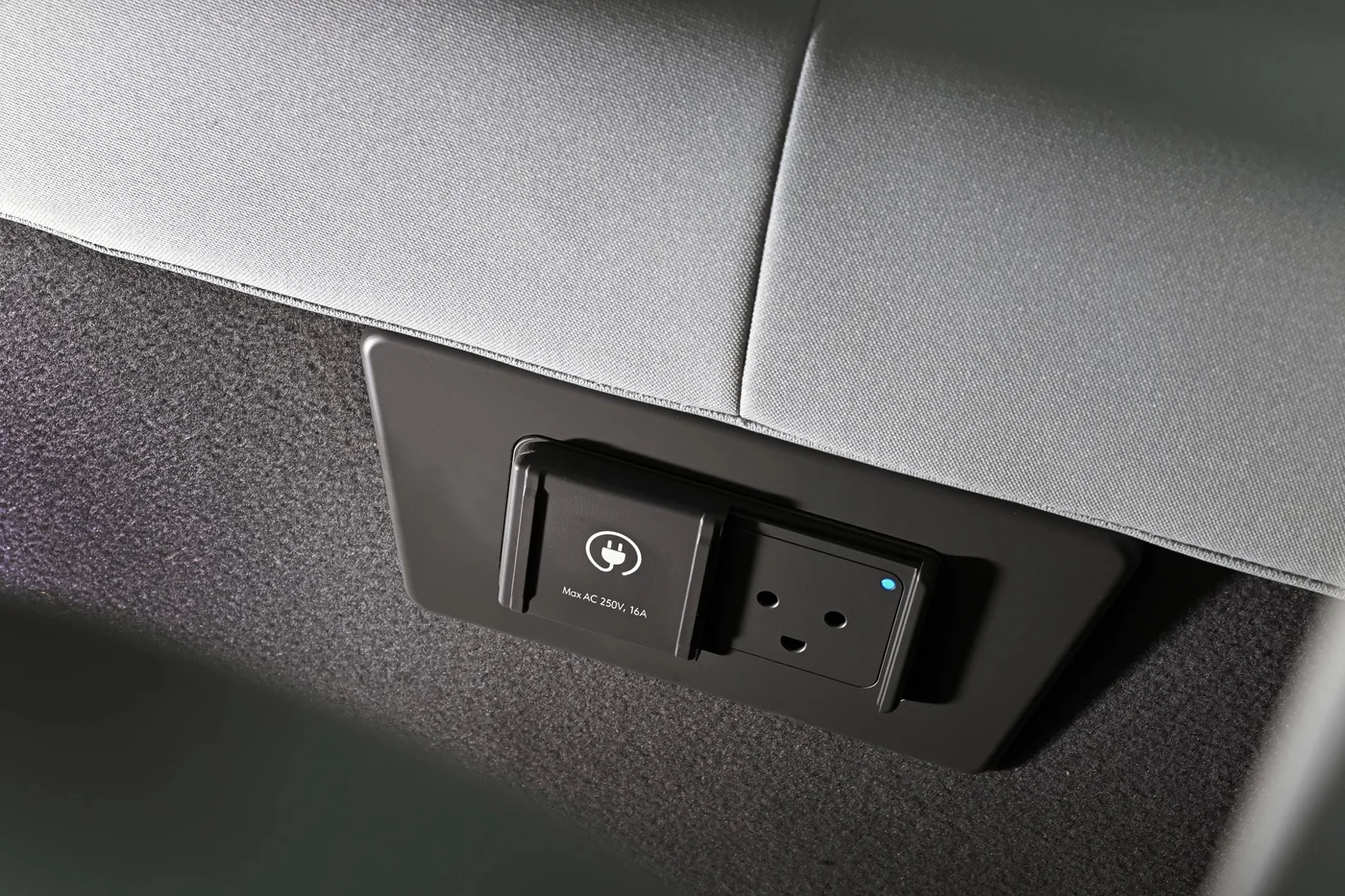
The same option pack can add a heat pump, which helps preserve range in winter, and vehicle-to-load (V2L). V2L turns the car into a power source, so you can run a laptop, an e-bike charger or camping gear from the battery through an external socket or a plug inside the cabin.
Performance
Source: Hyundai
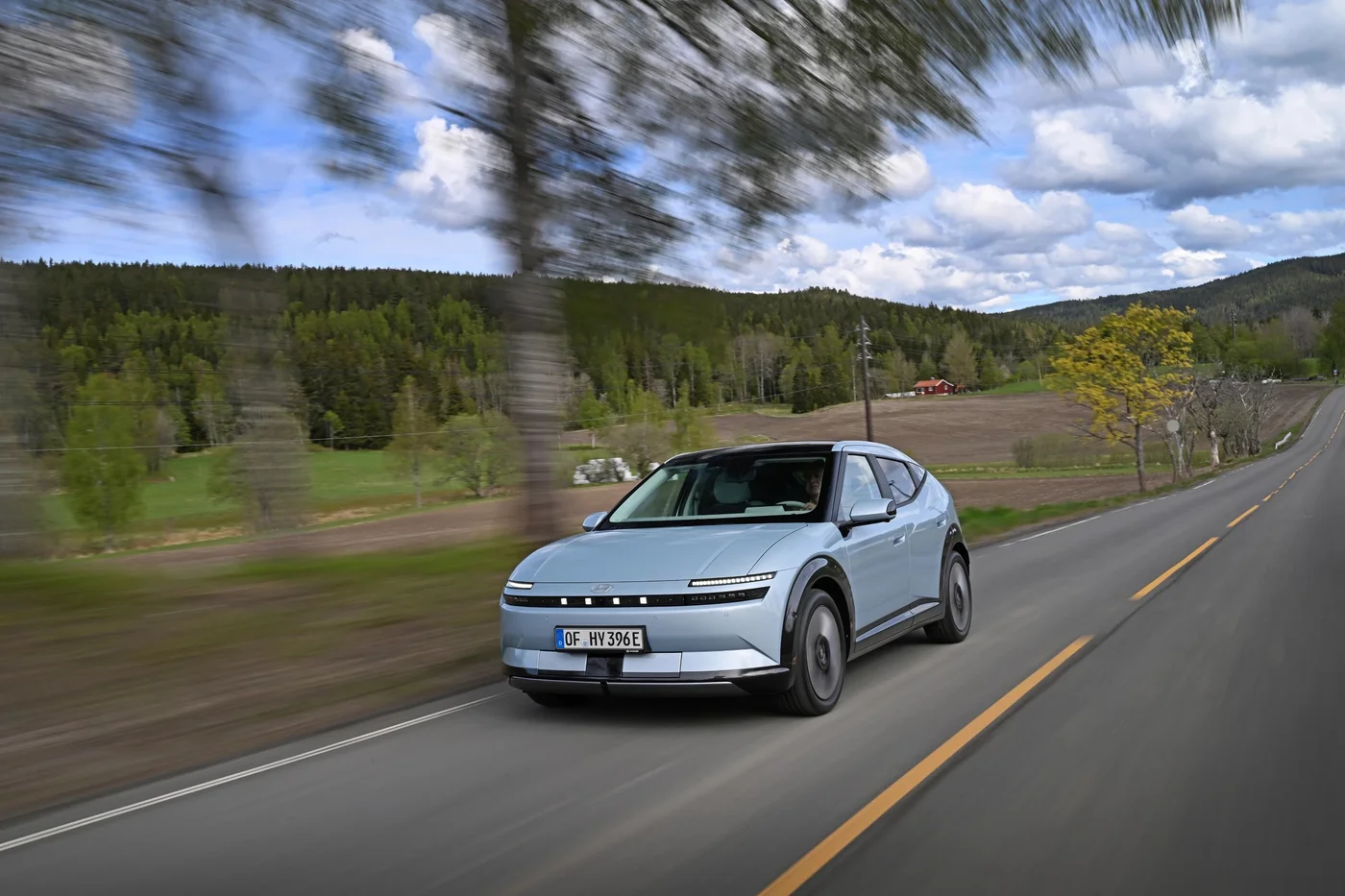
The Standard Range Ioniq 3 gets from 0-100km/h in 8.8 seconds and has a top speed of 170 km/h. That's brisk for a small hatchback. Hyundai hasn't yet published an acceleration figure for the Long Range.
All versions are front-wheel drive. Paddles behind the steering wheel adjust how strongly the regenerative braking slows the car when you lift off the accelerator.
Size and practicality
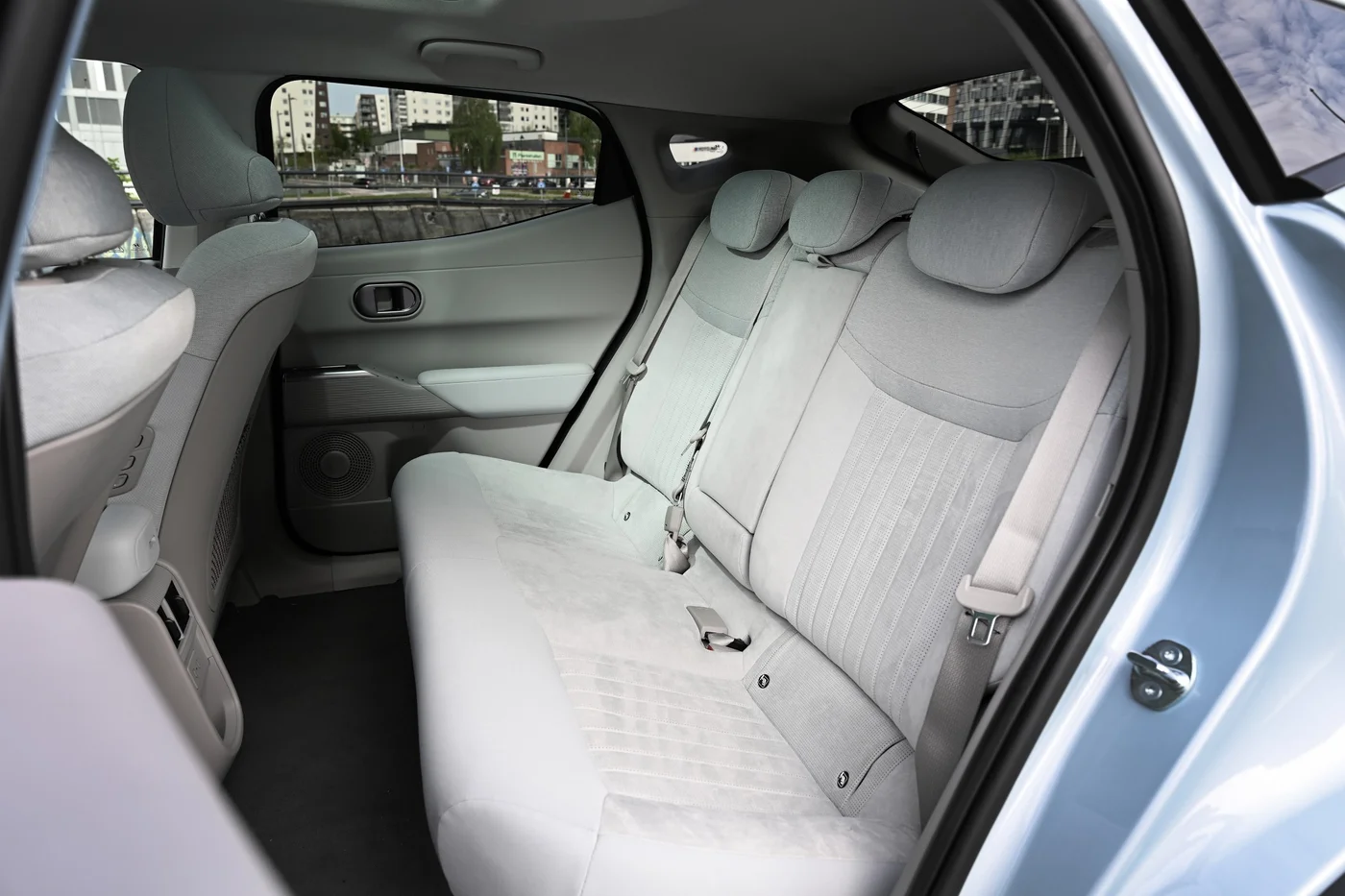
At 4,155 mm long, 1,800 mm wide and around 1,510 mm tall, the Ioniq 3 is at the larger end of the small car class, and its 2,680 mm wheelbase is long for a car this size.
Source: Hyundai
The boot holds 441 litres with the seats up and 1,213 litres with them folded, which is big for a small car. Under the floor there's a further 119 litres in what Hyundai calls the Megabox. The main boot area is quite shallow, so the Megabox is where you'd keep the charging cables and anything you want out of sight.
It can tow up to 750 kg, enough for a small trailer, and every version has ISOFIX child seat mounts in the back.
Design
Source: Hyundai
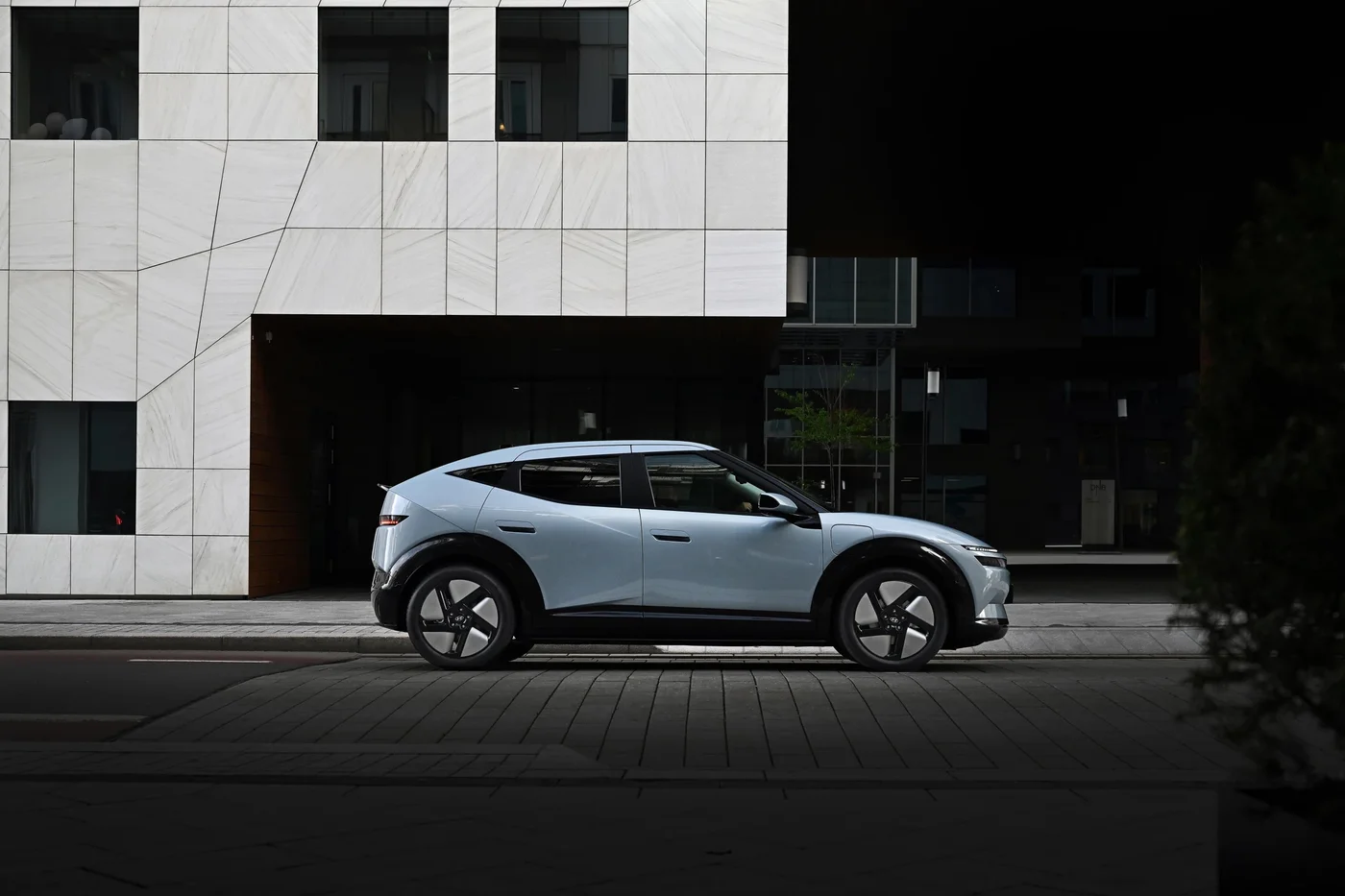
Hyundai calls the shape an "Aero Hatch". The roof slopes down to a tall, squared-off tail, and the result is a drag coefficient of 0.263, which is low for a small car and part of the reason the range is so good. It was designed by Hyundai's European team, developed at its technical centre in Rüsselsheim, Germany, and is built at Hyundai's plant in İzmit, Türkiye.
Source: Hyundai
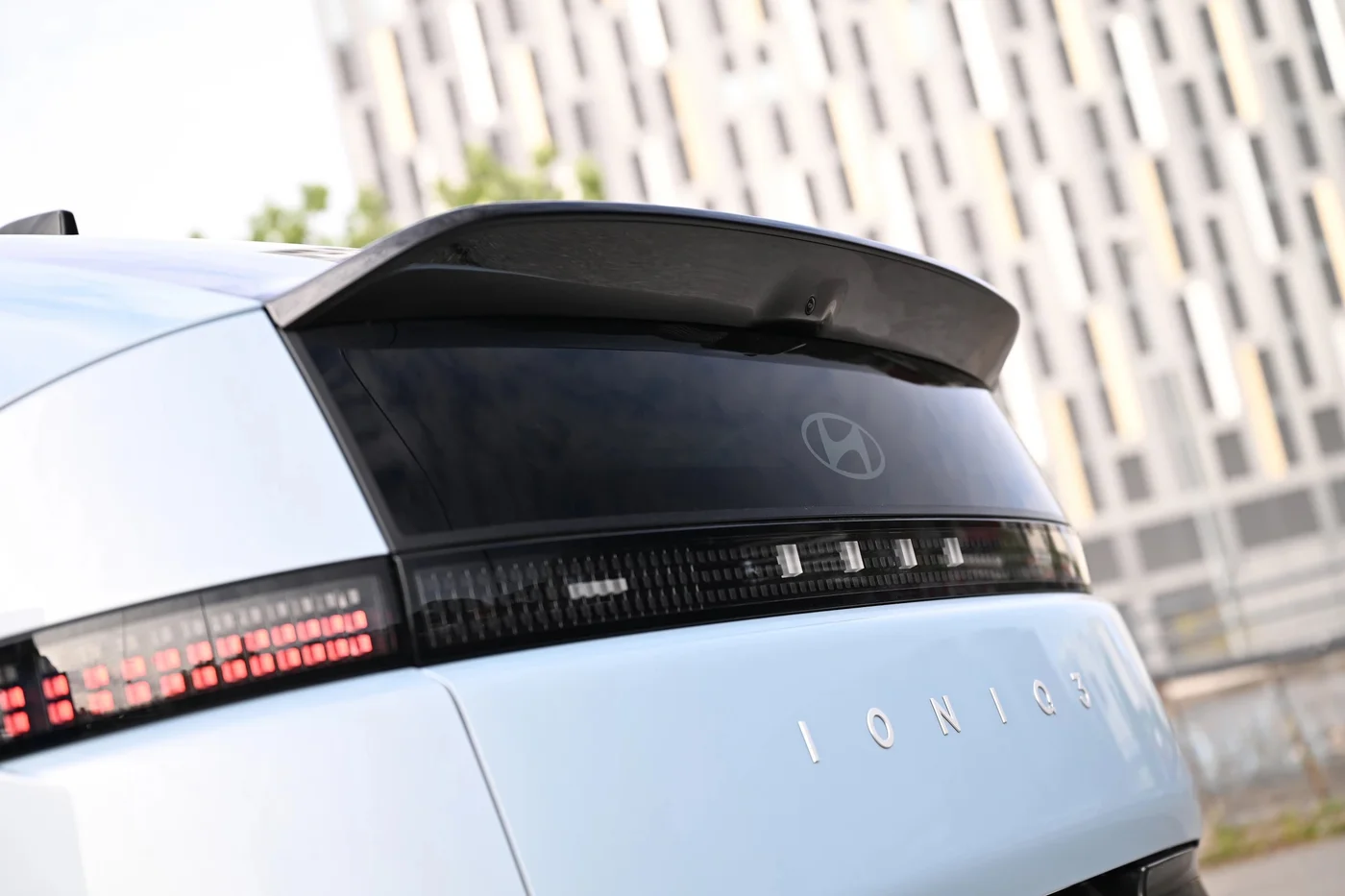
At the back, a full-width pixel light bar and a roof spoiler link it to the larger Ioniq models. Wheels range from 16 to 19 inches depending on the version, and higher trims can have a two-tone roof or a large glass Vision Roof.
Tech and equipment
Source: Hyundai
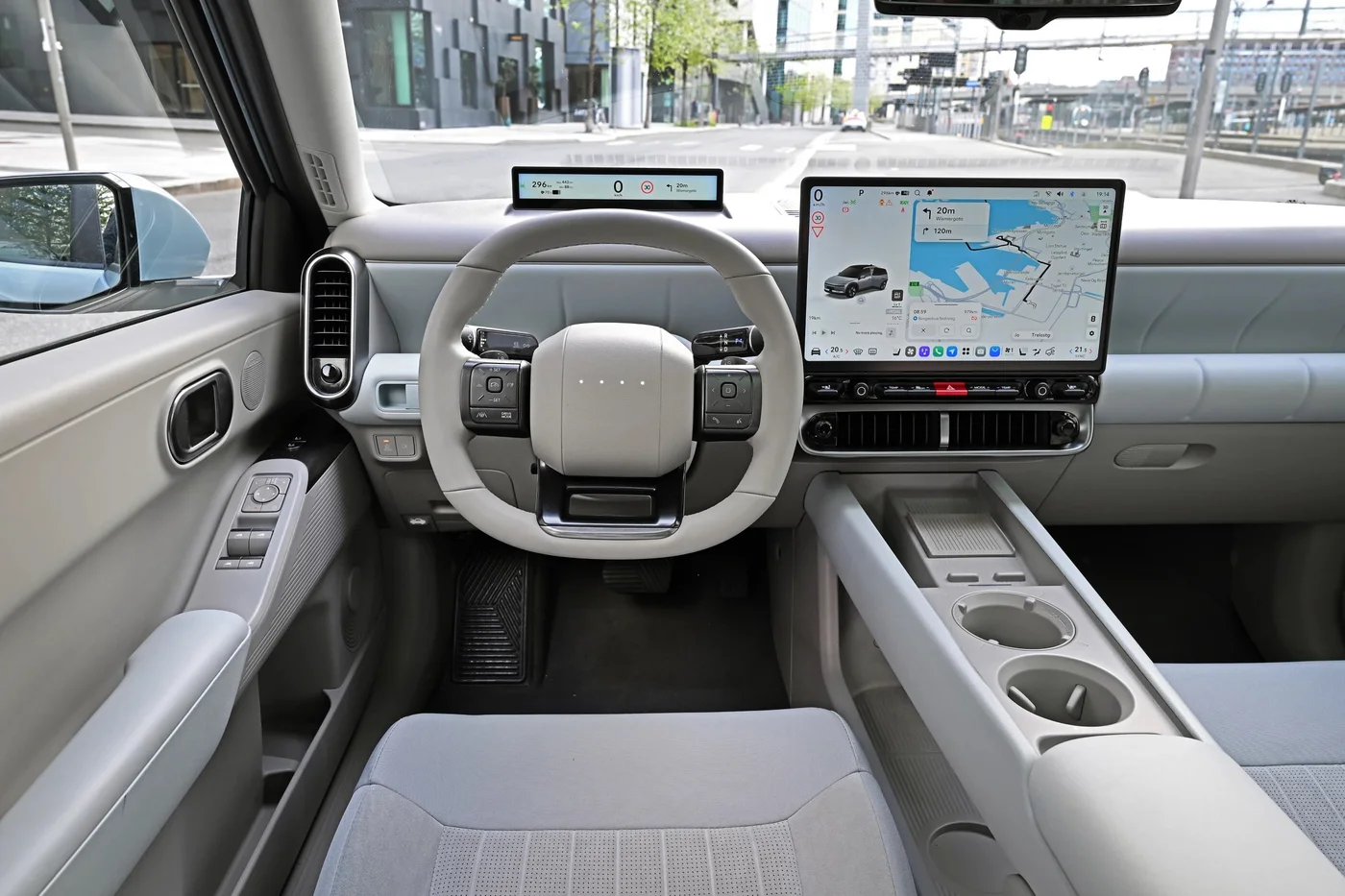
The Ioniq 3 is the first Hyundai with Pleos Connect, a new infotainment system based on Android Automotive. It runs on a 12.9-inch or 14.6-inch touchscreen, depending on the version, with a slim digital display in front of the driver. There's also an app store, the Pleos App Market, which needs Hyundai's Bluelink connected services and a Pleos subscription. Every Ioniq 3 gets over-the-air software updates.
Equipment varies by market, but even the entry versions are well equipped. In the UK, the Advance comes with 16-inch alloys, wireless Apple CarPlay and Android Auto, keyless entry, dual-zone climate control, a rear-view camera and LED lights.
The mid-range Premium adds 17-inch alloys, a 9.9-inch digital instrument display, a wireless phone charger, privacy glass and battery pre-conditioning. The Ultimate brings Matrix LED headlights, Highway Driving Assist 2, heated front seats and a heated steering wheel, with a Bose sound system and Hyundai's Digital Key on the options list.
Source: Hyundai
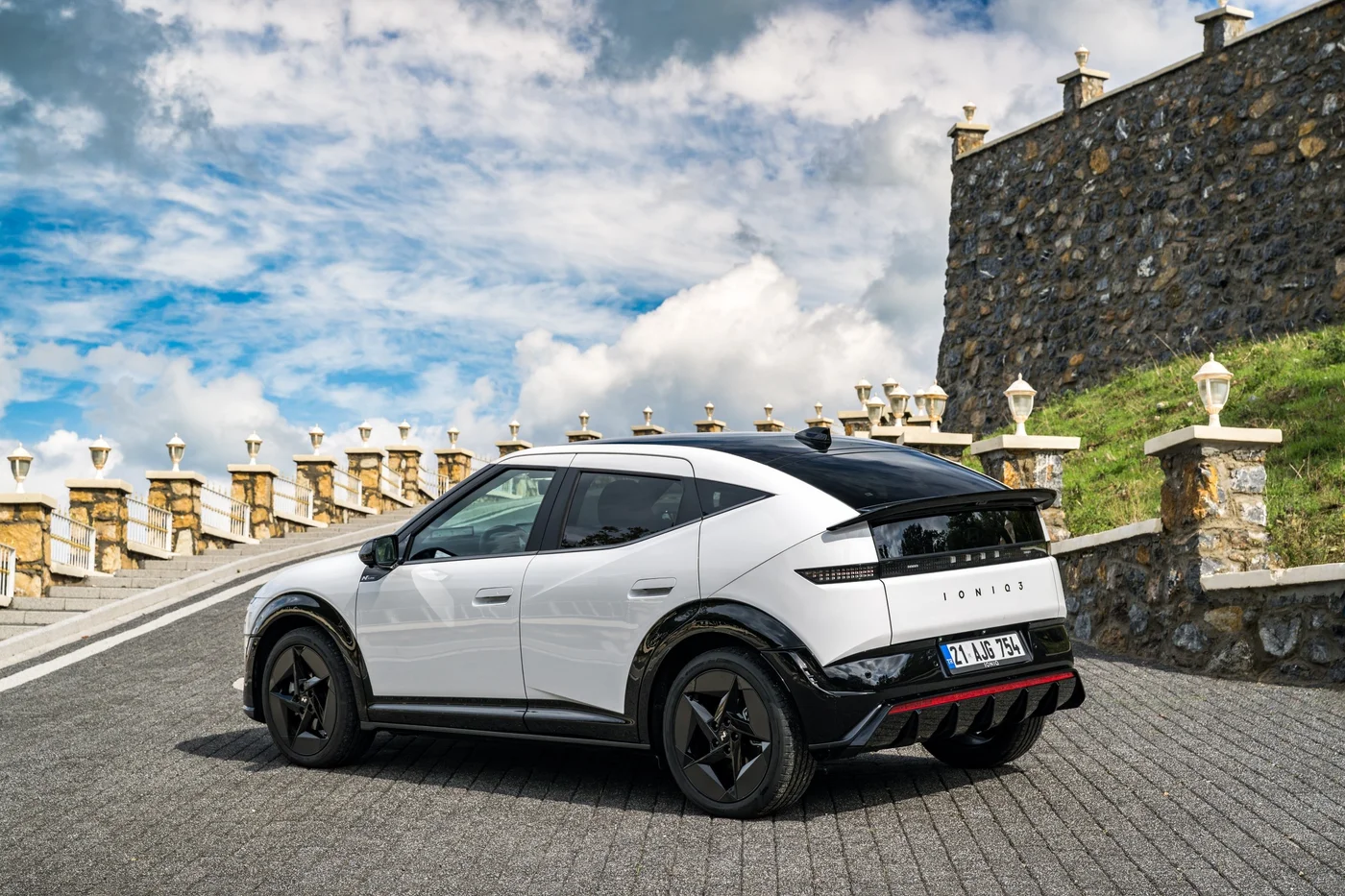
At the top of the range, the N Line Evo has sportier bodywork with red detailing, 19-inch alloys, the larger 14.6-inch screen and a surround-view camera.
Safety
Euro NCAP hasn't published a rating for the Ioniq 3 yet. Every version comes with automatic emergency braking (Forward Collision Avoidance Assist 2.0), blind spot collision avoidance, a driver distraction warning, e-Call and front, side and curtain airbags. We'll add the Euro NCAP result when it's published.
Rivals
| Car | Battery | WLTP range |
|---|---|---|
| Hyundai Ioniq 3 Long Range | 61kWh | 497 km |
| Volkswagen ID Polo | 52kWh | up to 452 km |
| Cupra Raval | 52kWh | 443 km |
| Renault 5 | 52kWh | 430 km |
The Volkswagen ID Polo and Cupra Raval are built on the same platform in the same Spanish factory. The ID Polo is the sensible all-rounder, while the Raval is shorter, sportier and has the same 441-litre boot as the Hyundai. The Renault 5 is the most stylish of the group. All three use a 52kWh battery for their longest-range versions, so none of them goes as far as the Ioniq 3 Long Range.
Which Ioniq 3 should you buy?
The Standard Range makes sense if you mostly drive locally and can charge at home. In the UK, where it's only sold as the entry Advance, it's one of the cheapest ways into a new EV with a usable range.
For most buyers, the Long Range is worth the extra €4,000. It adds more than 150 km of range, and it's available across the trim range. Pick a version with battery pre-conditioning if you regularly use public chargers. In the UK, that means the Premium at £23,695, which also adds the digital instrument display and wireless charging.
If you drive a lot on motorways, the higher trims add Highway Driving Assist 2 and Matrix LED headlights, along with heated seats and a heated steering wheel.
Our verdict
The Hyundai Ioniq 3 is one of the best small EVs you can buy. The Long Range battery goes further than any of its main rivals, the boot and Megabox make it more practical than its size suggests, and pricing across Europe is competitive. In the UK, the full grant makes it particularly good value.
Strengths
- Up to 497 km (308 miles) of range
- 441-litre boot plus a 119-litre Megabox
- Competitive pricing across Europe
- Well equipped, even in entry versions
Weaknesses
- Battery pre-conditioning isn't on the entry trims
- The heat pump is an option, not standard
- No Euro NCAP rating yet
- The Pleos app store needs a subscription
FAQs
How much is the Hyundai Ioniq 3?
Prices start at €27,995 in the Netherlands and Ireland, €28,950 in Germany and €29,995 in France. In the UK, it starts at £18,495 after the £3,750 Electric Car Grant.
What is the Hyundai Ioniq 3's range?
The 42.2kWh Standard Range has a WLTP range of 344 km (214 miles), and the 61kWh Long Range 497 km (308 miles).
Does the Hyundai Ioniq 3 qualify for incentives?
In the UK, every version qualifies for the full £3,750 Electric Car Grant. In France, it's eligible for an income-based incentive of €3,600 to €6,000. Elsewhere, check your national scheme, as incentives change regularly.
How long does the Hyundai Ioniq 3 take to charge?
On a fast public charger, about 29-30 minutes from 10% to 80%. A 7kW home wallbox fully charges it overnight: about six hours 20 minutes for the Standard Range and eight and a half hours for the Long Range.
How big is the Hyundai Ioniq 3's boot?
441 litres with the seats up and 1,213 litres with them folded, plus a 119-litre Megabox under the floor.
Where is the Hyundai Ioniq 3 built?
At Hyundai's plant in İzmit, Türkiye. It was designed by Hyundai's European team.