
Denmark electric cars: new help for low-income drivers from 2028

Nearly every new car in Denmark is already electric, so the government is turning to the drivers who can't yet afford one.

Published

Share:
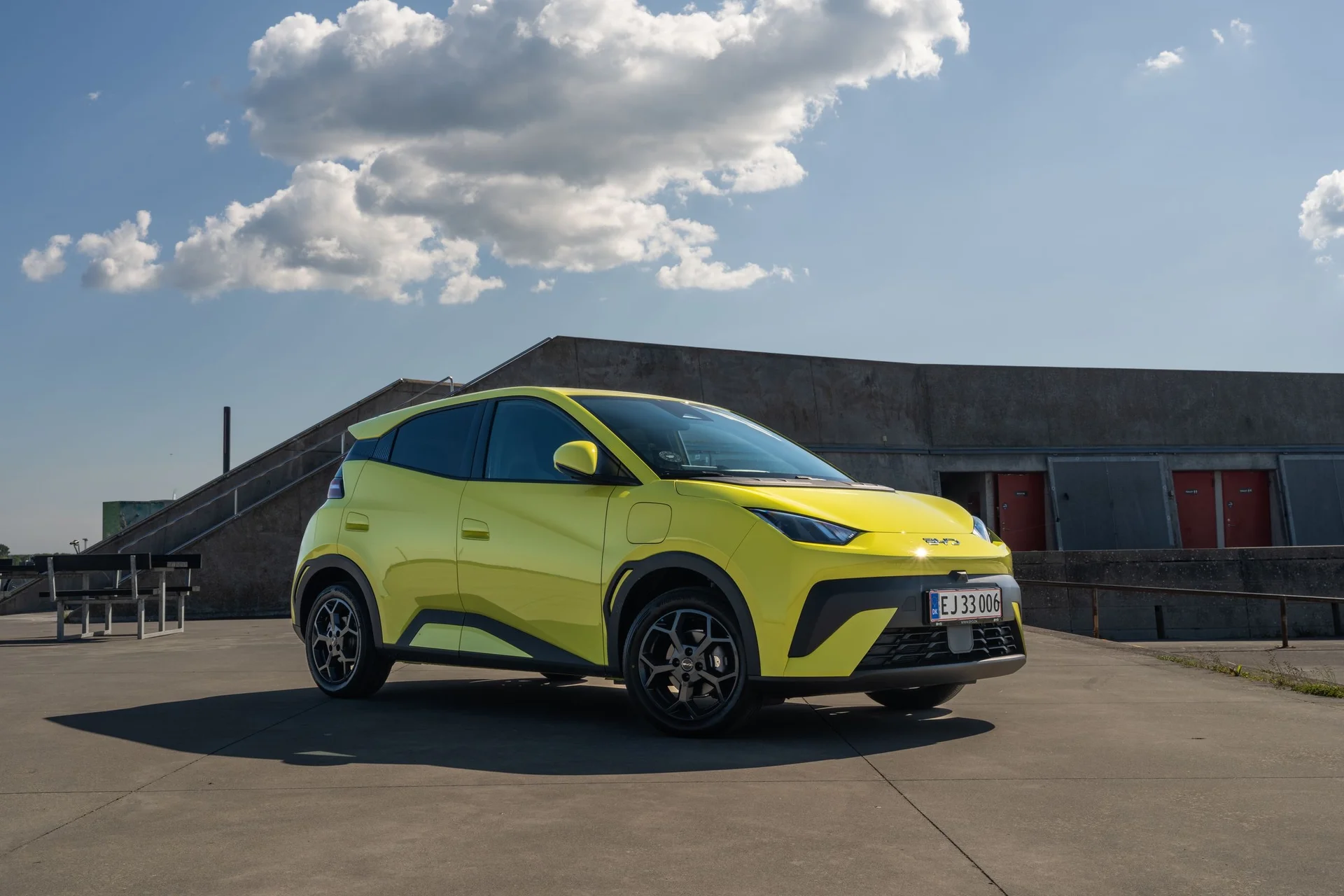
Yellow BYD Dolphin Surf small electric car parked outside a warehouse, front three-quarter view
Source: BYD

Denmark's government has agreed to set aside DKK 150 million a year from 2028 to 2030 to help low-income households replace petrol and diesel cars with electric cars, possibly by subsidising a lease. It comes at a time when Denmark's electric cars already make up 88.4% of new-car sales, so the money is aimed squarely at the drivers that market hasn't reached.

The scheme is part of a climate deal agreed on 14 November between the government and two left-wing parties, the Red-Green Alliance (Enhedslisten) and Alternativet, as part of the 2027 budget. The wider package is worth about DKK 3.9 billion up to 2035, most of it for heat pumps and district heating.

What Denmark has agreed

The agreement describes a targeted subsidy for electric cars among low-income groups, with the aim of replacing fossil-fuelled cars. Leasing support is the example it gives, and the parties will look at experience from Sweden and France, which has run a social leasing scheme since 2024. A grant towards buying an EV is also on the table, but the agreement is cautious about it, pointing to the risk that people sell the car on to cash in the subsidy, as well as the cost of running such a scheme.

Almost everything else is still open. The support rates and who qualifies have yet to be worked out, and the agreement names income and geography as the two ways of narrowing down the target group. The Red-Green Alliance has made clear it wants to reach people in rural areas who need a car to get to work and can't afford an EV. The design will also have to fit the recommendations of an expert group that's reviewing Denmark's car taxes, and the parties expect a proposal by the middle of 2027.

The DKK 150 million a year covers administration and lost tax revenue as well as the subsidies themselves, so the amount that reaches drivers will be smaller. The government will also apply for money from the EU's Social Climate Fund, the fund set up to cushion lower-income households from the cost of the energy transition, and the parties say any money that brings in could be used to make the EV scheme bigger.

Get the latest EV news and reviews straight to your inbox

Unsubscribe any time. See our privacy policy.

Why the help is going to lower incomes

New-car buyers in Denmark need little persuading. In October, 16,679 of the 18,875 new cars registered were fully electric, 88.4%, up from 70.6% a year earlier, according to the industry body Mobility Denmark. Among cars bought by private buyers, the share was 97.6%. There are now 750,000 battery-electric cars on Danish roads, a figure the government-appointed commission on green cars didn't expect until 2030 when it reported in 2020, and that forecast included plug-in hybrids.

Those figures are about new cars, though, and the households the scheme targets mostly don't buy new. That's the gap it's meant to close. A separate tax deal agreed this month points the other way for some of those drivers: the government and the Danish People's Party have called off a planned increase in the registration tax on electric cars for 2027, and cut the tax on petrol and diesel by DKK 2 a litre for 2027, which makes running an old fossil-fuelled car cheaper for now.

How it compares

France's social leasing is the closest model. Its 2026 round opened on 16 July for 50,000 households, offering a new electric car for at most €200 a month over at least three years. It's open to households with a taxable income of up to €16,880 per tax share who live more than 10 km from work and drive there, or who drive more than 8,000 km a year for work.

Germany took a different route this year, with an income-linked grant of €3,000 to €6,000 towards a new EV, bought or leased, for households with taxable income up to €80,000, or €90,000 with children. More than 138,000 households had been approved by the start of November, and the most-funded cars include small, cheap models such as the Leapmotor T03, Hyundai Inster and Dacia Spring, which shows how much demand there is when the help is aimed at lower incomes (see our report on Germany's EV subsidy).

Denmark's budget is much smaller than either. DKK 150 million a year is a fraction of Germany's €3 billion over four years, though Denmark's market is far smaller too. How many households it reaches will depend on whether it pays towards a monthly lease, which spreads the money over many more drivers, or towards a purchase.

(Figures correct at 19 November 2026.)