
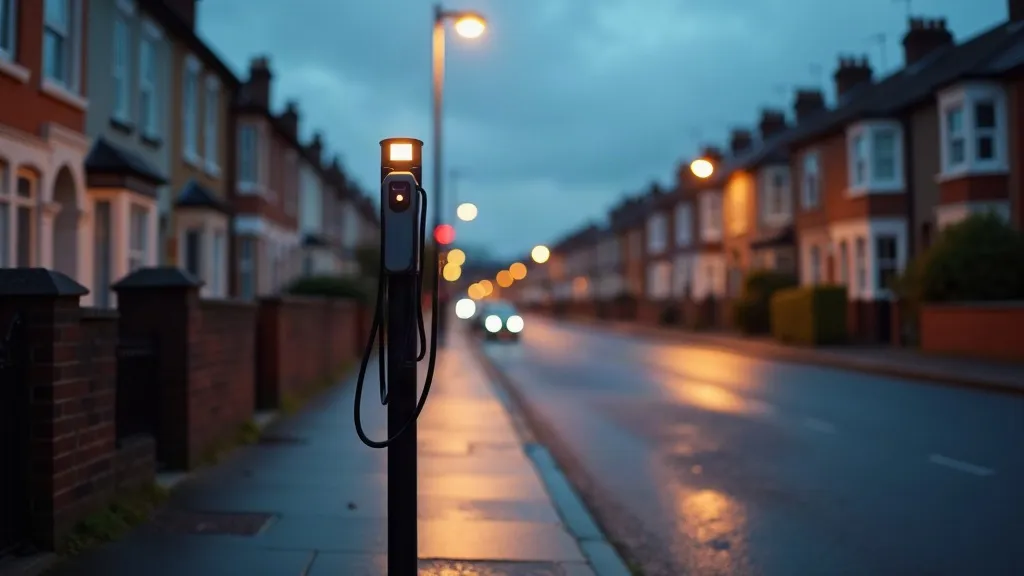
The Budget 2026 changes for electric cars are mostly about the cost of charging. The government is putting £100m into cutting prices at local, lower-powered public chargers, and the temporary cut in VAT on home electricity now runs until 1 July 2027. What the Budget didn't do is change the pay-per-mile tax that EV drivers will start paying in 2028.
Cheaper on-street charging from spring 2027
The £100m is spread over two years, £50m in 2027-28 and £50m in 2028-29. It's aimed at the slower public chargers that drivers without a driveway rely on, such as lamp-post and kerbside points, rather than the rapid chargers at motorway services. The Treasury expects prices to start falling in spring 2027 and says an average driver who charges on the street will save around £150 a year.
That matters because public charging costs far more than charging at home. Zapmap's price index put the average pay-as-you-go price on public chargers up to 49kW at 54p per kWh in September 2026, and 79p on rapid and ultra-rapid chargers. At home, the average capped electricity rate is 26.32p per kWh, roughly half the on-street price.
The government hasn't said yet how the money will reach drivers, and the Department for Transport will set out the details later. It's also setting up a taskforce to look at letting drivers use their home electricity tariff at local public chargers, an idea the Treasury describes as complex and likely to take time. An independent review of public charging costs, led by Philip New, was published alongside the Budget.
Home charging stays VAT-free until July 2027
If you charge at home, the bigger change is already on your bill. VAT on household electricity was cut from 5% to 0% on 1 October 2026, originally until 31 March 2027, and the Budget extends that to 1 July 2027. The Treasury says the extension takes around £50 off the typical household bill covered by Ofgem's price cap from April 2027.
For EV drivers, the cut makes every home charge about 5% cheaper than it would otherwise be, whether you're on a standard tariff or a cheap overnight EV tariff. Public charging isn't included and still carries VAT at the standard 20% rate, which is part of the reason the gap between home and public charging prices is so wide.
The pay-per-mile tax is still coming
Electric Vehicle Excise Duty (eVED), the mileage-based charge announced in last year's Budget, still starts in April 2028. It's set at 3p a mile for electric cars and 1.5p a mile for plug-in hybrids, on top of normal vehicle tax. For a driver covering 8,000 miles a year in an electric car, that's £240 a year.
The Budget adds some detail on how it will work: a mileage estimation tool at launch, an opt-in system called eVED Connect that reports mileage using the car's own connectivity, and automated refunds by 2030.
Petrol and diesel drivers get help in the short term. The 5p fuel duty cut has been extended again, and the planned rise in line with inflation is pushed back to 1 July 2027. Combined with eVED from 2028, that narrows the running-cost advantage of an electric car a little, although it's still largest for drivers who can charge at home.
(Figures from the Budget 2026 documents published on 28 October 2026, Zapmap's September 2026 Charging Price Index and Ofgem's October to December 2026 price cap.)