
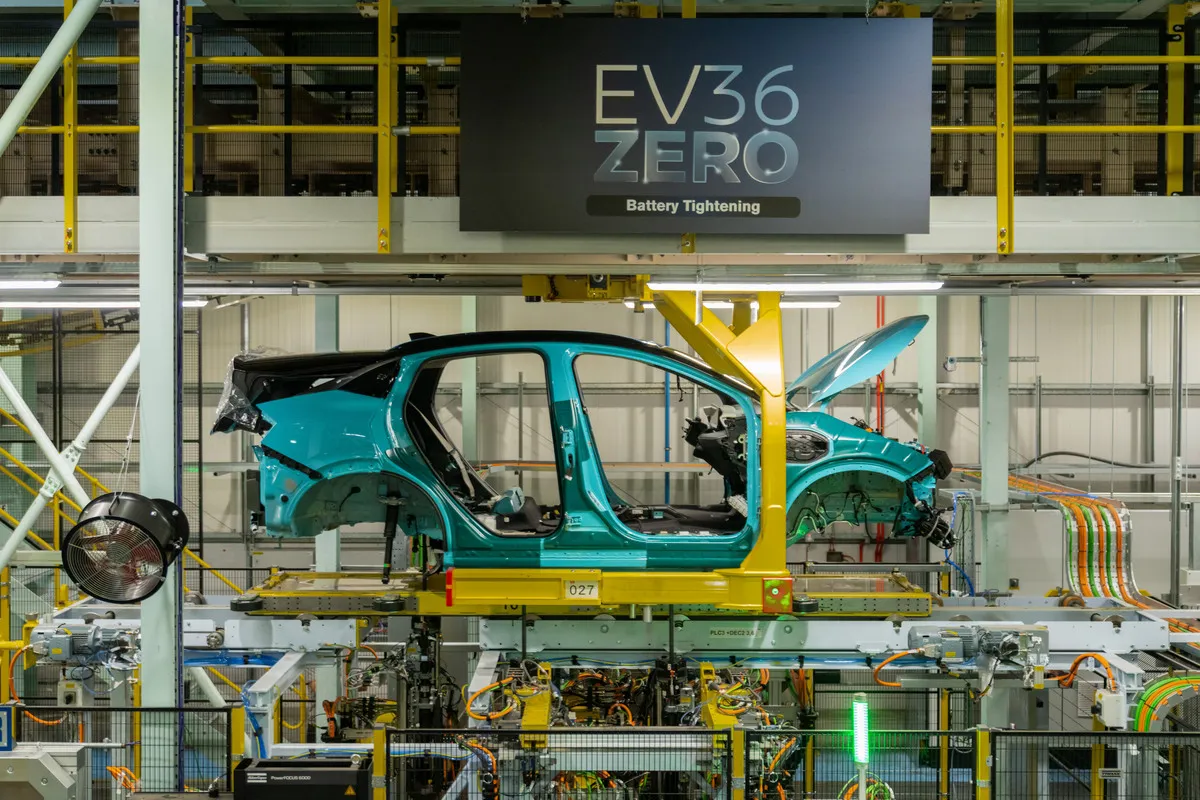
Nissan has begun production of its all-new Leaf electric hatchback at the company's Sunderland plant, marking a significant milestone for British automotive manufacturing.
The redesigned model, which went on sale this week, represents one of the few electric vehicles to qualify for the full £3,750 UK Government grant, positioning it as an attractive proposition for UK buyers navigating the transition to electric motoring.
The latest-generation Leaf arrives with a thoroughly modern design that's a world away from its predecessor's polarizing looks.
Nissan has transformed the electric hatchback into a sleek crossover that's comfortable, refined, and refreshingly approachable.
Where the previous Leaf looked distinctly 'electric car' in its styling, the new model blends seamlessly into the mainstream with conventional proportions and a more sophisticated aesthetic.
Under the redesigned bodywork, Nissan offers two battery options that should suit most buyers' needs.
The entry-level 52kWh pack delivers a WLTP range of around 270 miles (430km), while those wanting extra peace of mind can opt for the larger 75kWh battery that extends range to 375 miles (600km).
Charging speeds top out at 150kW, which means you'll still be able to charge from 20 to 80 per cent in under 30 minutes at a rapid charger, though this falls slightly behind some rivals that can accept up to 200kW or more.
Upgraded Ride Quality And Refinement
Early driving impressions suggest Nissan has prioritized comfort and refinement over outright sportiness, which feels entirely appropriate for the Leaf's target market.
The suspension and ride quality impress, absorbing large potholes and undulating surfaces without feeling unsettled or jittery.
During testing in Germany, the car remained free of creaks and rattles even when subjected to rough cobbled streets, suggesting solid build quality throughout.
The driving experience is calm and confidence-inspiring rather than thrilling, with excellent levels of sound deadening keeping road roar at bay.
Wind noise remains well controlled at motorway speeds, though the wing mirrors can generate a bit of a racket in certain conditions.
Overall refinement places the Leaf ahead of rivals like the Volkswagen ID.3, which can feel a little bouncy and lacks the polish and bump isolation that Nissan has achieved.
Efficiency appears competitive with key rivals. Though sustained real-world testing is still to come, early impressions suggest the Leaf should match the Volkswagen ID.3 and Kia EV3 for miles per kilowatt-hour.
The larger battery option should comfortably deliver over 300 miles (480km) in typical mixed driving, making it a genuinely practical proposition for family motoring.
For Nissan's Sunderland plant, the new Leaf represents a crucial vote of confidence in British manufacturing.
The facility has been building Leafs since the model's inception, and this latest generation ensures production continues well into the future.
It's a welcome piece of good news for the UK automotive sector at a time when many manufacturers are consolidating production in lower-cost regions.
With its combination of refined driving manners, generous equipment levels, competitive range figures, and government grant eligibility, the new Nissan Leaf looks set to reclaim its position as one of Britain's go-to family EVs. The transformation from quirky electric pioneer to mainstream family transport is complete.