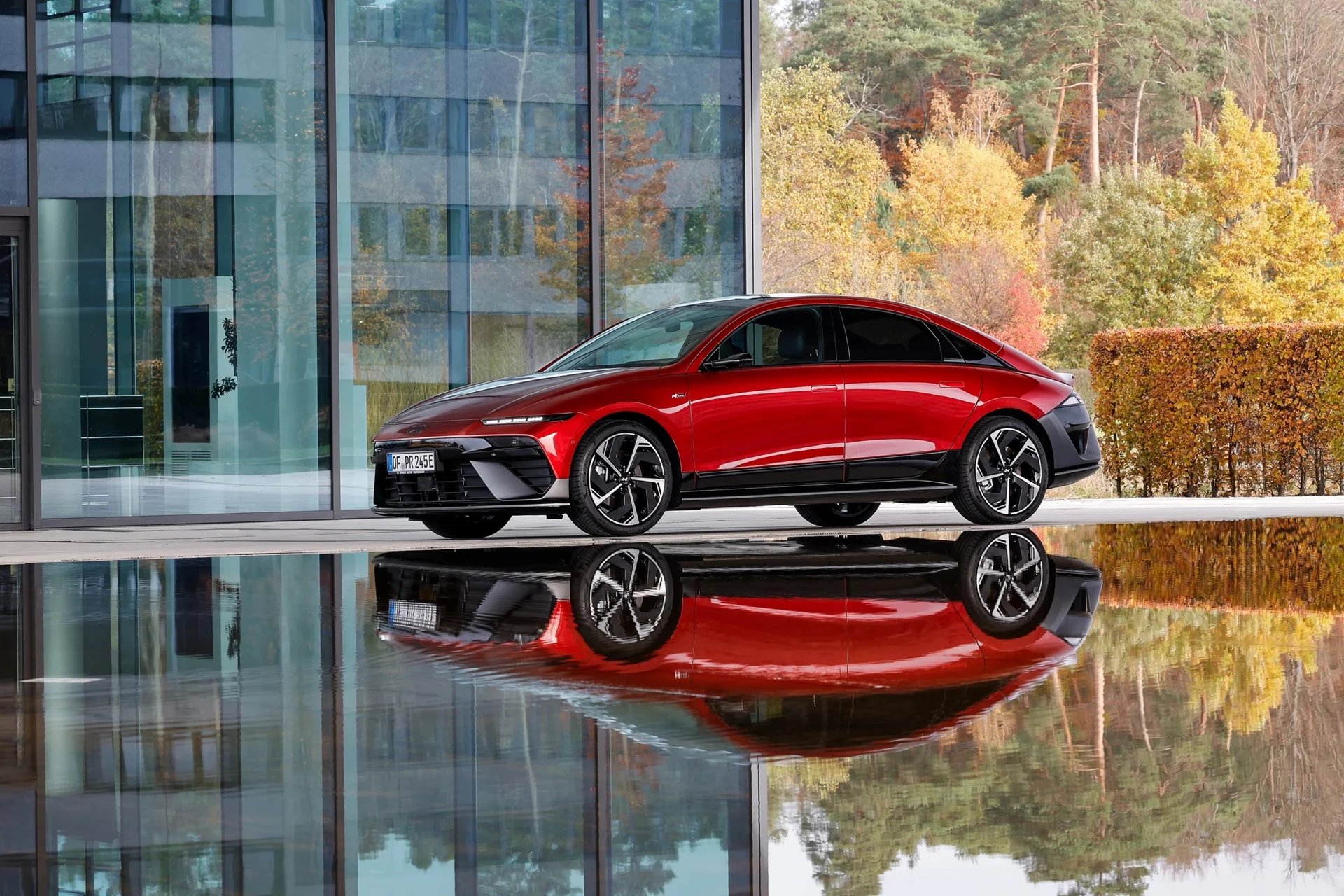
The Hyundai Ioniq 6 has always looked like a pebble someone left in a wind tunnel, and that slippery shape is exactly why it goes so far on a charge. For the update, Hyundai has sharpened the nose, binned the big rear wing and squeezed in a bigger battery, so the longest-range version now manages 680 km (422 miles) on the WLTP cycle. It starts at €42,085 in Ireland, including the SEAI grant and VRT relief, and at £33,240 in the UK with the £3,750 Electric Car Grant.
The batteries grow from 53kWh and 77.4kWh to 63kWh and 84kWh, and the maximum range rises from 614 km. Ireland and the UK only get the 84kWh battery.
Key specs
| RWD | AWD | |
|---|---|---|
| Irish price | from €42,085 | not offered |
| UK price | from £33,240 (with grant) | from £43,490 |
| Battery | 84kWh | 84kWh |
| WLTP range | 585-680 km (364-422 miles) | 570-650 km (354 miles in the UK) |
| Peak DC charging | up to 260 kW | up to 260 kW |
| 10-80% DC charge | 18 minutes | 18 minutes |
| AC charging | 10.5 kW | 10.5 kW |
| Power | 168 kW (229 PS) | 239 kW (325 PS) |
| 0-100km/h | 7.4 seconds | 5.1 seconds |
| Boot | 401 litres + 45-litre frunk | 401 litres + 14.5-litre frunk |
| Length | 4,925-4,935 mm | 4,925-4,935 mm |
| Grants | SEAI and VRT relief; UK grant on Premium and N Line | none in the UK |
Prices and trims
| Market | Entry price | Top of the range |
|---|---|---|
| Netherlands | €42,995 | not yet published |
| Ireland | €42,085 | €48,585 |
| Germany | €45,550 | €62,000 |
| France | not sold | not sold |
| UK | £33,240 | £46,770 |
(Prices correct at 29 October 2026. Irish prices include the €3,500 SEAI grant for private buyers and VRT relief, and exclude delivery. UK prices are on the road, and the Premium and N Line RWD prices include the £3,750 Electric Car Grant. German prices are from Hyundai's January 2026 price list. The Dutch price is Hyundai's starting price from 1 October 2026.)
Ireland has three versions, all with the 84kWh battery and rear-wheel drive. The N Line is the cheapest at €42,085, the Premium is €43,585 and the Platinum is €48,585. The Platinum adds Hyundai's Relaxation front seats, which recline almost flat at the push of a button. Annual motor tax is €120.
In Germany the range starts with the 63kWh Basis at €45,550, a 125 kW (170 PS) rear-wheel-drive car with a WLTP range of 521 km. The 84kWh battery starts with the Centriq at €55,300, and the N Line X tops out at €62,000. In France, Hyundai isn't selling the standard Ioniq 6 at all: only the high-performance Ioniq 6 N is on sale there, Automobile Propre reports.
The UK gets five versions. The Premium RWD (£33,240 with the grant) comes with 18-inch alloys, a heat pump, battery pre-conditioning, heated front seats and steering wheel, dual-zone climate control, Matrix LED headlights, a powered tailgate, wireless phone charging and Highway Driving Assist 2.
The N Line RWD (£36,240 with the grant) adds 20-inch alloys, gloss-black bumpers, an N steering wheel, metal pedals, red stitching and heated outer rear seats. The N Line is also offered with all-wheel drive at £43,490.
The N Line Evo costs £43,270 with rear-wheel drive and £46,770 with all-wheel drive. It adds leather and suede seats, ventilated Relaxation front seats, a head-up display, an electric sunroof, a surround-view camera, remote parking, Digital Key 2, a Bose sound system and an exterior vehicle-to-load adaptor. Digital side mirrors are an option.
Only the Premium and N Line RWD qualify for the grant, so they're the ones to look at in the UK. The AWD N Line costs £7,250 more than the RWD version, partly because it misses out on the grant. UK orders are open now, with first deliveries in early 2027.
Battery, range and charging
Source: Hyundai
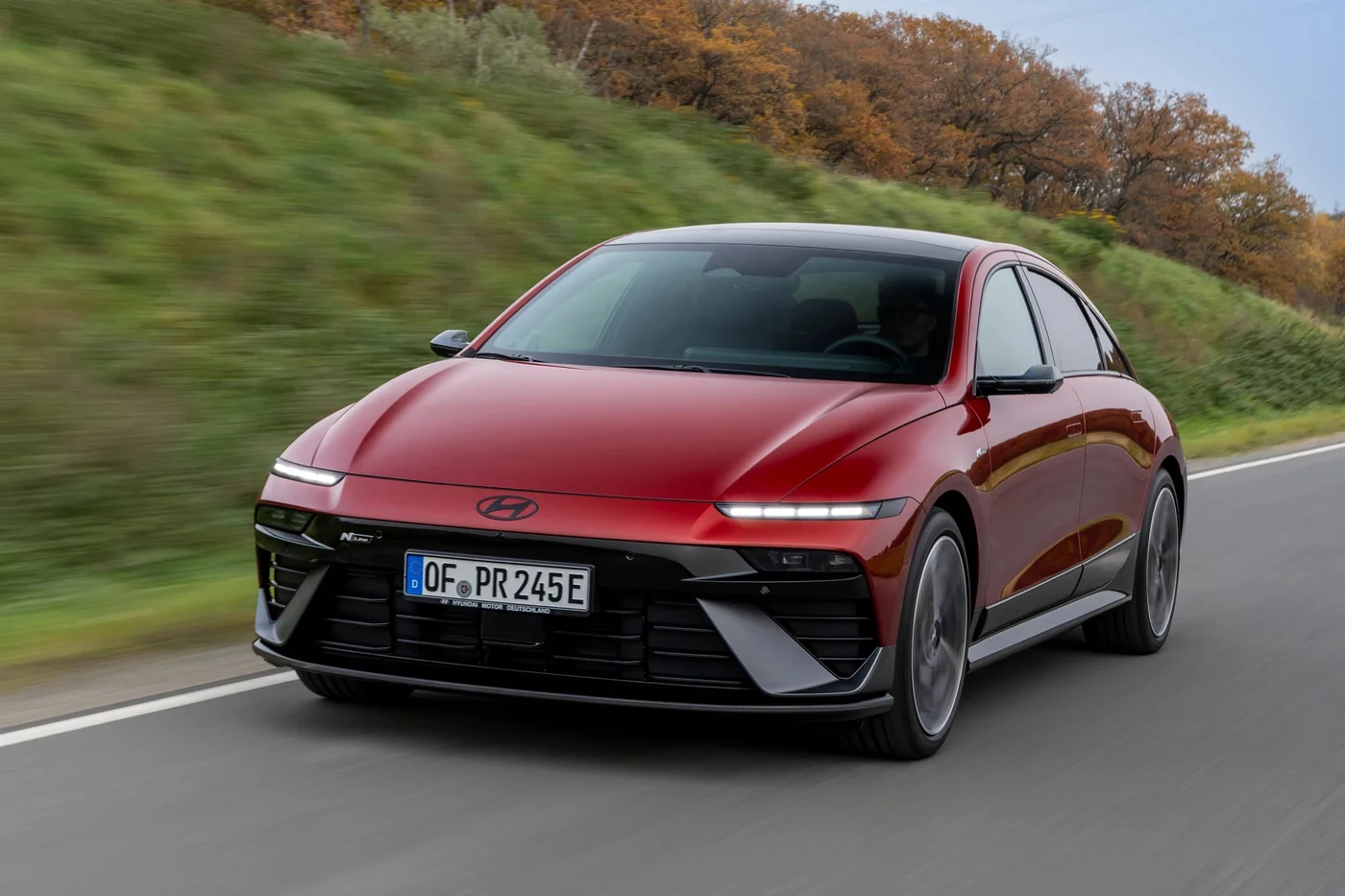
The 84kWh rear-wheel-drive Ioniq 6 on 18-inch wheels has a WLTP range of 680 km (422 miles). That's among the longest ranges you can get at this price, and it's helped by a very low drag coefficient of 0.21.
Wheel size makes a big difference. On 20-inch wheels the same car drops to 624 km, and the N Line, with its 20-inch wheels and sportier bodywork, is rated at 585 km (364 miles). All-wheel drive versions range from 650 km on 18-inch wheels to 570 km (354 miles) for the N Line. In the UK, that means the Premium goes 58 miles further on a charge than the N Line, for £3,000 less.
The 800V electrical system is the other big selling point. Hyundai quotes a peak DC charging rate of up to 260 kW and a 10-80% charge in 18 minutes on a 350 kW charger. That's quick enough that a motorway charging stop takes about as long as a coffee. On a 50 kW charger, 10-80% takes one hour 20 minutes.
At home, the 10.5 kW on-board charger fills the battery from empty in seven hours 35 minutes on an 11 kW three-phase supply. Most homes have a single-phase supply and a 7 kW wallbox, which will be slower, but either way it's full by the morning. Every UK version has a heat pump and battery pre-conditioning as standard, which help the range in cold weather and keep charging fast in winter.
Vehicle-to-load lets you power devices from the battery at up to 3.6 kW. There's a socket inside the car on every UK version, and the N Line Evo also gets an adaptor for the external charging port, which is the one you'd use to run camping gear or power tools.
Performance
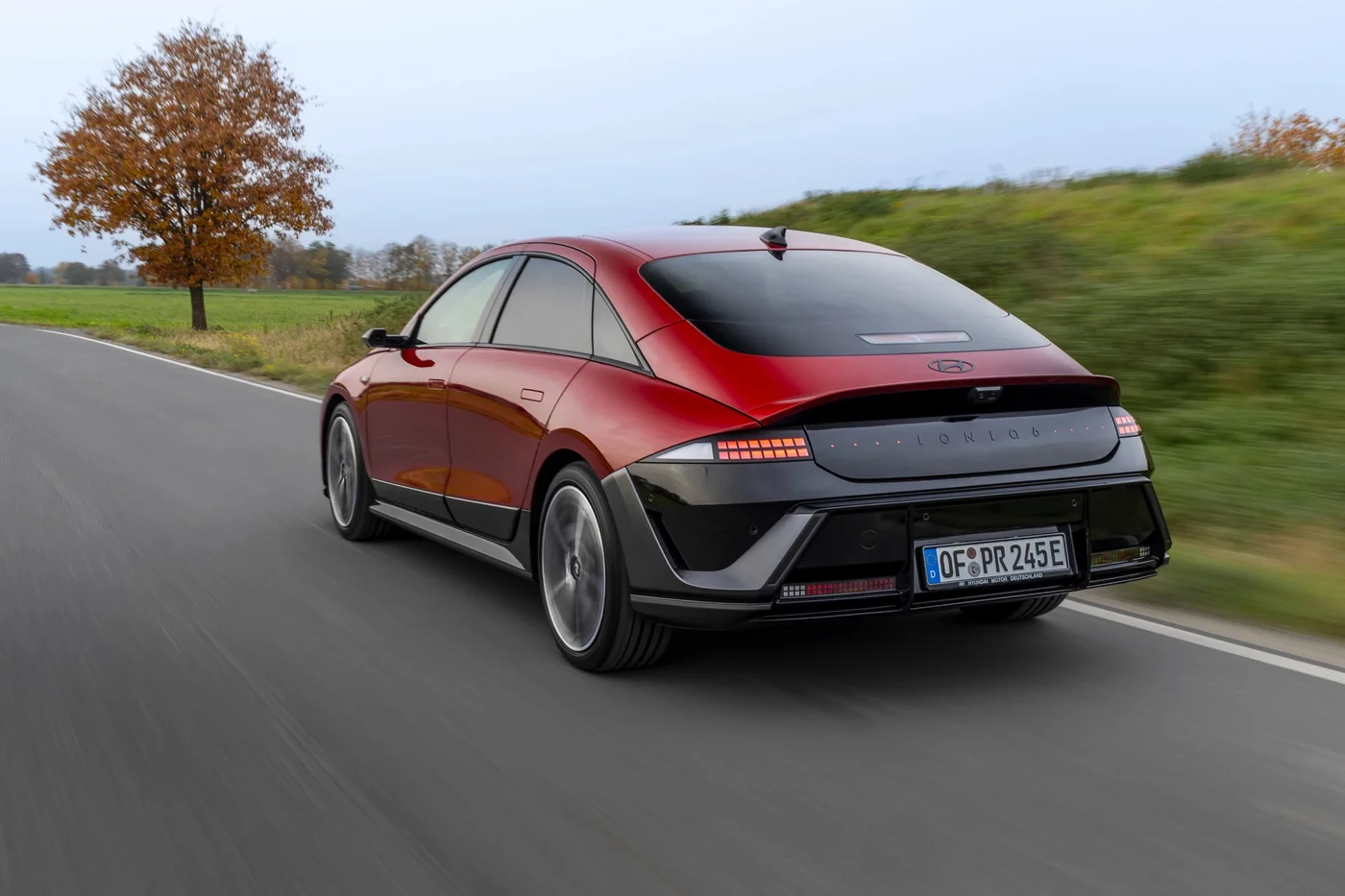
The rear-wheel-drive car has 168 kW (229 PS) and 350 Nm of torque, which takes it from 0-100km/h in 7.4 seconds. That's quick enough for most drivers. The all-wheel-drive version adds a front motor for 239 kW (325 PS) and 605 Nm, and cuts the 0-100km/h time to 5.1 seconds.
Source: Hyundai
Hyundai quotes a 50-75 mph time of 4.7 seconds for the RWD car and 3.5 seconds for the AWD, which matters more for overtaking than the sprint from a standstill. Top speed is 185 km/h (115 mph) for every version. In Germany, the 63kWh car has 125 kW (170 PS) and takes 8.3 seconds to reach 100 km/h.
The extra performance costs range and practicality. The AWD car loses up to 30 km of range, and its front motor takes up most of the frunk. Unless you want the extra traction or the acceleration, the rear-wheel-drive car is the better buy. Every version has paddles behind the steering wheel to adjust the regenerative braking.
Size and practicality
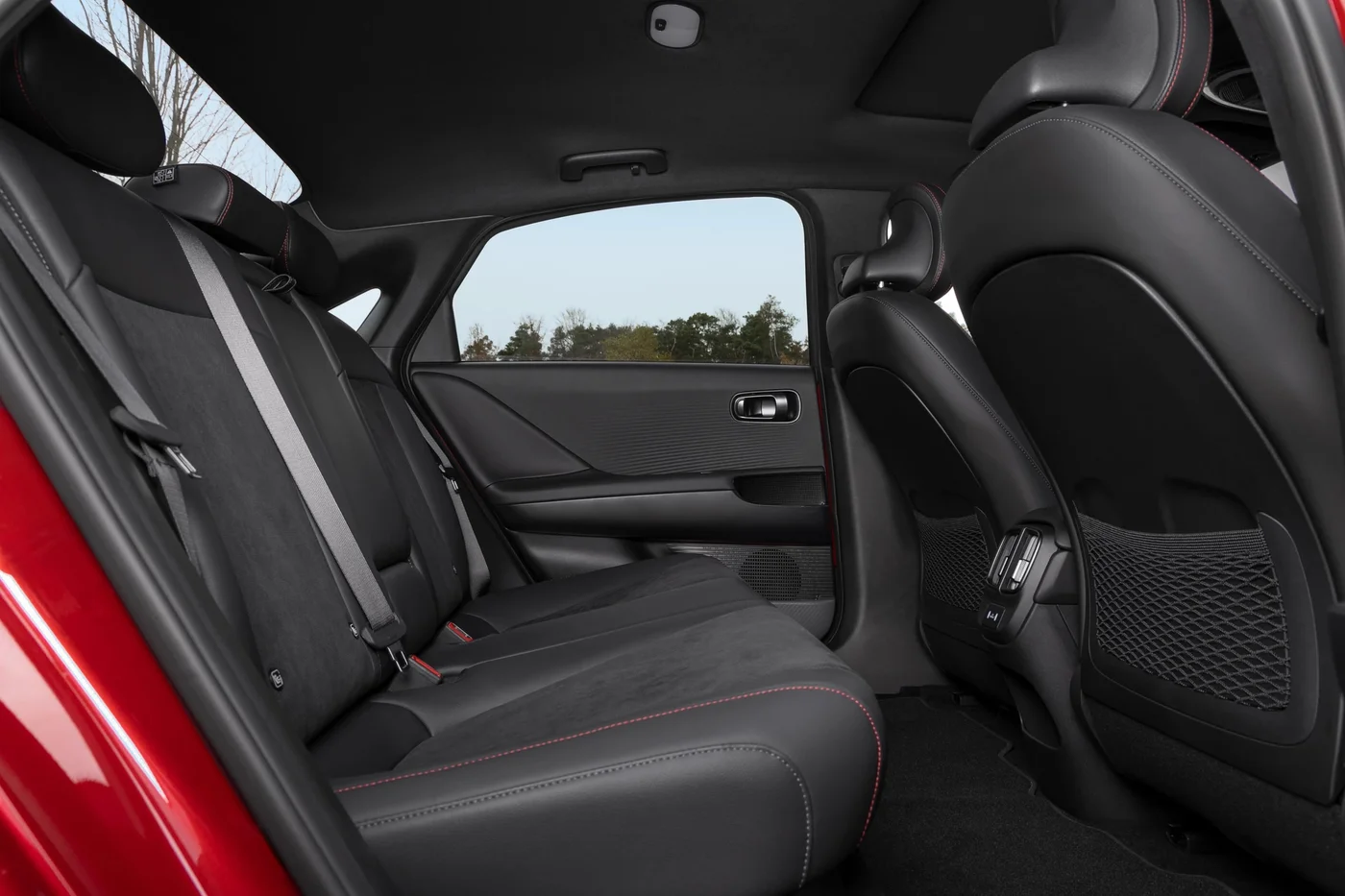
At 4,925 mm long, 1,880 mm wide and 1,495 mm tall, the Ioniq 6 is a large car. Its 2,950 mm wheelbase is long even for this size, which gives a lot of room inside, particularly in the back.
Source: Hyundai
The boot holds 401 litres, which is smallish for a car of this length. Like most saloons, it has a boot lid rather than a hatchback, so the opening limits what you can fit. There's a 45-litre frunk under the bonnet on rear-wheel-drive cars, enough for the charging cables, but only 14.5 litres on the all-wheel-drive version.
The Ioniq 6 can tow up to 1,500 kg with a braked trailer and 750 kg unbraked, which is enough for a small caravan. It weighs between 1,925 kg and 2,092 kg depending on the version.
Design
Source: Hyundai
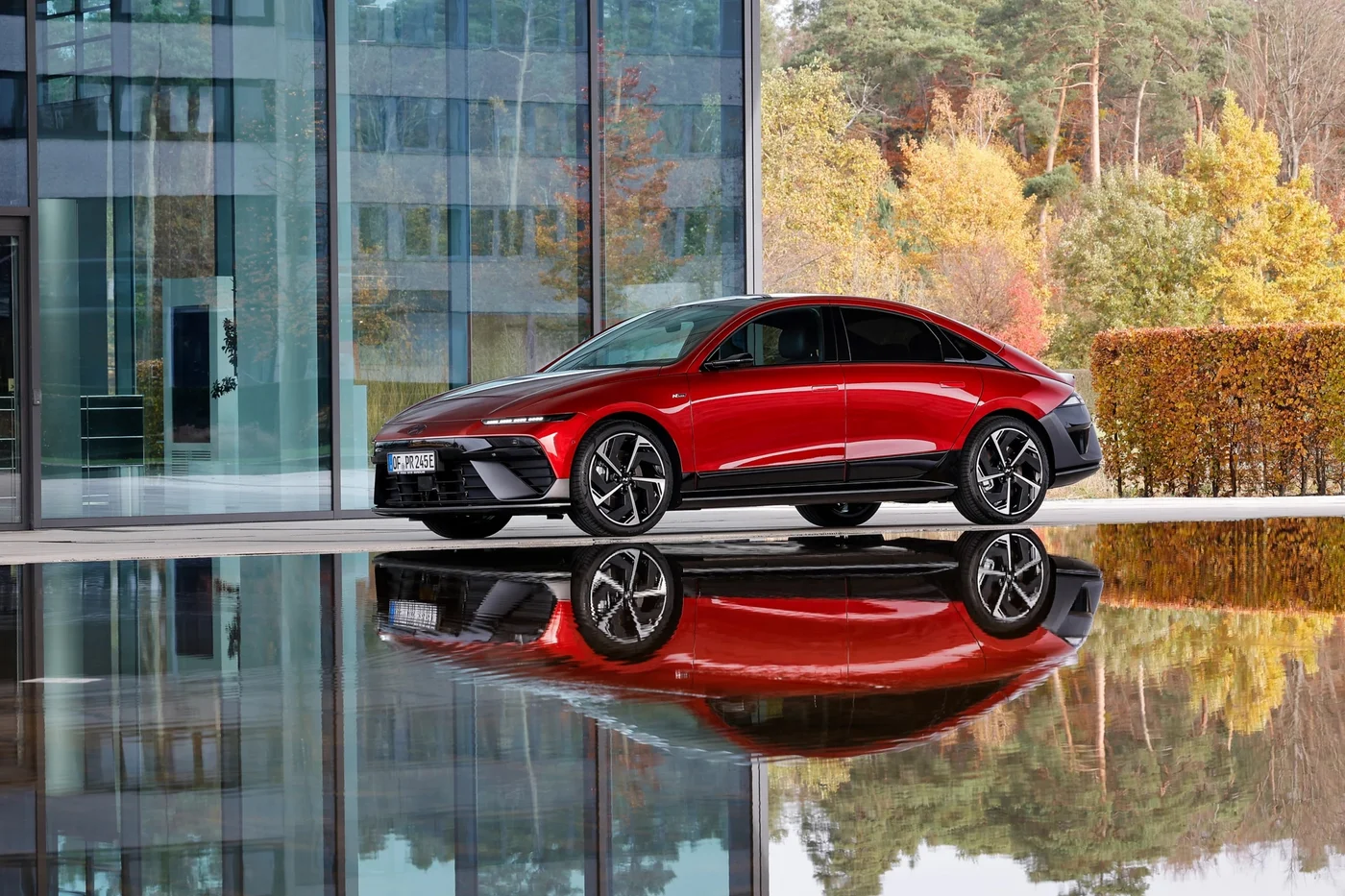
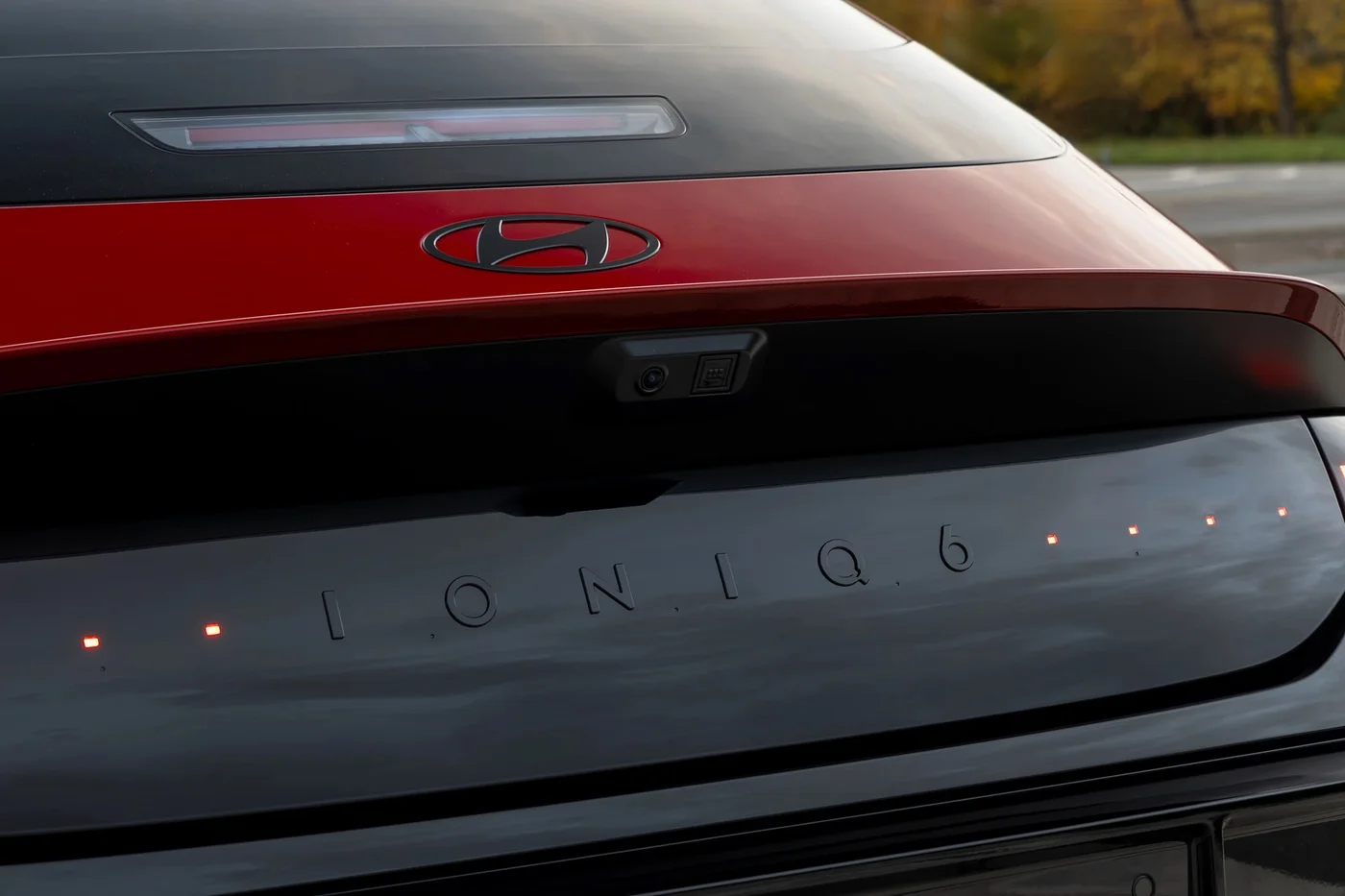
The update keeps the Ioniq 6's distinctive curved shape but tidies up the details. The bonnet is higher, the nose is longer with what Hyundai calls a "shark-nose" front, and the bumpers have sharper lines. The large rear wing of the original car has gone, replaced by an extended ducktail spoiler that keeps the aerodynamics intact.
Source: Hyundai
The car grows by 7 mm, to 4,925 mm. The N Line has its own bumpers, gloss-black trim and 20-inch wheels, and in the UK, Ultimate Red paint is a no-cost option, while other metallic and pearl colours cost £750 and matte paint £1,250.
Tech and equipment
Source: Hyundai
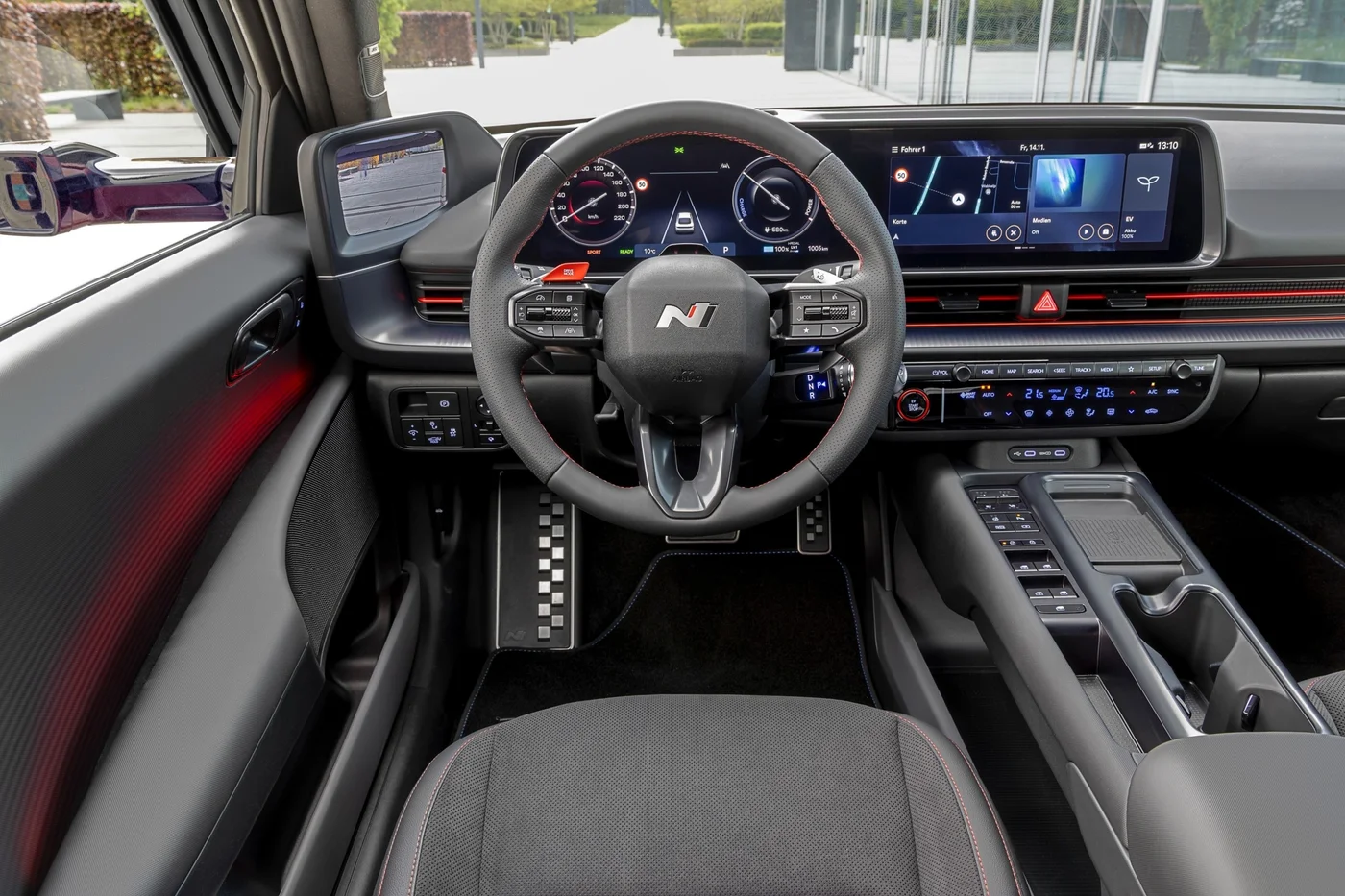
The dashboard has two 12.3-inch screens, one for the driver and one for navigation and infotainment, running Hyundai's latest software. It adds AI voice recognition, wireless Apple CarPlay and Android Auto, and split-screen views. Over-the-air updates cover the maps and infotainment as well as key systems such as the battery management and driver assistance.
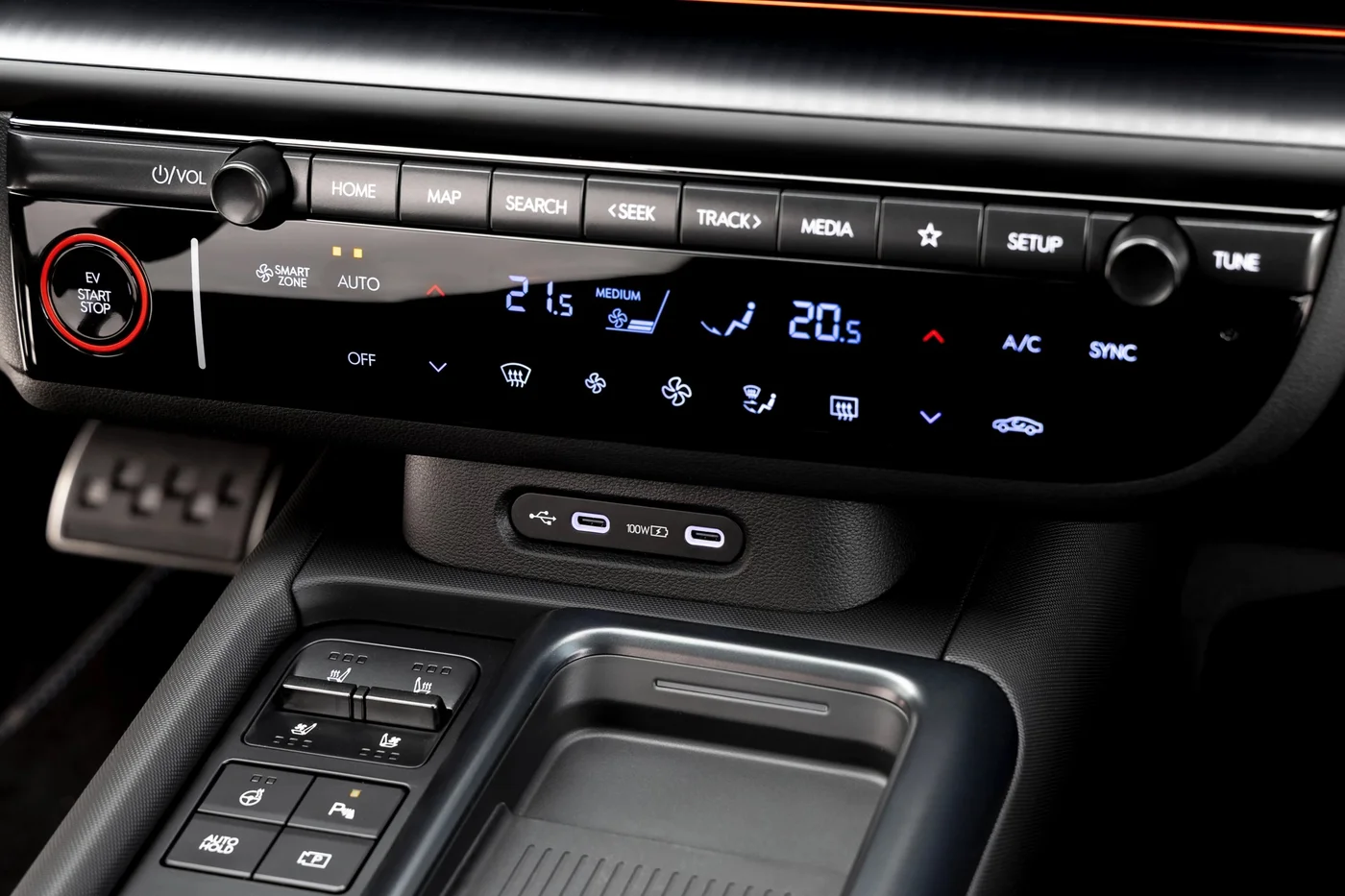
Source: Hyundai
Hyundai has kept physical buttons for the climate controls, which are easier to use while driving than a touchscreen menu. USB-C sockets charge at up to 100 W, enough for a laptop. Digital Key 2 lets you unlock and start the car with your phone, and the steering wheel has interactive pixel lights.
Optional digital side mirrors replace the glass mirrors with cameras and screens inside the doors. In the UK they're an option on the N Line Evo.
Safety
Euro NCAP awarded the original Ioniq 6 five stars in 2022, with 97% for adult occupant protection, 87% for child occupants, 66% for vulnerable road users and 90% for safety assistance systems. The updated car hasn't been tested separately.
There are seven airbags, including a centre airbag between the front seats, and an improved automatic emergency braking system that can help at junctions and with evasive steering on higher trims. Every UK version has Highway Driving Assist 2, blind spot collision avoidance and lane keeping assistance. The N Line Evo adds parking collision avoidance and a blind spot camera view in the instrument display.
Rivals
| Car | UK price | WLTP range |
|---|---|---|
| Hyundai Ioniq 6 Premium RWD | £33,240 (with grant) | 680 km (422 miles) |
| Tesla Model 3 RWD | £37,990 | 534 km (332 miles) |
| Polestar 2 | from £45,210 | up to 658 km (409 miles) |
| BYD Seal | from £45,730 | up to 570 km (354 miles) |
(Prices correct at 29 October 2026.)
The Tesla Model 3 is the obvious alternative. At £37,990 it's just over the grant's £37,000 limit, so in the UK the Ioniq 6 Premium is £4,750 cheaper and goes 146 km further. The Polestar 2 is a fastback with a hatchback boot, and its Long Range Single Motor gets close to the Hyundai's range. The BYD Seal has a similar shape and a 53-litre frunk, but its 150 kW peak charging rate is well behind the Ioniq 6.
Which Ioniq 6 should you buy?
In the UK, the Premium RWD is the one to buy. It has the longest range of the line-up, the full grant and all the equipment most people need, including the heat pump, heated seats, Matrix LED headlights and Highway Driving Assist 2. The N Line RWD costs £3,000 more for sportier styling and 20-inch wheels, but you lose 58 miles of range.
In Ireland, the N Line is the cheapest version, and the Platinum is worth a look if you want the Relaxation seats. Pick all-wheel drive only if you need the traction or want the acceleration: it costs more, has less range and a much smaller frunk.
Our verdict
The updated Hyundai Ioniq 6 is one of the best long-distance EVs for the money. The 84kWh battery gives it more range than the Tesla Model 3, its 800V charging is among the fastest available, and in the UK the Premium RWD's price with the grant undercuts most of its rivals. The boot is the main weakness: 401 litres with a saloon boot lid isn't much for a car this long.
Strengths
- Up to 680 km (422 miles) of WLTP range
- 10-80% charge in 18 minutes
- UK Premium and N Line RWD get the £3,750 grant
- Heat pump and battery pre-conditioning standard in the UK
Weaknesses
- 401-litre boot with a small saloon opening
- 20-inch wheels cut the range noticeably
- AWD version has only a 14.5-litre frunk
- Euro NCAP rating predates the update
FAQs
Does the Hyundai Ioniq 6 qualify for the Electric Car Grant?
Yes, but only the Premium RWD and N Line RWD, which get the £3,750 grant and cost £33,240 and £36,240. The AWD and N Line Evo versions don't qualify.
How much is the Hyundai Ioniq 6 in Ireland?
It starts at €42,085 for the N Line, including the €3,500 SEAI grant and VRT relief. The Premium costs €43,585 and the Platinum €48,585.
What is the range of the Hyundai Ioniq 6?
Up to 680 km (422 miles) WLTP for the 84kWh rear-wheel-drive car on 18-inch wheels. The N Line is rated at 585 km (364 miles), and the all-wheel-drive N Line at 570 km (354 miles).
How fast does the Hyundai Ioniq 6 charge?
From 10% to 80% in 18 minutes on a 350 kW charger, with a peak rate of up to 260 kW. On an 11 kW home supply it charges fully in seven hours 35 minutes.
When can I get the updated Hyundai Ioniq 6 in the UK?
Orders are open now, and Hyundai UK expects first deliveries in early 2027. It's already on sale in Ireland and Germany.